Author: admin

  • Warmer caves may save bats from deadly fungus

    Warmer caves may save bats from deadly fungus

    Nancy Heaslip, New York Dept. of Environmental Conservation
    Nancy Heaslip, New York Dept. of Environmental Conservation

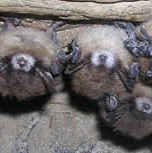
    Shivering bats need help to fight off white-nose syndrome

    Researchers are hoping that heated bat boxes can curtail the number of bats dying from white-nose syndrome — a condition that has decimated hibernating bats across the northeastern United States.

    As many as half a million bats have died from the poorly understood ailment since it was discovered in New York state in 2006. Because the bodies of emaciated bats are often found strewn around the entrances of affected caves, scientists have hypothesized that the bats are starving to death during hibernation. Now, a pair of ecologists has created a mathematical model that suggests the bats’ hibernation patterns are being altered, forcing them to burn through their fat reserves to warm up. Furthermore, they propose placing heated huts within affected caves for the bats to move into, allowing them to conserve energy — and survive.

    :: continue reading in Nature ::

  • Reading the fine print of the human face

    The expert behind a new hit TV series says tiny expressions reveal if someone is lying

    CHICAGO–Sometimes a curl of the lip can catch an unfaithful lover … or a murderer.

    In the new television series Lie to Me, deception expert Cal Lightman, played by British actor Tim Roth, reads people’s true feelings to uncover their lies. He and his team collaborate with law enforcement and government agents to crack their trickiest cases, solve murders and uncover scandal.

    Though it may seem unlikely that an upward glance or a slight shrug could catch a killer, most of the show’s science is sound.

    Lie to Me is based on the work of prominent psychologist Paul Ekman, the world’s expert on involuntary “microexpressions.” A former professor at the University of California, San Francisco, author of books on subjects ranging from lying to Buddhism, and editor of the 2005 edition of Charles Darwin’s The Expression of the Emotions in Man and Animals, Ekman, now in his seventies, has been studying facial expressions and body movements for more than 50 years.

    “The face is the best marker we have to know what is going on with people emotionally,” says Ekman, in Chicago recently for a science convention.

    :: continue reading at TheStar.com ::

  • Canadian research infrastructure receives support, but will it last?

    Investment in infrastructure typically brings to mind hard-hat projects such as the construction of highways. But to keep science on the fast track, focused funding of research infrastructure is necessary. Following this logic, in December the Canada Foundation for Innovation (CFI) announced it would award C$45.5 million ($35.9 million) to specific Canadian research projects. The investment will support more than 250 projects, including those in the health field, by providing equipment to attract and retain researchers to Canadian institutions.

    The money will be distributed through two channels: the Leaders Opportunity Fund, which allows institutions to invest in research equipment for new or existing faculty, and the Infrastructure Operating Fund, a smaller accompanying program that covers a portion of the operating and maintenance costs of CFI-supported infrastructure projects.

    “We’re really pleased,” says Peter Lewis, vice dean of research at the University of Toronto’s Faculty of Medicine. “It’s been quite catalytic to get researchers to work together on projects that they might not have been able to otherwise.”

    :: continue reading in Nature Medicine :: (subscription required)

  • Arctic Expedition: Life on the Amundsen

    Arctic Expedition: Life on the Amundsen

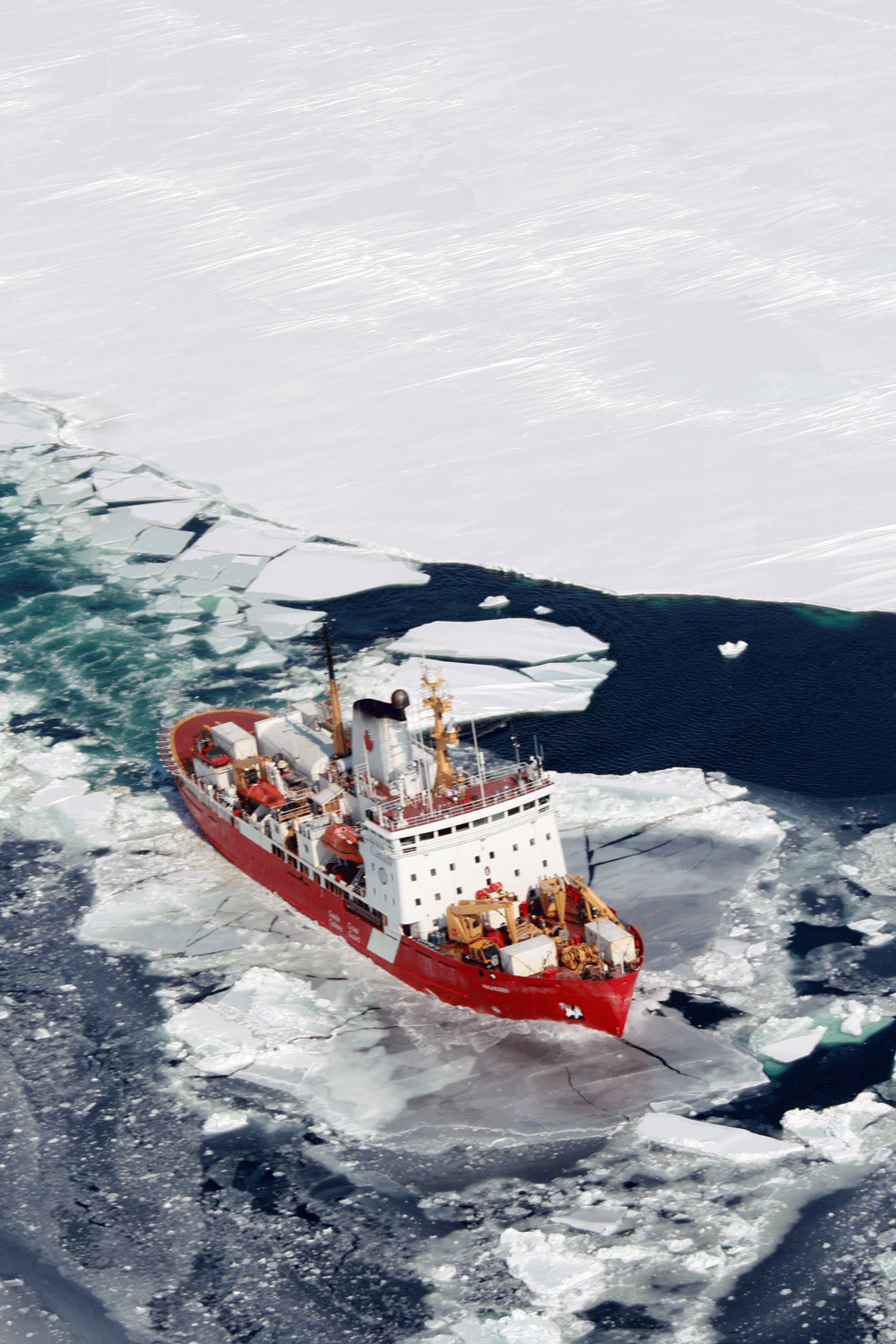
    When the CCGS Amundsen, a Canadian research ice breaker, left its home port of Quebec City in July 2007, it embarked upon a historic 15-month expedition that would have it travel across the Arctic and overwinter in the Beaufort Sea.

    The scientists on board the  Amundsen might spend their days hunting for ice algae, fishing for zooplankton, or surveying the contours of the nearby ice floes.   But it’s not all work and no play for the researchers and graduate students that call the Amundsen home.

    This slideshow was first published by The Gazette in December 2008.

    The World Federation of Science Journalists sponsored this trip in April 2008.

  • Control Freaks

    Tiny genetic snippets called microRNAs may promote metastasis

    Biologists know quite a bit about the steps that turn a normal cell into a cancerous one. Their understanding of metastasis, on the other hand, is somewhat more hazy. Now a short stretch of genetic material has been implicated in the spread of breast cancer, according to a study in the Oct. 11 Nature.

    Molecular biologist Li Ma of the Whitehead Institute for Biomedical Research, in Cambridge, Mass., has identified a type of microRNA—a tiny genetic molecule—that can coax breast cancer cells to spread to other tissues. MicroRNAs regulate the expression of genes by controlling the larger RNA molecules that help to make proteins.

    :: Read more in CR magazine ::