Maclean’s
Ice cores tell the history of Canada’s climate, but now the government doesn’t want them anymore. (more…)

Ice cores tell the history of Canada’s climate, but now the government doesn’t want them anymore. (more…)

Posted on the Nature News blog on 14 October 2011.
In an effort to address Canada’s problem with innovation, an independent panel has recommended a radical overhaul that includes the creation of a new funding council and transforms the country’s largest research entity, the billion dollar National Research Council (NRC).
Study after study has shown that Canada’s businesses invest less on R&D, relative to the country’s gross domestic product, than those of many other OECDcountries and, unlike others, has actually decreased its spending over the last decade. Many of these business investments include government support in the form tax credits, training programs, or grants.
In an effort to make the best use of the government’s investments the six-member expert panel developed six broad recommendations include appointing a Minister of Innovation and creating the Industrial Research and Innovation Council (IRIC).
According to the panel’s report, to be released on 17 October, the proposed IRIC would be an arm’s-length funding agency to help entrepreneurs bring ideas to the marketplace. Under the plan, the council would focus on business-driven support by expanding some existing programs, such as the Industrial Research Assistance Program, which offers advice and funding to support high-risk R&D, while cutting the tax credits available for business R&D. The Natural Sciences and Engineering Research Council, the granting agency that funds a large portion of Canadian scientists, but which also hosts a number of business-related support programs, would instead focus its innovation investments on projects housed within universities.
The panel’s recommendations also include breaking up the NRC by sending those of its member institutes that are engaged in more basic research to universities where their funding would be managed by NSERC and the Canadian Institutes of Health Research. The institutes undertaking more applied, industry-oriented research would be rolled into a non-profit research organization, overseen by the IRIC. These proposed changes parallel previous reports that the NRC would focus on industry-driven research.
When the report is released on Monday, the response is likely to be mixed. Some will favour the streamlining of multiple programs and greater direct support to R&D. Others will likely be concerned about the fate of the researchers, facilities and research at the various NRC instittutes.
Indira Samarasekera, president of the University of Alberta, in Edmonton, says folding NRC’s basic research institutes into universities could boost output, but that it will be challenging to implement, especially if the laboratory isn’t located on campus. “It can be difficult to get independent researchers to rally around a specific scientific problem that may be industry driven,” says Samarasekera, whose university houses the NRC’s National Institute of Nanotechnology. “But this is the best of both cultures.”
Gary Goodyear, the Minister of State for Science and Technology, would not comment on the specifics of the report, as it has not been officially released. In a statement he said the panel’s advice will help “modernize programs that support innovation” with the goal of encouraging more companies to invest in R&D.
According to the mandate, the panel’s recommendations could not increase or reduce federal funding to R&D initiatives. “Where we have identified opportunities for savings, we expect the government to reallocate the savings to provide funds for our other recommendations,” the panel wrote.
Canada’s innovation gap has been scrutinized before (here and here), but this time the report lays out a clear set of recommendations.
Confusion over fate of valuable climate record chills researchers.
An unusual ‘help wanted’ advertisement arrived in the inboxes of Canadian scientists last week. The e-mail asked the research community to provide new homes for an impressive archive of ice cores representing 40 years of research by government scientists in the Canadian Arctic.
The note was sent out by Christian Zdanowicz, a glaciologist at the Geological Survey of Canada (GSC) in Ottawa. He claimed that the collection faced destruction owing to budget cuts at Natural Resources Canada (NRCan), the government department that runs the survey, and a “radical downsizing” of the Ice Core Research Laboratory. The e-mail pressed scientists at universities and other institutions to take in the ice cores before they were left to melt.
But David Scott, director of the GSC’s northern Canada division, denies this and says that there have been no budget cuts at GSC. He says that GSC management did not approve the letter, and it contains a number of factual errors. “There is no shutdown of the ice-core facility being contemplated. We’re not actively dispersing the collection,” he says. “Nothing that meets the criterion of having scientific value would be destroyed.”
>> Continue reading at Nature.com
This story was posted on ScientificAmerican.com, and mentioned on Mother Jones‘ Blue Marble blog

McGill scientists are playing a leading role in explaining how the nature vs. nurture debate is even more complicated than we thought.
This article originally appeared in the Spring-Summer 2011 issue of the McGill News
What if your ability to pay the rent, to buy groceries or the nature of your relationships set up your children for cardiovascular problems, diabetes or even mental health issues? Although it’s not a far-fetched idea, researchers struggled for years to find biological explanations that linked socioeconomic status or trauma to health. And then, beginning in 2004, scientists at McGill began to untangle some of those connections.
Piece by piece, study by study, a trio of scientists, backed by a talented crew of post-doctoral fellows, graduate students and research associates, has found evidence that early life experiences can leave lasting marks on the brain. They’ve dismantled the long-standing debate over nature versus nurture, and discovered that it’s not one or the other, but both.
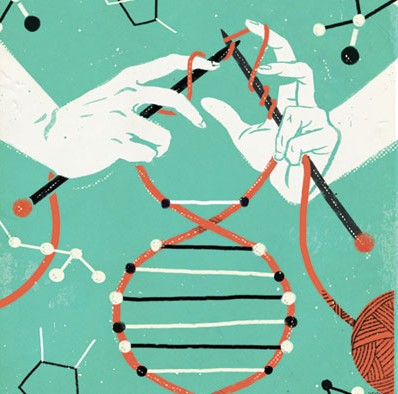
Though the early 2000s were marked by gushing enthusiasm over the sequencing of the human genome and the secrets it would uncover, Michael Meaney, Moshe Szyf and Gustavo Turecki, PhD’99, targeted their study of health and heredity at another level of genetic information. They looked above the genome, at the epigenome, a code of biochemical tags, often attached to DNA, that turn genes on or off.
Their research has run the gamut of experimental design: they’ve studied rodents to understand the impact of maternal care on stress, looked at post-mortem tissue to get at the biological effects of childhood abuse, and are currently following 500 mothers and their children to learn how maternal stress and well-being influence child development. Their group has published in the top scientific journals and their work has been featured in media around the world, including the New York Times, BBC, Time, the Economist, and, more recently, the New Yorker. Together they’ve helped usher into the spotlight this new field of epigenetics and put Montreal at its epicentre.
Michael Meaney is a neurobiologist and clinical psychologist who splits his time between the Douglas Mental Health University Institute at McGill and the Singapore Institute for Clinical Science. In his lab, there are two kinds of rat mothers: those that lick and groom their pups and those that don’t. He and his team have found that the well-licked pups are even-tempered critters that produce less of the stress hormone cortisol when faced with a pressure-filled situation. These cool-headed traits persist into adulthood. But Meaney wanted to understand how an environmental signal, such as the nuzzles and caresses of a nurturing mother, could reshape the genome and change the rat’s response to stress.
At a research meeting in Madrid, Meaney encountered Szyf, a molecular biologist and a fellow McGill scientist. The two hadn’t really known each other in Montreal, but as they sipped beer together in a Spanish bar, they launched into an animated discussion about how experiences could leave a lasting mark on the genome and a new research partnership was soon forged.
Szyf, the University’s James McGill professor of pharmacology and therapeutics, has long studied epigenetics in tumour cells—the dynamic modification of the genome through a process called methylation. The pair thought methylation, which alters how genes function, might be the mechanism they were looking for.
The genetic code is written in letters, each one representing a different chemical: guanine (G), cytosine (C), adenine (A) and thymine (T). Three billion of these letters are strung end to end like patio lanterns, coiled and wrapped around proteins and packed into each cell. The genome is the ultimate insider’s guidebook to the human: it contains all the information a cell needs to produce a neuron, an acid-producing cell in the stomach, or any of the other 200 different cell types crowded into the human body.
But it is the epigenome that provides the directions, revealing which genes should be expressed by adding or removing chemical tags composed of carbon and hydrogen from the genome. A tag planted near a gene will shut it down.
When the researchers looked at the epigenomes of the rats, they found that when a mother licks her pups, she switches on a gene that dials down the amount of stress hormones that get released in times of duress. Meaney and Szyf had found a mechanism to link environmental cues and gene expression.
It was an unconventional conclusion. Though scientists have known about these tags for some time, many thought their role was restricted to cell differentiation, the process that ensures that, for example, a heart cell remains a heart cell when it divides by expressing only the genes a heart cell requires. Instead, Meaney and Szyf, working with graduate student Ian Weaver, PhD’06, and their team, found evidence that life experiences alter DNA by painting it with chemical tags and altering nearby gene expression.
They also showed that they could remove the stress-related methylation by putting unlicked pups with nurturing foster-mothers, or by injecting a drug called trichostatin A into the brains of adult rats—in effect erasing the negative effects of early life experiences.
They submitted the study to Nature and Science and elsewhere. “We got mixed responses. Some were really excited, others were really skeptical,” says Szyf. The reviewers took issue with the idea that such epigenetic changes could occur after birth. How could a complex system that made sure your eye was always an eye also be manipulated by motherly love? Szyf speculates that the system has a highly organized component that is very strict, “and can’t be messed up,” and a responsive component that allows the system to adapt. The study was finally published in Nature Neuroscience in 2004, and it made a huge splash.
One of the scientists who took note was Gustavo Turecki. “The nature vs. nurture debate has been very divisive and created very strong rivalries between the different factions, dividing psychiatry departments,” he says.
A psychiatrist and the director of the McGill Group for Suicide Studies, Turecki approached Meaney after hearing him speak about his research at a scientific meeting. Turecki, who is also the director of the Réseau Québécois de recherche sur le suicide, had access to the Quebec Suicide Brain Bank, an almost unique resource for scientists keen on understanding the neurobiology of suicide.
In 2005, Patrick McGowan joined Meaney’s lab as a postdoctoral fellow after finishing his PhD at Duke University. He’d jumped at the chance to come back to Montreal (he’d obtained his undergraduate degree from Concordia) and to work with Meaney in the field of epigenetics. “I was interested in the epigenetics story from the beginning. It had always been an interesting question: Why do these effects of early life experiences persist? And why do [traumatic experiences] lead to an increased risk for mental disorders? There hadn’t really been a good explanation, but epigenetics offered the first clues as to how that can happen,” says McGowan.
McGowan thought that when he joined Meaney’s lab he’d be working with animals, where his background lay. Instead, because of Turecki’s involvement, McGowan found himself examining human tissue. “Humans are so variable. A lot of people asked, ‘How could you possibly pull out the effects of early life experiences?’” he says. “We had to find the right population, the right cohort, and with Gustavo Turecki’s subjects, we had that. These people had committed suicide. [We] also had the life histories of these individuals and [we knew] they’d suffered terrible, terrible experiences.”
McGowan identified 36 brain tissue samples for the study. They came from men who had been abused as children and who had later committed suicide, and men who had committed suicide, but had no history of abuse. The last group came from otherwise healthy men and made up the control group.
The researchers chose to focus on the stress response genes that are expressed in the hippocampus, one of the brain structures involved in anxiety, depression, placing events in place and time, and storing long-term memories. The researchers discovered something consistent among the suicide victims who had troubled pasts. They found methyl groups fixed to the genes that control the production of stress hormone receptors in the brain, making these individuals far more biologically sensitive to stress.
“What we did was pretty cool. It might take us somewhere that lets us understand why the genome operates differently in one individual versus another, and why environmental events might explain that,” says Meaney.
In 2003, Meaney and other investigators began recruiting pregnant women to participate in the Maternal Adversity, Vulnerability and Neurodevelopment (MAVAN) project. They enrolled 500 women, some of whom suffered from depression or lived in poverty. They visited the mothers to evaluate the type of stressors they faced: Did they have enough money to pay for rent, or buy food for the family? Were they in a violent relationship? What sort of social support did they have? And they followed the children from birth, checking in at three, six, 12, 18 and 24 months, and every year after until they turned eight. The researchers did a battery of tests, measuring cognitive and physical development, attention, food preferences and mother-child interaction. They measured hormone levels and collected DNA.
“MAVAN is unique in Canada,” says Hélène Gaudreau, MAVAN’s study coordinator.
The study is ongoing, so few of the results have been published. Part of the project measures the kids’ confidence and compares it to their genetic backgrounds and upbringing. Generally, a child’s confidence level drops following the experiencing of a failure. But what Meaney and Gaudreau have found is that genetics and maternal care combine to determine whether confidence plummets or only dips following failure.
The serotonin transporter is one of the proteins associated with emotion. Individuals who possess a shorter version of the gene are at a greater risk of developing depression. But genetics alone can’t predict which children will be most upset when they fail a test. It also depends on the child’s attachment to his mother, they discovered. The study found that those with the shorter gene avoided the emotional crash if they were cuddled and cooed over, and formed a strong bond with their mothers.
“There are two points to this: one is the interdependence of genes and environment, and the other is that your genes don’t make you sick. They make us more or less susceptible to environmental influences. It’s a much more sophisticated way of thinking about what genes do,” says Meaney.
“Hopefully, we’ll be able to see which children are more sensitive to developing vulnerabilities, and we can find a way to help those families,” says Gaudreau. “A lot of people talk about maternal stress and its impact on the baby. But it’s not fixed—you can reverse some of those effects and that is good news.”
Over the last decade, Montreal has become an epigenetics hotspot. In addition to the MAVAN study, Meaney continues to study rodents, taking a broader look at the genome to understand whether particular types of genes are more vulnerable to the maternal influence than others. Szyf recently received funding through a European neurosciences and mental illness research network to study the effects of prenatal, perinatal and postnatal stress and its epigenetic impacts on depression. McGowan, who is now an assistant professor in biological science at University of Toronto Scarborough, is collaborating with Szyf and researchers at Université de Montréal and Université Laval on a study of twins that will examine such things as parenting behaviour and family functioning. The study could help explain how environmental factors affect early mental health development. McGowan is also preparing to teach a university-level course in epigenetics, introducing the next generation of scientists to a field he helped pioneer.

The 1.2-million-square-kilometre region—twice the size of France—is known for its wild rivers, biodiversity, diverse ecosystems and a large swath (about 20%) of Canada’s boreal forest. Boreal forest covers more than 25% of Quebec. More than 120,000 people, including 33,000 aboriginals also live in the region.
Quebec Premier Jean Charest said yesterday the government will invest CDN$80 billion into mining, forestry, transportation, energy development and tourism over the next 25 years.
The environmental aspects of the plan include the promise to set aside 600,000 square kilometres of the region to protect the environment and preserve biodiversity. By 2016, the government will have established several provincial parks, completed a survey of northern Quebec’s biodiversity, protected over 31,000 square kilometres of land, and adopted mitigation or restoration plans for each development project.
By protecting half of the forest, the Quebec government will keep more than 13.8 billion tons of CO2 sequestered—equivalent to about 70 years of industrial carbon dioxide emissions in Canada (Canadian Boreal Initiative, 2009 release).
The Plan Nord is getting mixed reviews from environmental groups. The Canadian Boreal Initiative, affiliated with the Pew Environment Group’s International Boreal Conservation Campaign applauded the sustainable development measures included within the plan (release). But others, including Greenpeace and Nature Quebec, said they could not endorse the plan as presented. The coalition of groups told the Globe and Mail the plan was “an attempt to regulate a mining boom rather than the expression of an authentic vision for the north.” They called for, among other things, an evaluation of the global environmental impacts of northern development.
From the Nature News blog.
Image: MRNF, Gouvernement du Quebec