Author: Hannah

  • US polar bears mark their territory

    US polar bears mark their territory

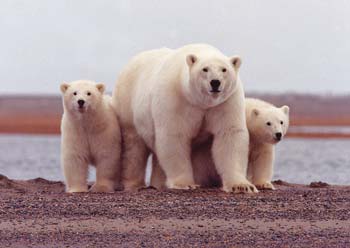
    More than two years after Alaskan polar bears were given a protection status of “threatened species” by the US Endangered Species Act, the Obama administration set aside on Wednesday 24 November 484,330 sq kilometres — twice the size of the UK — in Alaska as “critical habitat”.

    Almost all of the area is offshore sea ice habitat — where polar bears spend most of their time hunting seals, breeding and travelling—in the Beaufort and Chukchi seas off Alaska’s northern coast. It also includes on-shore barrier islands and land used for making dens. About 4,800 polar bears ramble along Alaska’s ice and shores.

    The story continues at Nature’s blog The Great Beyond

  • Taxonomy in Trouble in Canada

    Taxonomy in Trouble in Canada

    Canada is at risk of losing its taxonomic expertise, according to a report released today.

    The report details stagnant research funding, greying experts, a lag in digitization and a lack of support for national collections. This is threatening Canada’s understanding of its biodiversity, and the ecosystem services it provides, the report concludes.

    “Canadian contributions to describing new species has dropped from being 6th in the world to 14th in the last decade,” says Thomas Lovejoy, Biodiversity Chair at the Heinz Center for Science, Economics and the Environment, who chaired the panel of 14 Canadian and international experts who authored the report. “The taxonomic expertise in Canada is slipping at the moment when it needs to surge forward.”

    The effects are already being felt. The Committee on the Status of Endangered Wildlife in Canada recently filled positions on its subcommittees with outside experts because not enough Canadians had expertise in several taxonomic groups, including terrestrial and freshwater molluscs, lichens and mosses, the report says.

    Canada has more than 50 million wildlife specimens in collections worth over CDN$250 million, but there is no strategy for their maintenance, says David Green, director of the Redpath Museum at McGill University in Montreal. There are few storage facilities with advanced climate and pest control systems, and many are bulging beyond capacity.

    The story continues on Nature’s blog The Great Beyond.

  • Cold cash for cold science

    Cold cash for cold science

    The recent funding wrap-up from the international polar year (IPY) has left many Canadian researchers scratching their heads, trying to find a way to continue their arctic science projects. A new grant from the Natural Sciences and Engineering Research Council of Canada may help close that research-funding gap.

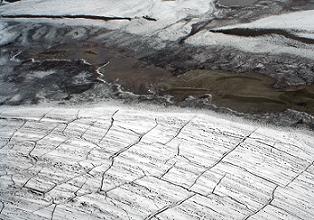
    In its announcement yesterday, NSERC opened a competition to fund large-scale research with a focus—for this round of funding—on northern earth systems. The Discovery Frontiers initiative will heft Can$4 million over five years on the successful research team to study the physical, chemical, biological and social factors that affect the North and its inhabitants—and to come up with solutions. Fresh water, sea level, permafrost, weather patterns, biodiversity or climate change adaptation could be part of the successful pitch. The northern community will help define the projects and their goals.

    The story continues at Nature’s blog The Great Beyond.

  • Free Radicals Radio: Bring on the bugs!

    Babes in the woods

    Get outside

    Can a walk in the woods really change us? Scientists are beginning to think so. There’s evidence to suggest that being in a busy city environment can reduce the brain’s capacity to remember things and lower self-control. Kids are driven to school and back, and off to soccer practice, and then when they get home, they turn on the computer or TV and settle down to an evening of screen-tertainment. The growing children and nature movement suggests children’s problems with obesity, attention span and lack of understanding of the environment are connected to less outdoor play and exposure to nature. Do you have nature-deficit disorder?

    Listen to the show: Babes in the woods (Download full episode, October 9) or listen to it from the CKUT archive.

    Find out more

    Children and Nature Network
    Environment Canada’s Biokits
    Child & Nature Alliance

    Red Fox Remix

    Here’s a treat: Growing up in Toronto in the 1970s, I was exposed to Hinterland Who’s Who–one-minute wildlife video segments about muskox, moose and the mighty beaver. (See the Red Fox below.) Now the Canadian Wildlife Service and the Canadian Wildlife Federation have opened the nostalgia gates for parents across Canada and giving kids the chance to remix their own Hinterland Who’s Who. It’s brilliant. Make your own HWW remix with your favourite Canadian critter. Don’t forget to upload it to the HWW YouTube channel.

    HWW video Copyright CWS, CWF (2005) Please direct any questions about the video to info@hww.ca.

  • Collapse of the ice titans

    Collapse of the ice titans

    Nature

    Monitoring Greenland’s melting glaciers from a 15-metre long sailboat.

    In early August, a 260-kilometre-square chunk of ice broke off the Petermann Glacier — the largest iceberg to calve in the Arctic Ocean since 1962.

    The collapse didn’t surprise Richard Bates, a geophysicist from the University of St Andrews, UK. During a visit to Petermann last summer, with glaciologists Jason Box of the Byrd Polar Research Center at Ohio State University in Columbus and Alun Hubbard of Aberystwyth University, UK, the three noted rifts and meltwater — a sign of pending collapse. They installed time-lapse cameras atop the 900-metre-high cliffs and placed eight Global Positioning System (GPS) units along the glacier’s centre line to monitor the event.

    The researchers returned to Greenland late last month to retrieve the equipment and make other oceanographic and geophysical measurements, but were thwarted in their attempts to reach Petermann by ice. Nature caught up with Bates soon after he stepped off the Gambo, the sailboat that voyaged to the north end of Humboldt Glacier, which the team is also studying.

    What did you see while sailing up the Greenland coast?

    We saw a lot of calving glaciers. One 400-metre-long section of the glacier broke off just after we surveyed it. On our way to the Humboldt Glacier we got close to some major calving. It can seem very dangerous to have such a small boat in front of these glaciers, but you can be a lot more reactive and nimble than in large research vessels. But once you’re stuck in the ice, you’re stuck. We were pushing it a bit last week.

    Richard Bates.

    What work did you have planned for this trip?

    We worked our way up from central Greenland — the Lille, Store and Rink glaciers. We took time-lapse measurements and looked at the submerged portion of the glacier to see how fast the front is changing. We’ve been finding out that the submarine melt rates can be 20–100 times faster than the above-surface melt rates. We’re using a laser scanner to measure the changes above the water and using a sonar to look at the melt rates below the water.

    → Read the entire Q&A with Richard Bates at Nature.

    Richard Bates photo courtesy of Richard Bates, Petermann Ice Island photo courtesy of NASA.