Author: Hannah

  • Canada picks site for Arctic Research Station

    Canada picks site for Arctic Research Station

    Cambridge Bay location offers a wealth of opportunities for studying the far north.

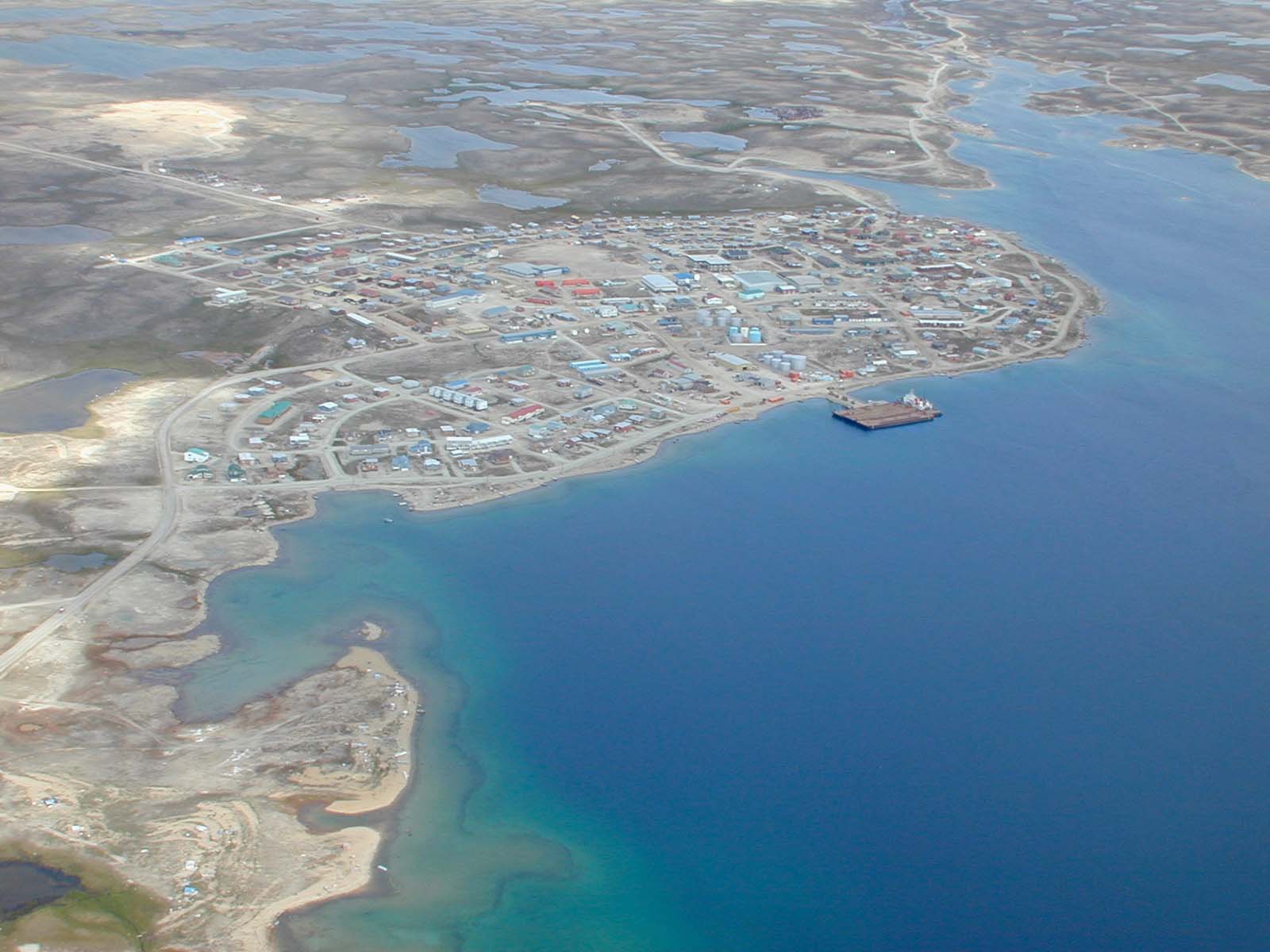
    After months of deliberation, the Canadian government has chosen Cambridge Bay — a hamlet midway along the Northwest Passage in the country’s far north — as the site for a world-class Arctic research station.

    Once built, the station will house scientists all year round, giving them a modern space to study Arctic issues, including climate change and natural resources. It will host conference facilities and laboratories for research on marine biology and geophysics, provide ecologists with the space to do long-term ecological monitoring in aquaria and greenhouses, and give researchers in the health and social sciences a base for their studies.

    “It’s a very exciting and long-awaited announcement,” says Warwick Vincent, director of the Centre for Northern Studies at Laval University in Quebec City, who was part of the committee consulted by the government during the selection process.

    The proposal for the Canadian research station was first sketched out in 2007 and a shortlist of sites was released in 2009. A Can$2-million (US$1.9-million) feasibility study for the proposed station established its functions, preliminary costs and construction schedule and involved an analysis of three possible locations: Pond Inlet, Resolute Bay and Cambridge Bay, all in the northern territory of Nunavut.

    Details about the new facility’s size or overall cost have yet to be released by the government, but sources suggest that it will be completed some time in 2017 at a cost of about Can$200 million.

    → Read more at the Nature website

    → Also found in WorldChanging’s Arctic Round-up (September 3)

  • Report maps perils of warming

    Report maps perils of warming

    Degree-by-degree breakdown of climate effects published.

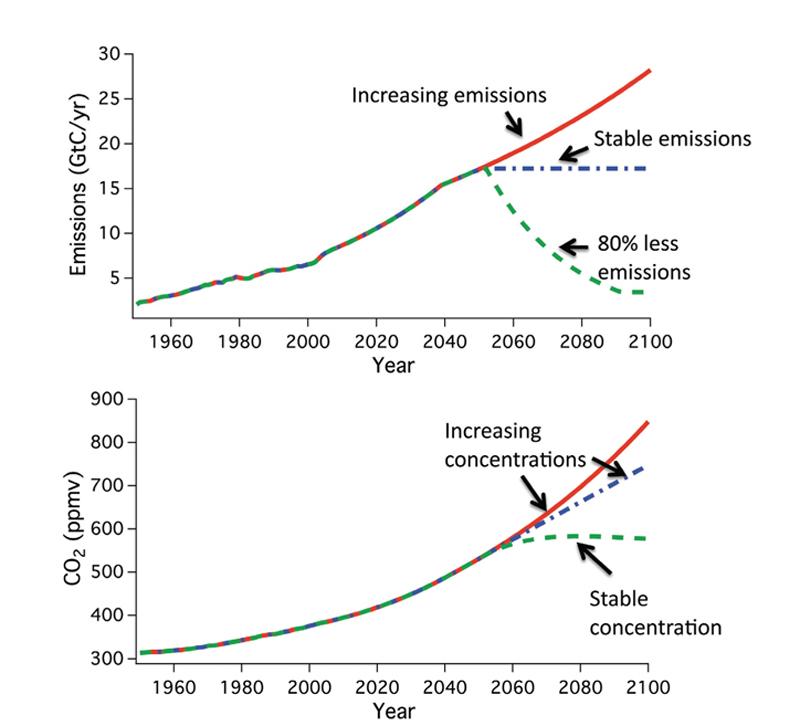
    As the US Senate gears up to debate the latest incarnation of proposed climate legislation next week, a blue-ribbon panel has released what it hopes will be a definitive guide to the consequences of climate change for lawmakers and the public. In offering a degree-by-degree breakdown of the potential impacts of temperature change, the report aims to highlight the effects of stabilizing greenhouse gases at a chosen target level. Yet few are optimistic that the report will influence the fate of the scaled-back climate bill, which would cap emissions from electricity utility companies.

    The report, from the US National Research Council (NRC), sets out the consequences — from streamflow and wildfires to crop productivity and sea level rise — of different greenhouse-gas emissions scenarios. It also concludes that once the global average temperature warms beyond a certain point, Earth and future generations will be stuck with significant impacts for centuries or millennia.

    Previous assessments tended to tie predictions to specific years or concentrations of carbon dioxide in the atmosphere. But because no one knows the course of future carbon dioxide emissions, this approach amplifies the uncertainties. The NRC report instead sets out the effect of each additional degree of warming, whenever that might happen. “There are some very important future impacts of climate change that could be quantified somewhat better than we previously thought,” says Susan Solomon, a senior scientist at the National Oceanic and Atmospheric Administration in Boulder, Colorado, who chaired the report committee.

    For example, the report shows that each 1 °C of warming will reduce rain in the southwest of North America, the Mediterranean and southern Africa by 5–10%; cut yields of some crops, including maize (corn) and wheat, by 5–15%; and increase the area burned by wildfires in the western United States by 200–400%. The report also points out that even if the atmospheric concentration of carbon dioxide is stabilized, the world will continue to warm for decades. If concentrations rose to 550 parts per million, for example, the world would see an initial warming of 1.6 °C — but even if concentrations stabilized at this level, further warming would leave the total temperature rise closer to 3 °C, and would persist for millennia.

    “It is blunt, direct and clear. Unlike the IPCC reports you don’t see any hedge words.” — Steve Cohen, executive director of the Earth Institute at Columbia University in New York City.

    Deep cuts in carbon dioxide emissions would be needed throughout this century to avoid this long-term warming, something recognized in the American Power Act proposed by Senator John Kerry (Democrat, Massachusetts) and Senator Joe Lieberman (Independent, Connecticut). The bill aims to reduce emissions by 17% below 2005 levels by 2020 and by more than 80% by 2050.

    “The report says an 80% cut is meaningful,” says Jay Gulledge, director of the science and impacts programme at the Pew Center on Global Climate Change in Arlington, Virginia. “I’ve never seen that stated before, but it is based on the best calculations for the carbon cycle.”

    → Read more at Nature

  • CSWA Ottawa conference report: Tools for tomorrow’s science writer

    CSWA Ottawa conference report: Tools for tomorrow’s science writer

    At Sunday’s workshop, Tools for Tomorrow’s Today’s Science Writer, four panelists shared their thoughts about online tools, transparency, and better story telling.

    It was no surprise to hear that journalism is experiencing a big shift from print to online. But, as Asmaa Malik pointed out, the fundamentals remain the same. We must find the stories, report them and present them. But how we’re doing that is changing. Asmaa is an associate managing editor at The Gazette. She runs the newsroom’s new media training workshops and writes Status Update, a monthly column that takes a look at how social media and technology shape relationships–on and off-line. She encourages journalists to go where your readers and experts are having their conversations–twitter, blogs, list-servs. News will break faster there than anywhere else.

    Asmaa also identified a move towards open-data resources. One year ago, the White House opened its government data stores to the public. Some municipal governments have too. (You can listen to Vancouver’s plan to open up municipal data on a past episode of CBC’s Spark.) Other data repositories, like the Guardian’s Data Store and Document Cloud open the door for journalists to find data and use it for new stories.

    It’s worth looking into. Let us know about any stories you cultivate from them or any new sources of Canadian data.

    Colin Schultz has found that journalism is no longer an activity done in isolation, with the journalist working in isolation and unveiling the final work to the audience. Instead, it is morphing into an ongoing discussion and process. And, blogging, says Colin, has become a key part of that process.

    During his journalism studies at the University of Western Ontario, Colin undertook an ambitious project to compare the advice of science communication scholars with the practices of working science journalists. He put all of his background work–interview transcripts, rough drafts and progress updates–on display, which allowed other bloggers, science journalists and his twitter followers to comment along the way. The highly interactive process improved his drafts, sped up fact-checking and made the final product better, he says.

    Along the way, his work was discussed on the Knight Science Journalism Tracker–a website that evaluates science journalism with the goal of improving its quality.

    Though the blogging model might work well when reporting a feature–allowing readers to help guide the direction of the story, as The Gazette’s Roberto Rocha did when he covered the call service industry–the audience and panelists universally decided that it probably wouldn’t work for news.

    Miriam Boon, the U.S. editor of International Science Grid This Week, an online publication about scientific computing, presented on the value of embedded information in science journalism, using her graduate thesis on polycystic ovary syndrome and metformin as an example. One of the tools she recommends is Apture, which allows readers to get more information without leaving the website. Once set up, site visitors can read background stories, watch videos or slide shows, or access almost any other additional media–references and links to scientific articles, for example–you can throw at them.

    After some technical difficulties, which were easy to sit through thanks to his on-camera antics, Ivan Semeniuk, the chief of correspondents for Nature, joined the panel via Skype. Until recently, Ivan was a journalist embedded with astronomers at the University of Toronto’s Dunlop Institute. He has worked at New Scientist, the Discovery Channel Canada and the Ontario Science Centre.

    When it comes to new tools, he is not, he says, an early adopter. One must get beyond the novelty of a tool and to use it appropriately to bring a story into a different media. Whether you’re incorporating sound, video or a slide show to your story, everything comes back to a couple of basic journalism principles: Your story’s lede and the quality of your material–writing, video or audio–are still the most important aspects of the piece.

    We hope you enjoyed the panel and begin using some of these tools in your reporting.

    In addition to the links provided above, we’ve put together a list of useful tools for the science writer.

    Follow us on Twitter: Miriam, Ivan, Colin, Asmaa, and Hannah

    Social media icons courtesy of Today in Art
  • Few bats for Quebec’s belfries. White-nose syndrome killing North American bats.

    Few bats for Quebec’s belfries. White-nose syndrome killing North American bats.

    Photograph by: Nancy Heaslip, New York Department of Environmental Conservation

    MONTREAL – In March, Frédérick Lelièvre found himself crawling through a narrow passage into the final chamber of the Laflèche Cave in Val des Monts. Raising his eyes to the hibernating bats on the rock above him, his heart dropped. The tiny lime-size animals were dusted with a white powdery substance. Most of them had it on their muzzles, and it was on the wings and the feet of others. It wasn’t a good sign.

    Wildlife biologists in the United States have come across similar sights over the last four years. Since 2006, a strange new fungus has been spreading through bat roosts, from New Hampshire to Oklahoma, leaving a grisly mess of rotting bat carcasses and toothpick-size bones in its wake.

    Until recently, the fungus had remained south of the border. But by March, the illness – dubbed white-nose syndrome – had spread to Ontario as well as Quebec.

    Despite the scene before him, Lelièvre clung to the faint hope that this was something different. Unlike the bat hibernacula in the U.S., the Laflèche Cave wasn’t littered with carcasses.

    “We looked at many, many bats, and we found the mould on them, but we found only a few dead bats,” says Lelièvre, a biologist at the Quebec Department of Natural Resources and Wildlife.

    Lelièvre sent whole bats to the Centre québécois sur la santé des animaux sauvages at the Université de Montréal faculty of veterinary medicine in St. Hyacinthe for necropsies to look more closely at the bats’ condition. Skin samples taken during the necropsy were then sent to the National Wildlife Health Centre in Madison, Wis., where a genetic test was used to identify the fungus. Both studies are necessary for diagnosis.

    André Dallaire, a veterinary pathologist, studied the animals – outside and in – for signs of the infection. The fungus looks like “what you’d see if you had a piece of bread that you left too long on the countertop,” he says. Some of the bats he examined were emaciated, having burned though their body fat and muscle to try to stay alive.

    By mid-April, Lelièvre had received word that the bats from the Outaouais area cave carried the same fungus as those in the U.S.

    “I was very worried. I thought, ‘Oh, no! Are we also going to lose our bat populations?’ ” says Lelièvre.

    More than one million bats have died in the U.S. In some hibernacula, 90 to 100 per cent of the bats have been reduced to a pile of bones. Aeolus Cave in East Dorset, Vt., – the largest hibernaculum in New England – once held an estimated 300,000 bats, says Scott Darling, a wildlife biologist with the Vermont Fish and Wildlife Department. Now about one-tenth of the initial population remains.

    The loss of so many bats has ramifications for humans and the ecosystem. Bats are ravenous predators of night-flying insects, moths, beetles and mosquitoes, some of which transmit human diseases and others that may damage crops and trees.

    Some have likened their vanishing to bee colony collapse disorder.

    “We’ve put a dollar value on what bees do for conservation, but I don’t know anyone who can put a dollar value on bats,” says Brock Fenton, a bat biologist at the University of Western Ontario, in London.

    > More photos from the US Fish and Wildlife Service, via Flickr
    > Listen to Dave Blehert on NPR’s Science Friday (October 32, 2008.) Video, too.
  • Living Machines

    Living Machines

    Verdant Art-Tech Contraption Descends Upon France

    This spring, a War of the Worlds-scale tripod carrying verdant laboratories on suspended platforms showed up in Nantes in western France. It was just the latest massive art-tech project from street theater company La Machine, which has been startling Europeans with giant robots for more than a decade. Before the “flying greenhouse,” there was the 50-foot-tall spider on the side of a building in Liverpool.

    All of these creatures are members of the Order of Intelligent Machines, a growing mechanical menagerie that La Machine has been assembling since 1999. “We want to fill people with wonder and have them look at their cities differently,” says François Delarozière, La Machine’s artistic director.

    Keep reading this story at Wired.

    You can also follow La Machine on Facebook.