Author: Hannah

  • Confronting the biodiversity crisis

    Confronting the biodiversity crisis

    In 2002, the world’s governments agreed to significantly slow the rate of biodiversity loss by 2010. Time is almost up, and by most accounts they’ve failed. Now that climate change is emerging as one of biodiversity’s greatest threats, scientists are proposing new ways to tackle the crisis. Hannah Hoag reports.

    Barcoding life

    In July 2009, for the fourth year in a row, a swarm of biologists fanned out across the tundra near Churchill, Manitoba, in northern Canada. They plucked fragments of plants and animals — feathers and fur, mayflies and moths — from land, lakes, rivers and ocean. At the lab, the specimens were ground up and identified using short stretches of DNA — a unique barcode for every species. So far, the team — led by Paul Hebert, an evolutionary biologist at the University of Guelph in Canada, who invented DNA barcoding (Proc. R. Soc. B 270, 313–321; 2003) to speed up the process of taxonomy — has identified more than 4,000 species from its northern expeditions, including parasitic wasps that have been observed across North America but were previously overlooked in the Canadian Arctic.

    “The first business of conservation is telling species apart,” says Hebert. Before barcoding, biological specimens were identified on the basis of morphology, behaviour and genetics. The technique will offer a “quantum jump” in the rate that species are registered, says Hebert. What once took months can now take a few hours. It also gives biodiversity a boost: barcoding has repeatedly shown that one species is, in fact, three, or ten (Evol. Biol. 7, 121; 2007).


    >> Keep reading…

  • Q&A with Earth director Alastair Fothergill

    Green Living

    Polar bears and prophecies from the director of Earth.

    Earth, the hotly anticipated new film from Disneynature—in theatres on Earth Day (April 22)—follows three families of mammals. It captures the spectacle of the animal kingdom on the Arctic sea ice, in the tropics and Kalahari Desert, and at the Antarctic’s Southern Ocean. Green Living caught up with Emmy Award-winning wildlife filmmaker and Earth’s co-director Alastair Fothergill (best known for producing and directing the BBC series Planet Earth) for a chat about climate, camera angles and the thrill of the chase.

    Green Living: What do you hope people will take away from this type of film?

    :: Read more at Green Living ::

  • Muslim students weigh in on evolution

    In Indonesia and Pakistan, questions about how science and faith can be reconciled.

    In the first large study of its kind, a survey of 3,800 high-school students in Indonesia and Pakistan has found that teachers are delivering conflicting messages about evolution.

    The Can$250,000 Islam and Evolution research project is the first large study of students, teachers and scientists in countries with significant Muslim populations to examine their understanding and acceptance of evolution. Some results from the three-year project were presented at a symposium at McGill University in Montreal, Canada, this week.

    “We now have empirical data for how Muslim students, teachers and scientists think about the subject,” says Brian Alters, the study’s lead investigator and director of the Evolution Education Research Center, a joint project between McGill and Harvard universities. “It was pretty much a black hole prior to this.”

    :: Read more at Nature ::

  • Canadian science minister under fire

    Comments on evolution spark fierce criticism.

    It’s been a rough month for Canada’s minister of science and technology. Gary Goodyear, who was appointed to the new position in October 2008, has been roundly criticized in the media for an outburst during a meeting with a university teachers’ group and for his comments on evolution.

    Some Canadian researchers say the criticism is unreasonable, but others say it suggests that Goodyear, a chiropractor by training, is not in tune with the community whose portfolio he oversees.

    :: Keep reading in Nature ::

  • Climate change may alter malaria patterns

    Climate change may alter malaria patterns

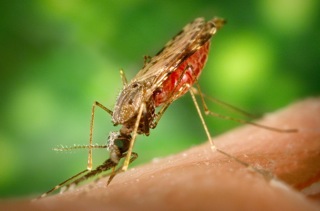
    mosquitoMalaria has long been endemic in Kenya’s humid lowlands and its tropical coast. But in recent decades there has been a spike in the number of malaria epidemics in the East African Highlands—an area where the people living there have little experience with the disease.

    The East African Highlands are high above sea level. Traditionally, the cool breezy climate has been inhospitable to mosquitoes. But in the late 1990s average temperatures in Kenya’s highlands were as much as 4 degrees higher than normal and the incidence of malaria jumped 300 percent. Many experts believe that climate change is fueling this new epidemic.

    Matt Thomas, an entomologist at Penn State University. He believes that temperature plays a key role in the development of malaria parasites in the mosquito, but that it is the daily temperature fluctuations that matter. Understanding these temperature fluctuations will be an important factor in understanding the spread of malaria. He’s studying malaria from the mosquito’s perspective: trying to understand its basic biology so that he can fill in the knowledge gaps of how temperature and environmental change might trigger a malaria epidemic.

    :: Listen on CKUT, 90.3FM ::

    * CKUT’s servers are down. Check back later for the mp3 of the show.