Author: Hannah

  • Dept. of Household Sciences

    Dept. of Household Sciences

    The Last Word on Nothing

    Division of Rubbing and Scrubbing

    On a recent quiet Sunday morning, I resolved to clean the caked-on grime on my stove. A roiling pot of pasta had overflowed one night, and in the rush to get plate to table and food to four-year-old’s mouth, the cloudy starchy water had cured onto the enamel around the burner and now refused to budge. Two earlier attempts to remove the gunk with run-of-the-mill household cleansers had been a waste of time. It was time for the big guns. Mr. Clean’s strong biceps bulged on Magic Eraser packaging, reassuring me that the dense white sponge inside could lift all kinds of dirt off my household surfaces. He did not disappoint.

    The victory lies in the sponge’s structure: Cleaning pads like these are made of melamine resin foam. Up close, it looks like a collection of densely packed exoskeletons left behind by popped bubble creatures. With a little water, the sponge glides over a surface, abrading domestic dross with hard-as-glass resin bones and trapping it inside. I didn’t need Mr. Clean’s pipes for the job, just an open-cell foam and some water.

    There is an entire arm of physics devoted to the science of rubbing and scrubbing–and which has slipped into all aspects of life, including my kitchen. Today, these scientists study friction, lubrication and wear mostly because they’re interested in keeping machines running smoothly, not because they care about my countertops.

    But these ideas have been around for a long time. Early examples of tribology, named from the Greek tribo, meaning “I rub”, trace back some 6,000 years to Mesopotamian villages and hinges they used in their doors.

    [media-credit name=”Sketch of a wall painting from the tomb of Djehutihotep by Sir John Gardner Wilkinson. A person standing on the front of the sledge wets the sand. Source: Wikimedia Commons.” align=”alignleft” width=”256″]Colosse-djéhoutihétep2[/media-credit]

    The most celebrated historical accounts of tribology focus on the physics of lubrication, how to keep two surfaces apart and reduce friction. An Egyptian tomb painting from 2400 BC shows a man pouring liquid from a crock onto the sand in front of the runners of a sledge transporting a hefty statue of Queen Ti to bind the sand grains together and firm up the path. The Chinese used a similar approach to transport huge stones–including one weighing in at 123 tons–on wooden sleds, using water to lubricate ice roads into the Forbidden City in the 1500s.

    Wear is the third edge of the tribology polygon. It goes by other names: polishing, scuffing, and scratching. The Egyptians surely used sand to scrub pots or metal oxides to polish jewellery, but those household sciences weren’t chronicled as prominently (if at all) on the burial chamber walls, I suppose.

    The modern-day equivalent to the Egyptian artwork might well be Andy Warhol’s 1964 Brillo Box sculpture.

    Brillo soap pads were one frustrated man’s answer to an industrial-era problem. During the early 1900s, Philip Brady peddled aluminum pots and other household goods from his buggy from town to town in New England. The pots sold quickly; they sparkled in comparison to the dull, heavy steel pots most women cooked with.

    But soon he was being greeted by angry customers. The aluminum pots blackened over coal-burning stoves and they appeared impossible to clean. Before long, Brady was replacing pots and losing money.

    [media-credit name=”Iron (III) oxide. Source: Wikimedia Commons” align=”alignright” width=”171″]iron oxide for LWON[/media-credit]

    Brady unloaded his problems onto his brother-in-law. Ludwig, a jeweller, had seen his fair share of tarnished metals. Ludwig advised restoring the pots’ sheen with a combination of fine German steel wool, some soap, and jeweller’s rouge–an ultra-fine red abrasive powder of iron oxide.

    Brady packaged the three components and began selling them with the rest of his wares. The parcels moved so quickly that the pair trademarked their creation “Brillo”, meaning shiny, in 1913 with the help of a lawyer named Milton B. Loeb. Loeb went on to launch the Brillo Manufacturing Company and run it for 50 years until it merged with Purex Corporation in 1963.

    [media-credit name=”Trademark for Aluminum-cleaner. Source: US Patent and Trademark Office” align=”alignleft” width=”238″][/media-credit]

    Soap pads intentionally abrade surfaces, removing a thin layer of the material in the process. The aluminum pots shone after being washed with Brillo because the water, soap and steel wool removed the soot, but also because the iron oxide scraped away the jagged imperfect surface into a smoother one that reflected light more uniformly. Your dentist does more or less the same thing to your teeth, using an abrasive rubber cup and a minty-tasting abrasive polishing paste to loosen plaque and smooth the surface of your teeth.

    Tribology wasn’t something I had heard of before I became semi-obsessed with the origins of Brillo. But now I see it everywhere: car oil changes, toothpaste, skin cleaners, the bottom bracket of my bike. And, yes, my sparkling stovetop.

    This story first appeared at The Last Word On Nothing

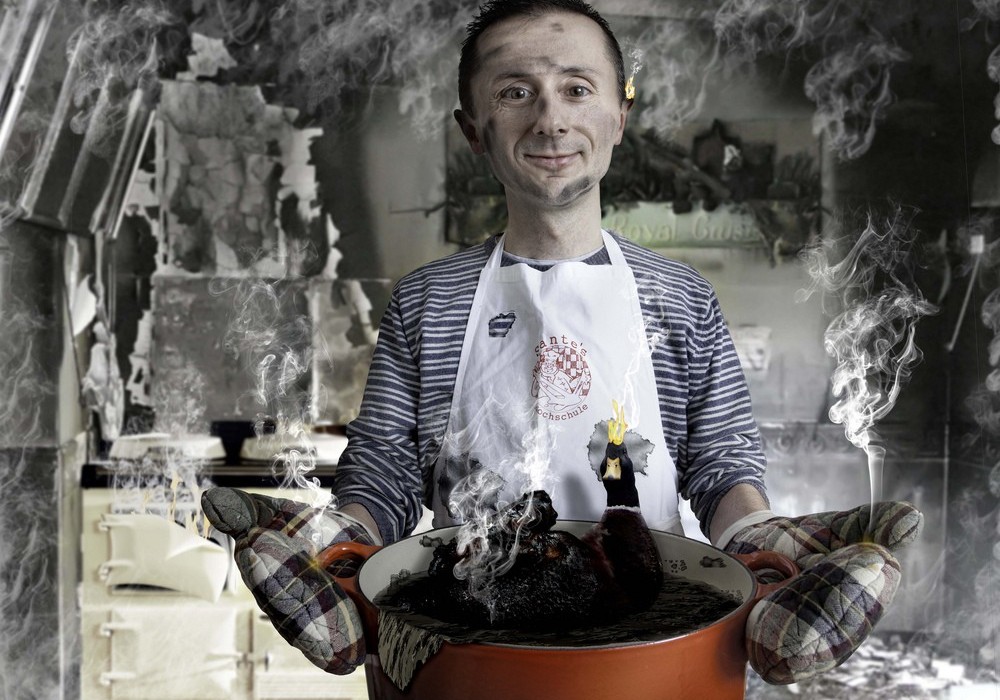
    Header: Cuisine Royale by David Blackwell. Source: Flickr, CC BY-ND 2.0


  • Bird origin for 1918 flu pandemic

    Bird origin for 1918 flu pandemic

    Nature

    Model also links avian influenza strains to deadly horse flu.

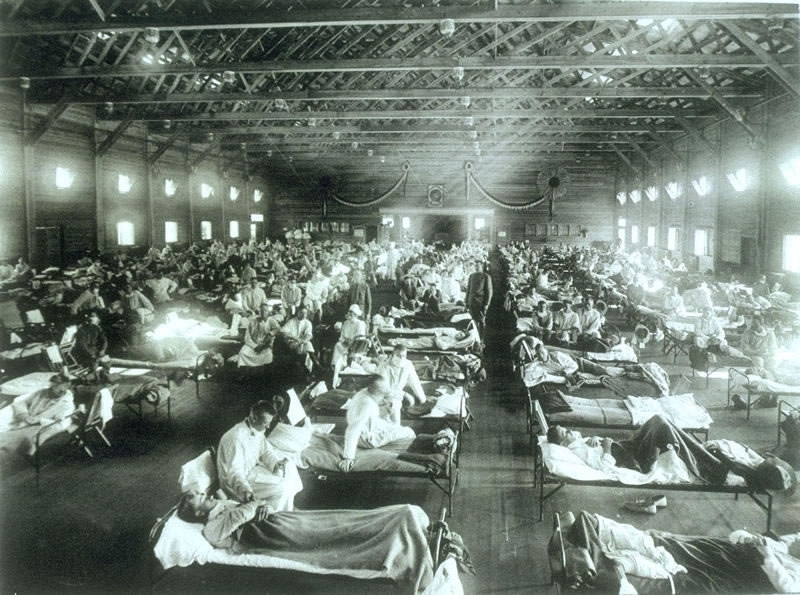
    The virus that caused the 1918 influenza pandemic probably sprang from North American domestic and wild birds, not from the mixing of human and swine viruses. A study published today in Nature reconstructs the origins of influenza A virus and (more…)

  • Caribou genetics reveal shadow of climate change

    Caribou genetics reveal shadow of climate change

    Nature

    Ancient ice ages that shaped modern caribou populations may foretell animals’ fate in a warmer world.

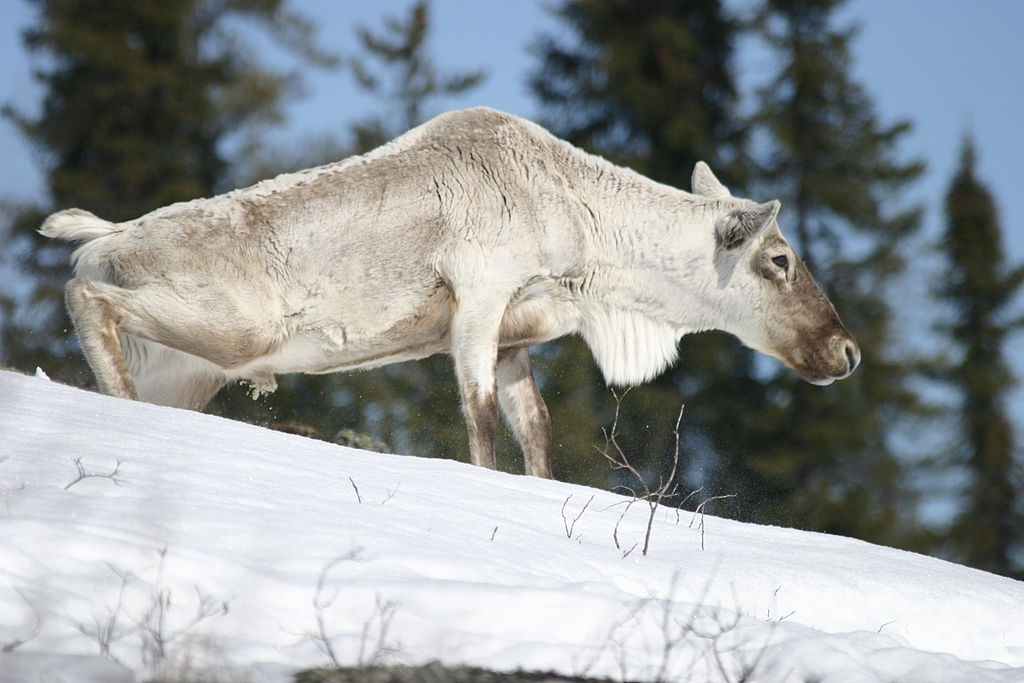
    When ice sheets marched across North America 20,000 years ago during the Last Glacial Maximum, they devoured liveable areas for caribou and isolated them from their Eurasian relatives for thousands of years.

    Now researchers have evidence that such climatic events have sculpted the genetics of North American caribou, which may make the animals unable to adapt to future climate change.

    “Although the past is not a guarantee for the future, it makes me pessimistic about the future of the species,” says Glenn Yannic, a population geneticist at Laval University in Quebec City, Canada, and lead author of a study published today in Nature Climate Change1.

    Major caribou herds around the globe are in decline. Scientists have blamed this on natural resource development and new roads that encroach on caribou habitat, and on changes in climate that put migrating caribou out of sync with spring plant growth, leaving them hungry. Most studies that forecast climate impacts on species look at ecosystems, individual species or populations, but not genetic factors on a global scale, says Yannic.

    Keep reading this story at Nature.

  • A brief history of what made biomedical news this year

    A brief history of what made biomedical news this year

    Nature Medicine

    Biomedical research in 2013 saw some dramatic developments, with unprecedented government action in the US ranging from the budget sequester in the spring to a dramatic government shutdown in autumn. But throughout the year, bright spots in science around the globe continued to dazzle, including multimillion-dollar partnerships to advance drug discovery and the go-ahead for highly anticipated trials of regenerative medicine.

    Read the rest of the story in the December issue of Nature Medicine. (Subscription required)

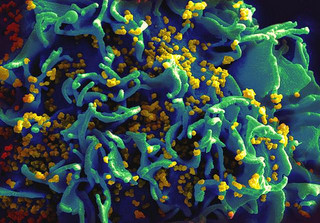
    Image Credit NIAID CC by 2.0. 

  • Lyme bacteria show that evolvability is evolvable

    Lyme bacteria show that evolvability is evolvable

    Nature

    Natural selection favours those with a greater capacity to generate genetic variation.

    Some gamblers succeed by spiriting cards up their sleeves, giving them a wider range of hands to play. So do some bacteria, whose great capacity for genetic variability helps them evolve and adapt to rapidly changing environments.

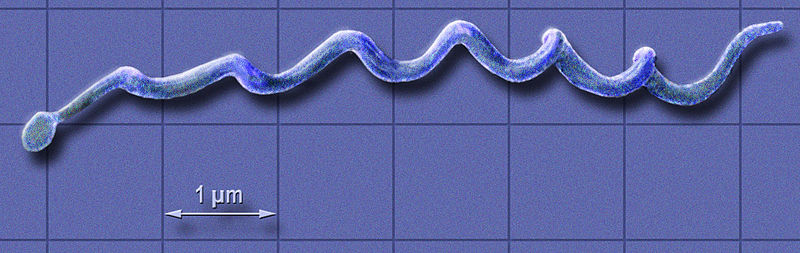
    Now research on Borrelia burgdorferi, the bacterium that causes Lyme disease, shows that the capacity to evolve can itself be the target of natural selection. The results were published today in PLoS Pathogens1.

    “There are other data that suggest that there could be selection on evolvability, but this is the first example where there really aren’t any other confounding answers for the data,” says lead author Dustin Brisson, an evolutionary biologist at the University of Pennsylvania in Philadelphia.

    B. burgfdorferi can cause a chronic infection even if its animal host mounts a strong immune response — evading those defences by  tweaking the shape and expression of its main surface antigen, VIsE. A series of unexpressed genetic sequences organized into ‘cassettes’ recombine with the VIsE gene, changing the resulting protein such that it escapes detection by the host’s immune system.

    “They make a clever case that the variation in these cassettes tells you something about evolvability and the results back up the idea,” says Tim Cooper, an evolutionary biologist at the University of Houston in Texas.

    Continue reading the story in Nature.

    Image by Lamiot via Wikimedia Commons.