Author: Hannah

  • Glimmer of hope for freshwater research site

    Glimmer of hope for freshwater research site

    This story was originally posted on the Nature News Blog. 

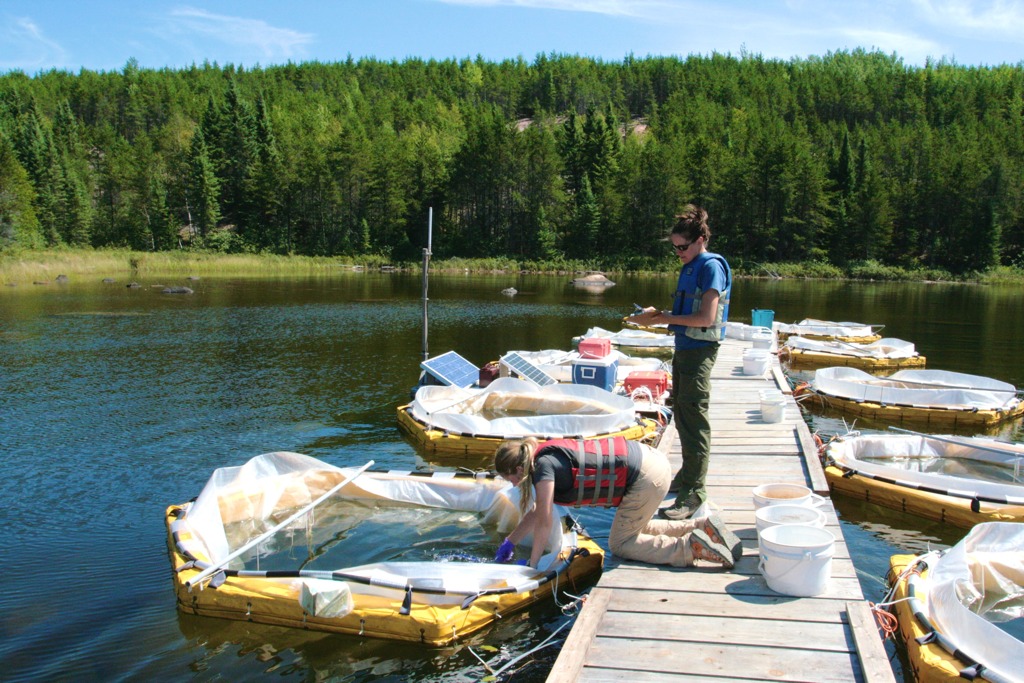
    The government of Ontario, Canada, has stepped in to keep open the Experimental Lakes Area (ELA). The freshwater research facility, located in northern Ontario, was closed in March by the government of Canada, despite protests from scientists.

    Ontario premier Kathleen Wynne announced today that the government of Ontario will provide support to keep the ELA running this year and in the future, as it works to transfer the facility to the International Institute for Sustainable Development (IISD), a United Nations think tank based in Winnipeg, Manitoba.

    “We have had many conversations with members of the public and our scientific and academic communities who want to see the Experimental Lakes Area stay open,” Wynne said in a statement. But the statement did not elaborate on how much money the government has designated for operations, whether the facility will be fully operational this summer or the fate of the long-term climate data set the facility has kept up for 45 years. Meanwhile, the federal government released its own statement today noting that it “has been leading negotiations with third parties”.

    “We remain hopeful that an agreement can be reached and we welcome Ontario’s willingness to play an active role,” reads the statement from Fisheries and Oceans Canada.

    Many university scientists say that they are still not sure whether they will be able to continue their experimental work this summer. Several are sceptical that negotiations will be wrapped up in time for experiments to proceed as planned. “It’s somewhat exciting news, but quite frankly I don’t know what it means for us yet,” says Maggie Xenopoulos, an aquatic biologist at Trent University in Peterborough, Ontario. Xenopoulos and her colleagues had planned to contaminate one of ELA’s lakes with nanosilver this summer and measure its ecological impact.

    A statement from the IISD’s leader offered few specifics about its potential deal with the government of Ontario. “If the ELA does come to IISD, we would work with other stakeholders to ensure it remains an independent, world-class research facility that continues to produce leading-edge freshwater ecosystems science in the public domain and in the public interest,” said Scott Vaughan, the institute’s president and chief executive.

    Vincent St. Louis, a biogeochemist at the University of Alberta in Edmonton, says that the plan “is a good first start”. The plan to close the lake area “has always been baffling from a scientific perspective, given how much it provides at such a low cost,” says St. Louis, who has studied acid rain, reservoir creation and mercury emissions at the ELA — and would like to see scientists use the facility to study the impact of chemicals found in oil sands tailing ponds, such as polyaromatic hydrocarbons, on aquatic biota.

    The federal government announced last May that it would stop funding the facility, which cost about Can$2 million (US$2 million) to operate, and that it would begin a search for a new operator. Federal funding dried up on 31 March, and university scientists who had planned experiments for the summer field season were told that they were not allowed on the site.

  • As millions gather for Kumbh Mela, doctors are watching

    As millions gather for Kumbh Mela, doctors are watching

    When a cholera outbreak gripped a London neighbourhood in 1854, physician John Snow carefully mapped its deaths. The thin bars he traced under each address clustered around a water pump on Broad Street, which turned out to be the source of the bacteria. Snow’s studies of disease patterns won him recognition as the father of modern epidemiology—and crushed the prevailing theory that cholera was spread by bad air.

    Faced with the same challenge today, Snow might use a tablet computer. In mid-January, as the Indian city of Allahabad began ushering in millions of Hindu pilgrims for the religious festival Kumbh Mela, emergency physician and epidemiologist Gregg Greenough settled into a temporary field hospital with his tablet computer. He and his team from the Harvard School of Public Health were on the lookout for signs of influenza, tuberculosis, cholera and other diarrheal diseases. The plan is to record the temporary residence of each pilgrim admitted to hospital and plot it on a digital map that geolocates the festival’s toilets and drinking water. “We’re helping them digitize the data and analyze it in real time,” says Greenough. “It should help keep the pulse of the community and see if anything is emerging so they can act on it quickly.”

    CONTINUE…

  • Air pollution delivers smaller babies

    Air pollution delivers smaller babies

    Study of 3 million infants suggests connection between inhaled particles and birth weight.

    Pregnant women who have been exposed to higher levels of some types of air pollution are slightly more likely to give birth to underweight babies, a large international study has found. The results are published online today inEnvironmental Health Perspectives1.

    Low birth weight — defined as a newborn baby weighing less than 2.5 kilogrammes — increases the risk of infant mortality and childhood diseases, and has been associated with developmental and health problems later in life, including diabetes and cardiovascular disease.

    Previous studies have looked at whether exposure to tiny airborne particles during pregnancy leads to more low-birth-weight babies. Although many studies have found links, others have failed to establish a connection.

    “The thorn in the side of many studies of air-pollution exposure and impact on fetal growth has been the variability in study design and in exposure assessment,” says Leonardo Trasande, a children’s environmental-health researcher at New York University in New York city. “This one does a tremendous service by making them very comparable.”

    Read more.

  • A universal problem

    A universal problem

    Recent headlines have promised that a ‘universal flu vaccine’ may be within reach, pointing to antibodies that offer broad protection in animal studies. But the scientists behind this effort had to first overcome great skepticism from their peers—as well as an imperfect laboratory test. Hannah Hoag reports on one virologist’s 20-year effort to challenge the tenets of the field.

    Influenza is the Lady Gaga of viruses: it reinvents itself each year, often in unexpected ways. But the flu virus is far more dangerous than an infectious tune. Although the flu usually manifests as a mild illness, the virus kills as many as 500,000 people worldwide each year, and it continues to provide a challenge from a vaccination standpoint. Whereas most vaccines for illnesses such as measles or polio offer years or decades of protection, influenza vaccines tend to work for only one season. The relentless refashioning means new influenza vaccines must be routinely reformulated, all at a cost to consumers and global health systems of more than $4 billion each year.

    A new type of vaccine could be on the way. In the past few years, a flurry of papers has provided firm evidence of antibodies capable of neutralizing multiple subtypes of the influenza virus. Immunologists say that isolating such antibodies is the first step toward the creation of a universal influenza vaccine that protects against seasonal flu year after year—and possibly prevents hundreds of millions of deaths when the next influenza pandemic sweeps across the globe. Several such universal flu vaccines are already in early human clinical testing. But convincing the biology community of the existence and potential of such antibodies was an uphill battle, and one complicated by a ‘gold standard’ test that masked the key findings.

    Yoshinobu Okuno, who has chased the dream of a universal antibody against flu since 1989, knows these challenges well. Okuno, a virologist at Osaka University in Japan, is now viewed by many experts in the field as an important and early champion of the idea. Yet his discovery two decades ago of a broad-acting antibody called C179 didn’t make waves at the time. “People didn’t pay attention to it,” says Ian Wilson, a structural biologist at the Scripps Research Institute in La Jolla, California. “In those days, most people weren’t thinking about broadly neutralizing antibodies that you could develop for flu.”

    The very test that prompted Okuno to look for these special antibodies—a tool known as the hemagglutination inhibition assay—tripped up the efforts of others in the field. In hindsight, the fault in the assay provides a cautionary tale of how the shortcomings of a test can mean that biomedical researchers miss what they are not looking for.

    Continue reading this story at Nature Medicine.

  • These Young Leaders Are Influencing the Future of the North

    These Young Leaders Are Influencing the Future of the North

    Arctic Deeply

    These are the people who stand apart when it comes to improving education, fighting climate change, boosting international collaboration and revitalizing Indigenous culture in the Arctic. (more…)