Category: climate science

  • The hornet has landed: Scientists combat new honeybee killer in US

    The hornet has landed: Scientists combat new honeybee killer in US

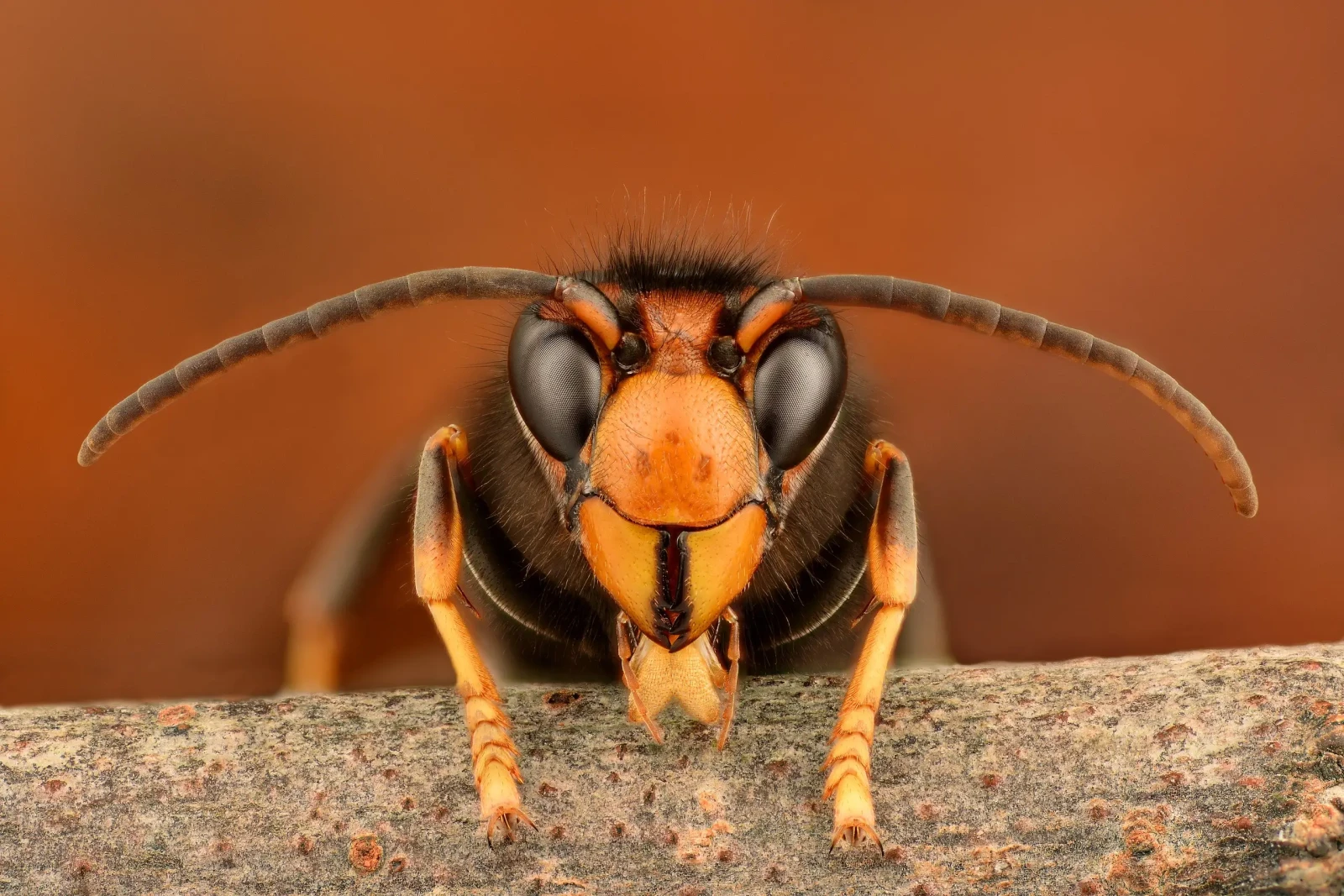
    Credit: Gilles San Martin, CC BY-SA 2.0

    KNOWABLE MAGAZINE

    An invasive yellow-legged wasp has been decimating beehives in Europe — and bedeviling Georgia since last summer. Researchers are working nest by nest to limit the threat while developing better eradication methods.

    In early August 2023, a beekeeper near the port of Savannah, Georgia, noticed some odd activity around his hives. Something was hunting his honeybees. It was a flying insect bigger than a yellowjacket, mostly black with bright yellow legs. The creature would hover at the hive entrance, capture a honeybee in flight and butcher it before darting off with the bee’s thorax, the meatiest bit.

    “He’d only been keeping bees since March … but he knew enough to know that something wasn’t right with this thing,” says Lewis Bartlett, an evolutionary ecologist and honeybee expert at the University of Georgia, who helped to investigate. Bartlett had seen these honeybee hunters before, during his PhD studies in England a decade earlier. The dreaded yellow-legged hornet had arrived in North America.

    With origins in Afghanistan, eastern China and Indonesia, the yellow-legged hornet, Vespa velutina, has expanded during the last two decades into South Korea, Japan and Europe. When the hornet invades new territory, it preys on honeybees, bumblebees and other vulnerable insects. One yellow-legged hornet can kill up to dozens of honeybees in a single day. It can decimate colonies through intimidation by deterring honeybees from foraging. “They’re not to be messed with,” says honeybee researcher Gard Otis, professor emeritus at the University of Guelph in Canada.

    The yellow-legged hornet is so destructive that it was the first insect to land on the European Union’s blacklist of invasive species. In Portugal, honey production in some regions of the country has slumped by more than 35 percent since the hornet’s arrival. French beekeepers have reported 30 percent to 80 percent of honeybee coloniesexterminated in some locales, costing the French economy an estimated $33 million annually.

    All that destruction may be linked to a single, multi-mated queen that arrived at the port of Bordeaux, France, in a shipment of bonsai pots from China before 2004. During her first spring, she established a nest, reared workers and laid eggs. By fall, hundreds of new mated queens likely exited and found overwintering sites, restarting the cycle in the spring. The hornet’s fortitude — it is the Diana Nyad of invasive social wasps — allowed it to surge across France’s borders into Spain, Portugal, Italy, Belgium, Germany, the Netherlands, the United Kingdom and Switzerland in only two decades, hurtling onward by as much as 100 kilometers a year.

    Suspected stowaway

    As the hornet fanned out across Europe, scientists in North America wondered when it might arrive on their side of the Atlantic. Queens sometimes overwinter in crates and containers, allowing them to stow away on ships and be transported long distances. In 2013, researchers cautioned that a yellow-legged hornet invasion at any one point along the US East Coast would have the potential to spread across the country.

    After the first sighting last summer, Georgia’s agricultural commissioner urged people to report hornets and nests, and warned that the yellow-legged hornet could threaten the state’s $73-billion agriculture industry. American farmers grow more than 100 different crops, including apples, blueberries and watermelons, that depend on pollinators. Georgia mass-produces honeybees and ships them north to jumpstart spring crops, like Maine blueberries, before local pollinators have awakened.

    Less than two weeks after the first hornet was spotted, scientists found a nest in a tree, 25 meters off the ground. In a night operation, while the hornets idled, a tree surgeon climbed to the nest, sprayed it with insecticide, and cut it down. Just a quarter of the full nest was the size of a human torso, and the Georgia Department of Agriculture displayed a chunk, still wrapped around the branch, at a press conference — warning that this was larger than those seen in Europe.

    “Savannah, Georgia, is primo climate for these guys,” says Otis. It’s a lush, subtropical paradise, giving the insect a long growing season — and a rich hunting ground.

    For the next several months, Bartlett helped the state agricultural researchers set traps and follow individual hornets to find other nests. By the end of 2023, they’d removed four more. “We think we’ve discovered them at a very early stage, which is why pursuing eradication is very, very plausible,” Bartlett said in November. If not, Georgia and its neighbors could get caught in an endless — and costly — game of whack-a-mole.

    Social wasps: Invasive global predators

    The yellow-legged hornet and other social wasps, like the common yellowjacket, the German yellowjacket and the western yellowjacket, have successfully invaded every continent except Antarctica. They’ve been introduced to new areas by global trade, sometimes more than once over several decades.

    The hornets live in colonies of individuals organized into groups that divvy up the labor of reproduction, foraging and caregiving. These behaviors, and the insects’ nearly omnivorous appetites, make them among the most successful invaders of new habitats and fiercest aggressors of native fauna. In their endemic ranges, these wasps are eaten by skunks, squirrels or bears, or snagged in flight by kingbirds and tanagers, or attacked by other predatory wasps. But in the absence of predators, their toll can be enormous.

    In New Zealand’s Nelson Lakes National Park, the beech forests are thick with invasive yellowjackets by early autumn. They sip the sugary secretions of scale insects living on the trees, and will fight the bellbirds, tui, silvereyes and other birds for it, even slaughtering nest-bound chicks. The densities of the yellowjacket nests — up to 40 nests per hectare and 370 wasps per square-meter of tree trunk — are among the world’s highest.

    “When you walk through the forest, you should smell the sweetness of the honeydew and hear the birds,” says invasive species biologist Phil Lester of Te Herenga Waka—Victoria University of Wellington, coauthor of a review of management strategies for invasive social wasps in the 2019 Annual Review of Entomology. “But with the wasp, you don’t hear the birdsong, you don’t smell the honeydew.”

    In Hawaii, the western yellowjacket has had dramatic impacts on the island ecosystem. Genetic studies show that the original population came from the Pacific Northwest or Northern California, possibly in a shipment of Christmas trees. It hunts native bees and drains the nectar from the wispy red flowers of the ‘ōhi’a lehua tree, stealing food from other pollinators and curtailing seed production.

    “They eat everything,” says ecologist Erin Wilson-Rankin of the University of California, Riverside, who has been studying invasive social wasps for nearly 20 years. “They don’t specialize. They’ll eat caterpillars, aphids, flies, the whole gamut of arthropods.”

    Controversial tools

    People have tried just about everything to get rid of wasps: fire, boiling water, electricity, traps, poison and brute force. While many poisons do work, they can also harm native insects and other animals. New Zealand has suppressed yellowjacket populations in highly trafficked areas with a selective poison bait called Vespex, but they reinvade elsewhere.

    Nest destruction can kill hundreds of wasps at once, but it’s dangerous: Yellowjackets can squirt venom into an attacker’s eyes, and stings can be painful or life-threatening. Reiner Jahn, a hornet-buster and research assistant for a local landscape conservation association in Germany, describes the pain of a yellow-legged hornet sting as “digging a hot rusty knife into your flesh.”

    Another approach to managing invasive species is biological control: A different species, often a natural enemy, is transplanted into the ecosystem to take on the role of contract killer. It can do the trick, but the long history of this strategy going awry (think harlequin ladybirds, cannibal snails, small Asian mongoose, cane toads) gives pause.

    Cajoling foreign predators to take root in new places is another bother. In New Zealand, for example, the government recently approved the release of a non-native hoverfly and beetle to target invasive wasps. In Europe, both species hitch a ride into the hornet nests, feasting on the juvenile hornet grubs and decimating the next generation. But the imported insect predators had to have their seasonal cycles flipped before they could be released in the Southern Hemisphere. After some setbacks, scientists released about 20 hoverflies into the wild on the northern end of the South Island in mid-May.

    Lester has other ideas: Silencing some of the wasps’ essential genes could reverse their spread. A handful of genetic control technologies are being tested globally to target invasive or harmful insects. For example, the biotechnology company Oxitec aims to combat the spread of dengue and other mosquito-borne diseases by releasing gene-edited male mosquitoes that produce female offspring that die young. (It’s the females that bite and spread disease.) Other researchers are using CRISPR gene editing on a range of agricultural pests to reduce pesticide use and save crops.

    In 2020, an international group of researchers, including Lester and Wilson-Rankin, sequenced the genomes of three invasive social wasps: the common yellowjacket, the German yellowjacket and the western yellowjacket. Lester then zeroed in on a gene called ocnus that’s involved in sperm development, with the goal of making sterile males.

    Like many insect pests, common yellowjackets are haplodiploid, which means that fertilized eggs become female wasps (with two copies of each chromosome) and unfertilized eggs produce males (with only one copy of each chromosome). If a queen mates with a sterile male, the eggs laid would produce only male wasps. Without female worker wasps, the nest would fail. But Lester’s modeling has shown that it would take decades for the mutation to spread across the South Island wasp population. So he continues to look for new genetic targets that might snuff out New Zealand’s invasive wasps more quickly.

    Many people are unsettled by the idea of releasing genetically modified organisms into the wild, even if it’s to save native species, but the approach carries advantages. The impact would be precise; it wouldn’t poison other animals or insects. It would disperse over large distances and into remote areas. It would also be self-perpetuating, so people wouldn’t have to climb long ladders in protective suits to cut down enormous nests full of angry wasps.

    Nest busting

    On a hot afternoon in mid-September, Jahn, the German hornet-buster, pulls up to the Metropolitan International School in Viernheim, an industrial town east of the Rhine River. Kids run and jump in the playground, until a teacher ushers them away. High in a tree overhanging the soccer field is a caramel-colored, beach-ball-sized yellow-legged hornet’s nest.

    “The kids can’t play soccer. I had to close the field because it is too dangerous,” says Oliver Wagner, the school’s facility manager.

    A whiff of revenge hangs in the air as Jahn and his crew set up. Each is a beekeeper who has lost colonies to yellow-legged hornets, or knows someone who has. Jahn extends a telescopic pole fitted with a spray nozzle into the branches. He jabs the nest and blows in a fine powder called diatomaceous earth as chunks of the nest tumble to the ground. Hornets stream out like the air escaping from a punctured balloon.

    Dusted with the white powder and unable to fly, the inch-long yellow-legged hornets wander through the grass and across the tarp. The crew picks through the nest debris and they tweeze the larger hornets into specimen bottles. When a nest is attacked — whether by a predator or a human — the queen may try to escape, Jahn explains. Find her, and the work is done. This time, she’s unaccounted for.

    The trick to stopping a yellow-legged hornet invasion is to find the nests and destroy them before hundreds of new queens fly out in the fall to establish their own nests. EU member states must, by law, control the hornet’s spread, but Germany has strict rules that protect pollinator and native insects and limit what beekeepers and hornet-busters can do. Diatomaceous earth, often used in homes to kill cockroaches and centipedes, has become Jahn’s go-to solution. It sticks to the hornet’s exoskeletons and dries them out but doesn’t spread to other insects.

    In all of 2023, Jahn destroyed 160 yellow-legged hornet’s nests in his home state of Hesse and 80 in a neighboring state, most brought to his attention by beekeepers. After a few years of nest-busting, he’s given up beekeeping (there’s no more time) and he no longer believes that the yellow-legged hornet can be eradicated in Germany — the country may have waited too long to start removing nests. Still, he says, “it’s easier to do something now than wait until next year.” But by mid-May this year, he’d already fielded calls for 19 new nests, compared with only two by late May last year.

    Back in Georgia, Bartlett has tracked down the source of the captured yellow-legged hornets. His genetic analysis shows that a single queen arrived from southern China, the Korean peninsula or Japan in late 2022. He believes the hornets captured last year were the first American-born generation founded by the stowaway queen. Now, the second-generation has emerged. “We have been finding queens a little further out than we had hoped. But nothing near the distances they see in Europe,” says Bartlett. As of the end of April, the state had trapped and destroyed 21 queens.

    Bartlett sees the work as his duty to protect the beekeeping industry, but his hope is that the hornet won’t define his scientific career. Still, he knows he can’t relent. “If we don’t get rid of them, there is very little chance that I’m not going to become the yellow-legged hornet expert in the US.”

  • On this Social Network, Sea Ice, Traditional Foods, and Wildlife Are Always Trending

    On this Social Network, Sea Ice, Traditional Foods, and Wildlife Are Always Trending

    Using an app developed by Inuit in Nunavut, Indigenous communities from Alaska to Greenland are harnessing data to make their own decisions.

    HAKAI MAGAZINE

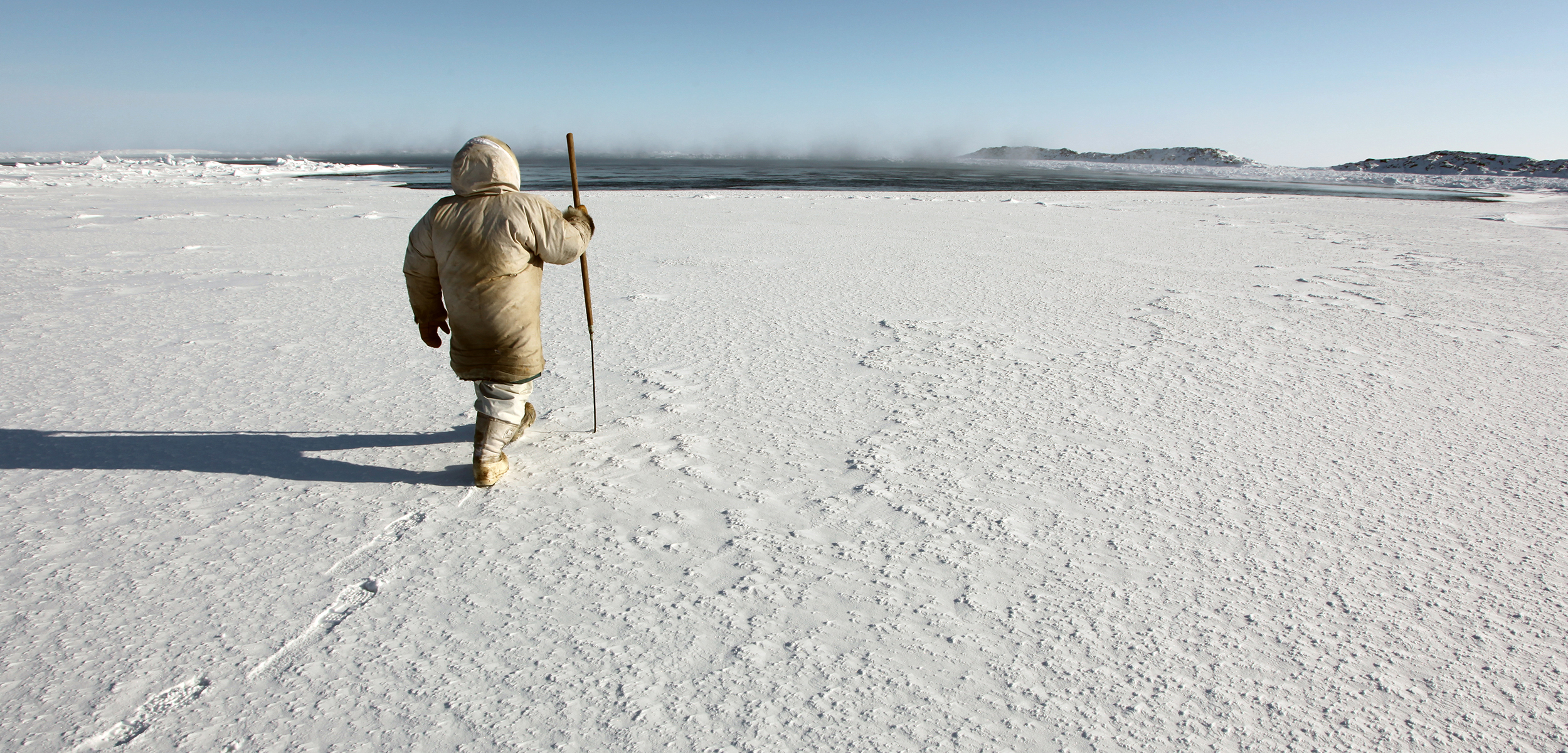
    Few social networking platforms are known for inspiring positive social change these days, but an Inuit-developed app is helping Indigenous communities from Alaska to Greenland advance their self-determination. Named SIKU after the Inuktitut word for “sea ice,” the app allows communities in the North to pull together traditional knowledge and scientific data to track changes in the environment, keep tabs on local wild foods, and make decisions about how to manage wildlife—all while controlling how the information is shared.

    A group of Inuit elders and hunters from Sanikiluaq, Nunavut, came up with the idea for SIKU more than a decade ago to document and understand the changing sea ice they were witnessing in southeastern Hudson Bay. The group turned to the local nonprofit Arctic Eider Society to develop a web-based platform where hunters in nearby coastal communities could upload photos and videos and share knowledge. Contributors began using the portal in 2015 to log water temperature and salinity data, note observations of important wildlife species—such as beluga and common eider ducks—and track the flow of contaminants through the food web.

    Over the years, SIKU has evolved, and recently, the elders saw that the platform could help address a familiar challenge: sharing knowledge with younger people who often have their noses in their phones. In 2019, SIKU relaunched as a full-fledged social network—a platform where members can post photos and notes about wildlife sightings, hunts, sea ice conditions, and more. The app operates in multiple languages, such as Inuktitut, Cree, Innu, and Greenlandic, and includes maps with traditional place names. Since early 2024, over 25,000 people from at least 120 communities have made more than 75,000 posts on SIKU.

    Members’ photos demonstrate the breadth and bounty of northern foods: They show plump bags of berries sitting on the tundra, clusters of sea urchins nestled on smooth gray stones, and boxes of fresh Arctic char placed in the snow. They depict harp sealsringed seals, ptarmigan, beluga, common eider, and neat rows of colorful eggs laid out next to smiling kids. The posts tell stories of hunting and traveling, the impacts of climate change and industrial activity, and the migrations, diets, and illnesses of local animals. In effect, SIKU captures everyday Indigenous life in a rapidly changing landscape.

    Keep reading this article at Hakai Magazine.

  • As Canada’s boreal forests burn again and again, they won’t grow back the same way

    As Canada’s boreal forests burn again and again, they won’t grow back the same way

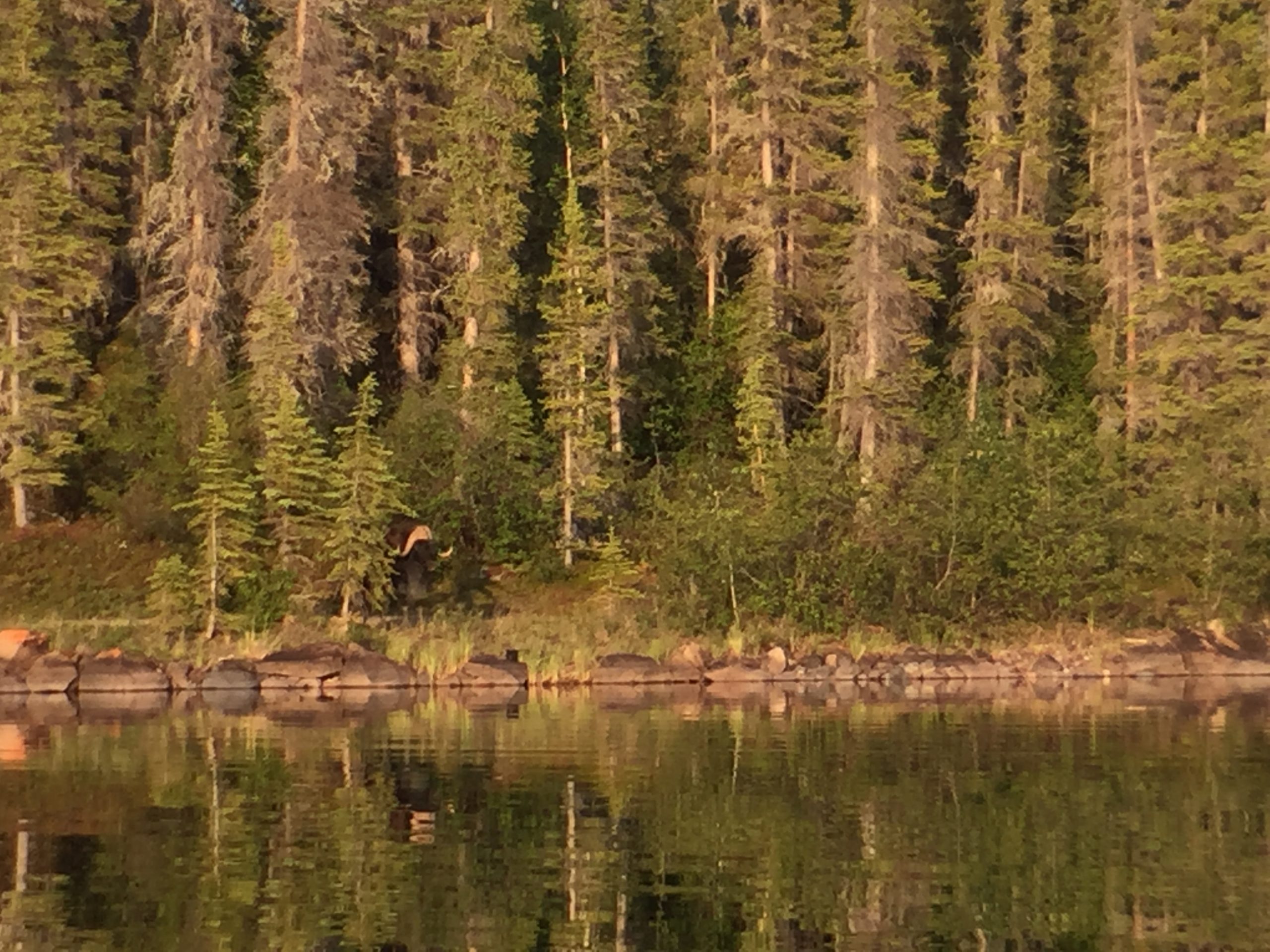
    Boreal forest. Credit: dvs from Vermont, USA, CC BY 2.0 , via Wikimedia Commons

    THE GLOBE AND MAIL

    In 2015, Ellen Whitman bushwhacked her way through a section of boreal forest in the southern Northwest Territories, near Fort Smith, and stepped into an open landscape, dotted with leafy trees. The area had once been thick with white spruce and some jack pine, but instead, Dr. Whitman saw trembling aspens surrounded by grassland.

    “It was almost like a savannah,” said Dr. Whitman, who is a forest-fire research scientist at Natural Resources Canada in Edmonton. “It was a big change.”

    Two fires had torn through the area less than 15 years apart. The first one burned the dense coniferous forest of older trees. The second killed off the young conifers that had sprouted after the first fire. The interval between the fires was too short for the trees to produce mature seeds and regenerate the forest on their own, allowing grasses, shrubs and deciduous trees to take root instead.

    It’s a shift that threatens to recur across Canada’s boreal forest. As wildfires increase in size, severity and frequency, against a backdrop of warmer temperatures and persistent drought, the boreal is beginning to give way to birch, aspen, shrubs and grasses.

    Wildfires have burned a staggering 15.4 million hectares so far this year, an area roughly the size of lakes Superior and Michigan combined. It is by far the worst wildfire season on record in Canada, where in an average year 2.1 million hectares burn.

    Historically, wildfire has been an important element in renewing the boreal. It clears out dead trees and other dry fuels and creates the conditions for fire-adapted tree species such as black spruce to distribute seeds and grow a new forest that resembles past ones. Wildfire also temporarily reshapes the forest for birds and other animals, creating open spaces for flycatchers and other insect eaters, and leaving behind dead trees that become larvae buffets for woodpeckers.

    But drought and warmer temperatures because of climate change have created hot and dry conditions that are causing fires to ignite more easily, grow larger and spread faster. Those changes to the fire regime are driving long-lasting shifts in the boreal.

    “Our forests are going to change,” said Jill Harvey, the Canada Research Chair in Fire Ecology at Thompson Rivers University in Kamloops, who studies repeat wildfires, historical fire regimes, drought and regeneration.

    “Forests need time to recover following wildfires. They need years for trees to germinate and time for trees to grow. … With drier conditions and more wildfires, we will see change in our forests, their structure and their function.”

    Read the rest of the story at The Globe and Mail.

  • Climate change is making forest fire season longer, more extreme

    Climate change is making forest fire season longer, more extreme

    Wildfire smoke from Quebec blankets New York City on June 7, 2023. (Anthony Quintano, CC BY 2.0, via Wikimedia Commons.)

    “How’s the smoke in Ottawa?” I texted my friend early Wednesday morning. Toronto smelled like yesterday’s campfire and the sky had a golden glow to it, but the haze had thinned.

    “It’s so bad,” came the response. “Climate anxiety is at an all-time high. It feels apocalyptic.”

    Ottawa’s Air Quality Health Index, a measure of the health risk floating by on the breeze at a given hour, was off the charts at 6 a.m., measuring 28 out of 10. Local hospitals were already seeing a surge in patients.

    It’s hard to ignore climate change when it’s scratching the back of your throat and making it hard to breathe.

    In Toronto, the arrival of summer isn’t usually marked by hazy mornings, air quality warnings and cancelled outdoor children’s programs. The AQHI has been around for nearly a decade, but many of us have hardly used it. In the years to come, smoky days may become normal as human-caused climate change worsens wildfires across the country and makes them harder to control.

    Quebec wildfires

    The smoke spreading through eastern Ontario was coming from Quebec, where 149 active fires were burning as of Wednesday afternoon, mostly out of control. Federal officials counted 414 blazes across the country, with 239 raging uncontrollably.

    In Canada, the wildfire season typically spans April to October and peaks in July. On average, more than 8,000 fires occur annually, burning about 2.1 million hectares across the country. This year, more than 3.8 million hectares of forest have already been torched.

    … continue reading at the Toronto Star.

  • In Canada’s boreal forest, a new national park faces the wrongs of the past — and guards our climate future

    In Canada’s boreal forest, a new national park faces the wrongs of the past — and guards our climate future

    AUDUBON

    James Marlowe zips along the glassy lake surface of the water in his aluminum fishing boat, and the town of Łutsël K’é quickly falls from sight. We stay close to the shoreline, avoiding hidden reefs, and steer straight for his net. It’s closing in on midnight, but Great Slave Lake—the deepest lake in North America and the 10th largest in the world—is flashing with fish and the tree-covered hills are aglow in the setting summer sun. Marlowe cuts the motor and begins hauling in the 150-foot net hand-over-hand.

    Splop! The first fish lands in a large plastic bin. Splop! Splop! Marlowe moves along the net, plucking whitefish from its mesh. With some effort, he untangles a 30-pound trout and heaves the rare find into the bin. “Oh, there are still more fish! It’s not going to stop, man,” he says with a laugh.

    Since he was a teen, Marlowe has hunted, trapped, and fished these wilds for caribou, moose, ducks, whitefish, and lake trout. Like his neighbors and ancestors of the Łutsël K’é Dene First Nation, he’s followed traplines that meander from the forest to  tundra and strung nets under the lake ice to harvest food. “We depend on the land and the water for survival,” says Marlowe. “It’s like our grocery store.”

    In the early 1990s, however, diamond mining and mineral exploration in Canada’s Northwest Territories began to threaten this tradition of living off the land. The mines produced some jobs and revenue for the community, but they also caused problems. The industry’s high interest in the area concerned the elders, who then directed Marlowe’s generation to find a way to protect the land, water, and animals for their own children—and for the survival of the Dene culture, language, and way of life.

    After more than 15 years of discussion, the Łutsël K’é Dene First Nation has now signed a landmark agreement with the governments of Canada and the Northwest Territories to form a massive new protected area called Thaidene Nëné, or “Land of the Ancestors.” Almost twice as large as the Grand Canyon, Yosemite, and Yellowstone national parks combined, Thaidene Nëné encompasses more than 6.4 million acres, stretching from the easternmost tip of Great Slave Lake northeast toward the Arctic territory of Nunavut. It spans the boreal forest and its transition to the heath-dominated tundra, making it one of the only protected areas in Canada to straddle the tree line—an important bridge for plants and animals that may migrate as the climate changes.

    .::. Read more at Audubon Magazine.