Category: climate science

  • Butterflies in the storm

    Butterflies in the storm

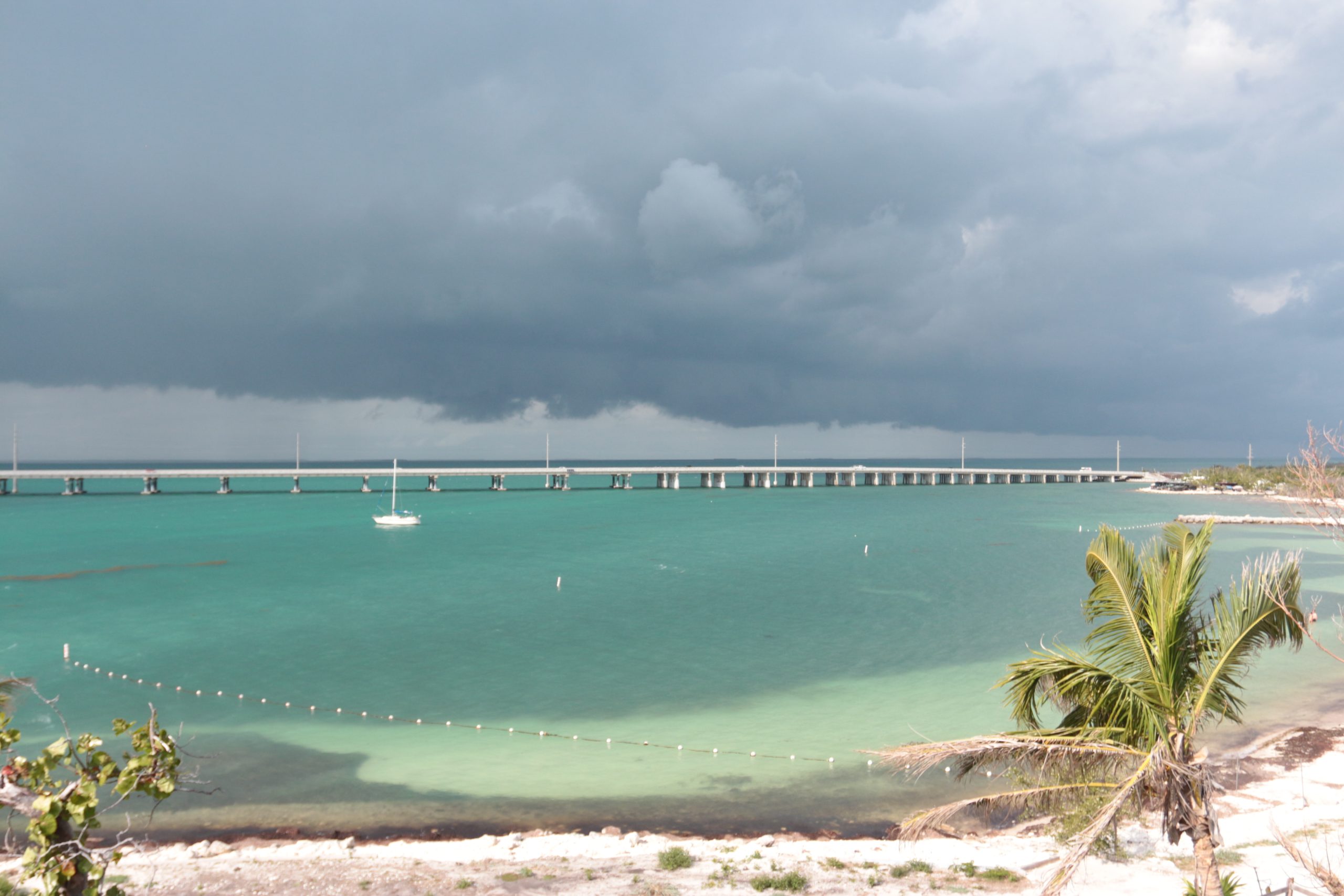
    As Hurricane Irma was bearing down on the Florida Keys last September, Erica Henry was watching from Raleigh, North Carolina. Henry, an ecologist, had packed up and left the Keys at the start of hurricane season and was supposed to be working on her doctoral thesis. But instead of writing code for a butterfly population model, she was checking and re-checking the hurricane’s projected path and posting anxious updates to Twitter.

    For six years, Henry had been studying some of the rarest endangered butterflies in North America, and she feared the storm seething through the Atlantic might gobble them up for good. “We always talk about how one hurricane could be the end of them,” said Henry. The day Irma slammed into the Keys, Henry approached one of the members of her advisory committee with a question: “What happens if one of your study species goes extinct during your dissertation?”

    Of the 25 native butterflies on the U.S. endangered species list, four reside in Florida. Henry is studying two of them, the Miami blue (Cyclargus thomasi bethunebakeri) and Bartram’s scrub hairstreak (Strymon acis bartrami). A former ski bum who wearied of waiting tables, Henry now copes with south Florida’s blistering sun, thorny bushes, and infinite mosquitoes in an effort to grasp what helps these butterflies thrive—and what might stave off their demise.

    For decades, efforts to save the world’s rarest butterflies have come up short. Many species have only become rarer—or extinct—sometimes after scientists and conservationists adopted seemingly cautious interventions that turned dire. Nick Haddad, Henry’s supervisor, likes to tell a story about the large blue butterfly (Maculinea arion eutyphron). First recorded in 1795, it became extinct in the British Isles in 1979.

    More than a hundred years ago, conservationists erected fences around fields that housed the disappearing butterfly to keep out both butterfly hunters and cattle. But it turned out grazers were key to the butterfly’s survival, keeping grasses short so that ants could squirrel the caterpillars below ground for 10 months until the butterflies emerged. (Butterfly larvae look remarkably like ant larvae, so the ants carry them into their nests where the butterfly larvae feast on developing ants.) Over time, the fields became overgrown, the soil temperature dropped, and other ant species with no interest in the large blue moved in.

    Fencing off the fields “was exactly the wrong thing to do,” said Haddad, an ecologist at Michigan State University who studies wildlife corridors, butterflies, and bees. “The very acts of conservation were dooming butterflies.” Another large blue subspecies from Sweden has since been introduced in the UK—and cattle munching on grasses have contributed to their success.

    Now, after watching endangered butterfly populations dwindle and sometimes wink out, butterfly ecologists are finally getting a handle on what it takes to give a rare butterfly a leg up. Farming, urbanization, and forestry have carved up habitat, wiped out key plant species, and squelched natural disturbances like fire, flooding, and grazing, that help keep butterflies alive. And when isolated fragments of rare habitat sit adjacent to homes or schools—or on the edge of rapidly rising seas—the extinction risk only grows. Ecologists have discovered that by re-introducing this natural disturbance, often in combination with captive breeding programs, they can set butterflies on track to recovery.

    .::. Keep reading at bioGraphic.

  • With warming temperatures, Canada’s Arctic glaciers are melting faster

    With warming temperatures, Canada’s Arctic glaciers are melting faster

    Researchers in two separate studies documented dramatic changes beginning in the 1990s after decades of stability.

    Most of Canada’s Arctic glaciers are shrinking — and some are already gone.

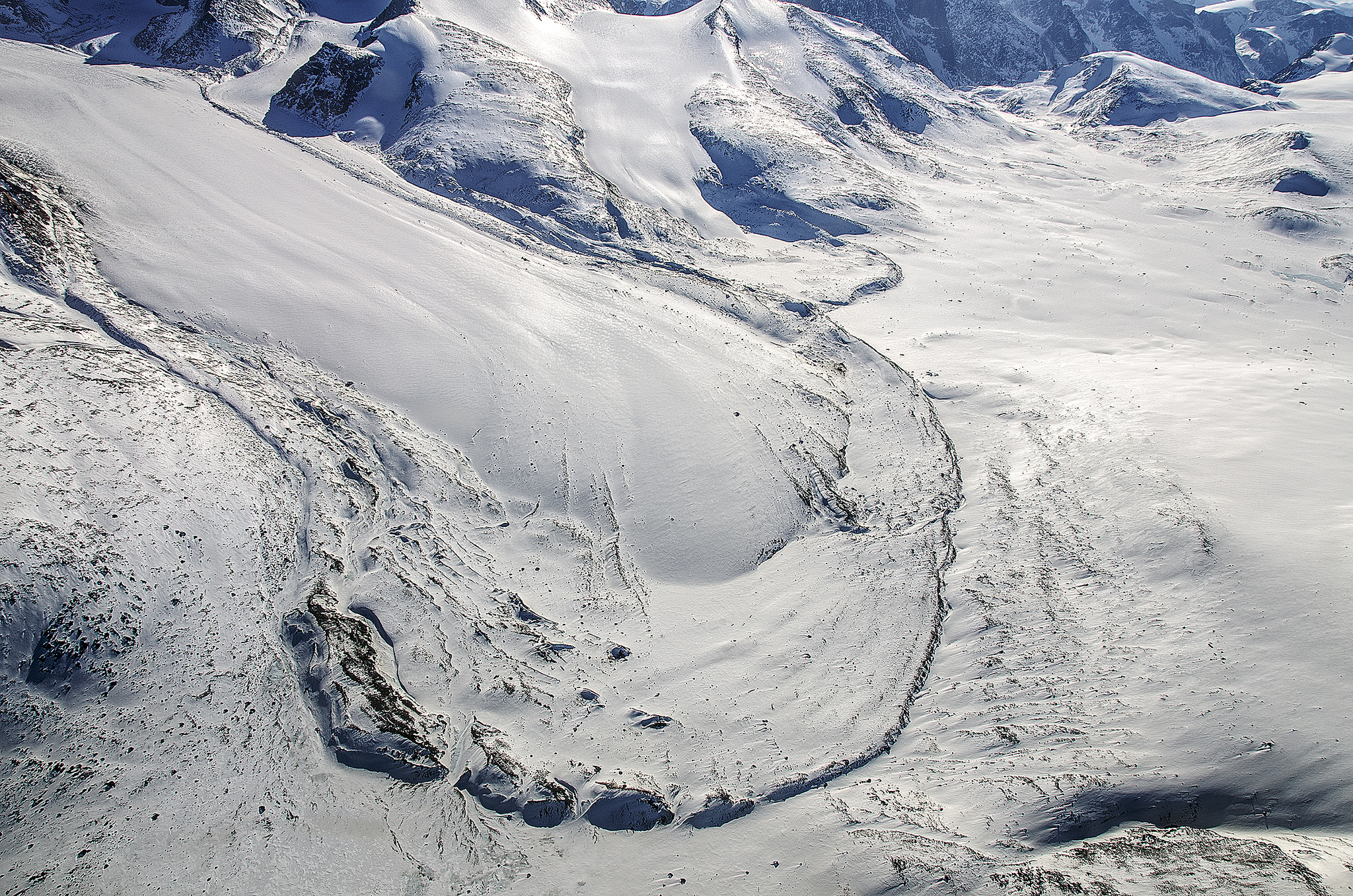
    A survey of 1,773 glaciers across northern Ellesmere Island in Nunavut, Canada has found more than three-quarters had lost area between 1999 and 2015. Overall, the glaciers lost about six percent of their total ice coverage, the equivalent of 1,705 square kilometers (658 square miles).

    Adrienne White, from the Laboratory of Cryospheric Research University of Ottawa, and her colleagues used optical satellite imagery to inventory and measure the area of the glaciers on Canada’s northernmost island.

    Over the past 16 years, the area of 150 glaciers had shrunk by half or more. Two ice shelves had melted and 19 glaciers with floating ice tongues had retreated to their grounding lines and now ended at the ocean. Five glaciers had been lost entirely.

    A rise in air temperature has contributed to the glacier melt, said White.

    On average, temperatures in the region have increased 0.5 degrees Celsius (0.9 degrees Fahrenheit) per decade since the 1940s. But there was a strong shift in the mid-1990s, when the mean annual temperature increase accelerated to 0.74C (1.3F) per decade from 0.12C (0.22F). The average summer air temperature shifted to above freezing from below freezing since 2000, said White.

    “The biggest percent per decade changes occurred on short and small glaciers at low elevation,” said White, who presented the work at the Polar 2018 Open Science Conference in Davos, Switzerland, in June. The study was published in the Journal of Glaciology on June 27.

    .::. Keep reading at Arctic Today.

  • Cost of Arctic fieldwork limits research

    Cost of Arctic fieldwork limits research

    SCIENCE — Mark Mallory, who has studied Arctic seabirds for more than 20 years, often notes in his scientific papers how expensive it is to conduct fieldwork in the far north, as have some of his colleagues. But when they recently tallied up their costs systematically, they were shocked to find the true price of northern research was eight times greater than for similar studies of seabirds in southern locations.

    The findings, reported on 4 June online in Arctic Science,  are among the first to quantify the high costs of Arctic research. The authors say funding sources are often insufficient to cover these expenses, limiting scientists from collecting enough data to understand how Arctic ecosystems are responding to climate change.

    Mallory, a professor at Acadia University in Wolfville, Canada, convened seabird researchers who work in the Arctic and in temperate regions. Based on their actual expenses, they estimated costs for a generic scenario in which three researchers establish a field camp for 4 weeks to monitor the breeding success of seabirds, including travel; accommodation; and shipping food, equipment, and supplies for sites in Nunavut and northern Newfoundland and Labrador in Canada; Svalbard, a Norwegian archipelago; Greenland; and the Aleutian Islands. The researchers compared these estimates to calculations for southern locales.

    .::. Keep reading in Science.

  • Sea change

    Sea change

    The Arctic Ocean is beginning to look and act more like the Atlantic. It’s a shift that threatens to upend an entire food web built on frigid waters.

    On a cool morning in late July, the Oceania, a blue and white, three-masted research vessel, maneuvers through the dark waters of a fjord on the west coast of the Arctic island of Spitsbergen. Craggy peaks streaked with snow rise sharply out of the water. Expansive sweeps of glacial ice plow between mountains and into the fjord, ending abruptly in towering turquoise walls. Chunks of ice drift by, sizzling and popping like sheets of bubble wrap as they melt and release air captured ages ago.

    As the ship sets anchor, scientists in wool sweaters, knit hats, rubber boots, and insulated marine jackets spill onto the deck and begin their work. One lowers a silver box of an instrument into the water to record its temperature, salinity, and depth. Another uses a winch to drop a cone-shaped net over the side of the ship to the seafloor. On its way back up, the fine mesh gathers a menagerie of tiny sea creatures, including krill, copepods, other tiny crustaceans, and a couple of grape-sized sea jellies.

    The copepods, tiny and transparent with slim red antennae, are the least beguiling of the hoard, but they are the main target. “We want to find out who they are, where they are, and how many of them there are,” says marine ecologist Sławomir Kwaśniewski who works at the Institute of Oceanology of the Polish Academy of Sciences (IO PAN) in Sopot, Poland. These minute crustaceans form the key middle links in a compressed Arctic food web: They are the primary food for Arctic cod, marine birds, and bowhead whales—and the energy and nutrients they contain help sustain seals, reindeer, and polar bears. By studying copepods, along with the Arctic ecosystem they support, from seafloor to bird-covered cliffs, the researchers hope to gain a better understanding of how climate change is restructuring that food web and changing the entire biological character of the Arctic.

    At its core, the scientists’ interest in the tiny copepods lies in a relatively recent phenomenon—one they’re calling the “Atlantification” of the Arctic. Years of sampling have shown that the Arctic Ocean is losing its distinctly Arctic traits and becoming increasingly more like the Atlantic. Its sea ice is melting, its water warming. In response, animals from warmer climes are encroaching, leading to a reorganization of its biodiversity. One particular copepod species is providing clues about the extent of the disruption and just how grave it might become.

    Keep reading this story at bioGraphic.

  • Nations put science before fishing in the Arctic

    Nations put science before fishing in the Arctic

    Nine nations and the European Union have reached a deal to place the central Arctic Ocean (CAO) off-limits to commercial fishers for at least the next 16 years. The pact, announced yesterday, will give scientists time to understand the region’s marine ecology—and the potential impacts of climate change—before fishing becomes widespread.

    “There is no other high seas area where we’ve decided to do the science first,” says Scott Highleyman, vice president of conservation policy and programs at the Ocean Conservancy in Washington, D.C., who also served on the U.S. delegation to the negotiations. “It’s a great example of putting the precautionary principle into action.”

    The deal to protect 2.8 million square kilometers of international waters in the Arctic was reached after six meetings spread over 2 years. It includes not just nations with coastal claims in the Arctic, but nations such as China, Japan, and South Korea with fishing fleets interested in operating in the region.

    Thus far, thick ice and uncertain fish stocks have kept commercial fishing vessels out of the CAO, but the region is becoming increasingly accessible because of rapid loss of summer sea ice. In recent summers, as much as 40% of the CAO has been open water, mostly north of Alaska and Russia, over the Chukchi Plateau.

    As the summer sea ice becomes thinner and its edge retreats northward, more sunlight is penetrating the water, increasing production of plankton, the base of the Arctic food web. These sun-fed plankton are gobbled up by Arctic cod, which in turn are hunted by animals higher up the food chain, including seals, polar bears, and humans. Some parts of the Arctic Ocean’s adjacent seas, such as the Barents Sea (off the northern coasts of Russia and Norway), saw steep increases in primary production in 2016, approaching 35% above the 2003–15 average.

    .::. Keep reading this story in Science.