Category: climate science

  • Test lakes face closure

    Test lakes face closure

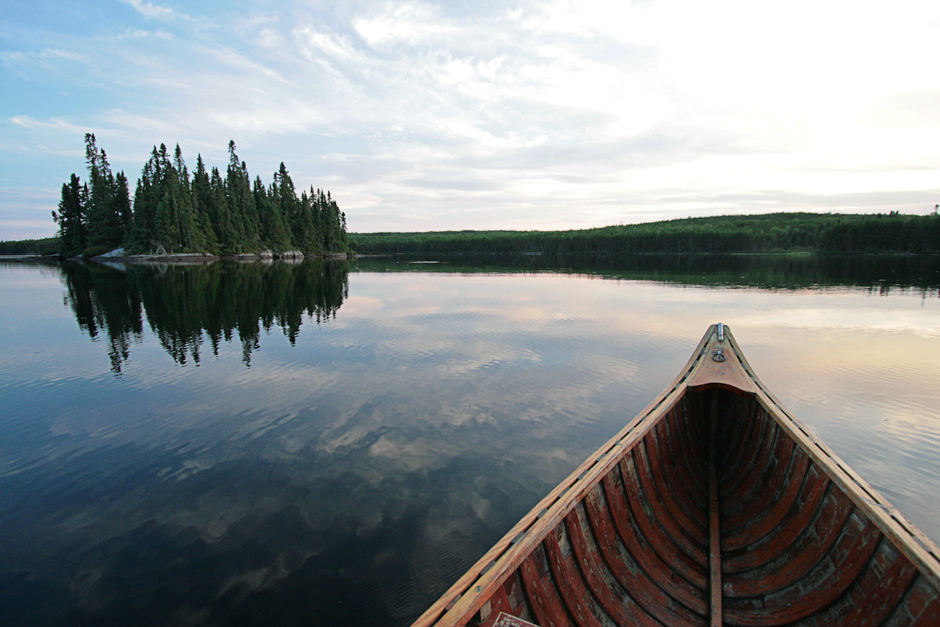
    Lake 239 looks inviting. Pines and spruce fringe the shoreline and waves lap against outcrops of weathered granite. But on this hot August afternoon in northwestern Ontario (see ‘Water works’), one feature stands out. At the far end of the 800-metre-long lake, a series of plastic-walled columns descend from a floating dock to the muddy bottom about 2 metres down. They are the sign that the lake’s placid setting disguises an experiment in controlled environmental abuse.

    Jennifer Vincent, a graduate student at Trent University in Peterborough, Ontario, kneels by one of the columns and empties a vial of silver nanoparticles into it. An iridescent purple cloud blooms in the water for a moment before the metal particles are mixed and disperse. These experiments are the first stage of a three-year, Can$720,000 (US$728,000) project to understand the biological effects of ‘nanosilver’ — an antibacterial agent commonly added to commercial products — and its possible effect on the environment. Previous work has shown that the chemical alters bacterial-community structure, affects algae and may change phosphorus cycling. Next year, the project intends to add nanosilver to an entire lake (Lake 222) and measure its effects across the ecosystem.

    With 58 such lakes serving as sites for a broad range of studies, the Experimental Lakes Area (ELA) is unique in the world. “I don’t take it lightly that you’re basically poisoning a lake,” says Chris Metcalfe, an environmental toxicologist from Trent University, and a leader on the project. But at the ELA, he adds, “you can graphically demonstrate what goes on in a whole lake ecosystem.”

    Yet the ELA project, with its laboratory buildings, residences and workshops, may soon disappear. Earlier this year, Canada announced that it would cease funding the ELA after March 2013, a development that dismayed scientists who have made use of the 44-year-old facility for investigations ranging from chemical contamination to the effects of climate change.

    The decision was unexpected. On 17 May, ELA employees at the Freshwater Institute in Winnipeg, were called to an emergency meeting, where they were told that the government was no longer interested in experiments requiring whole-lake manipulation. The 17 ELA staff at the institute, including four scientists, who are employed by the Department of Fisheries and Oceans (DFO), were told that their positions will be axed as of April 2013. (more…)

    Related stories

    More related stories

    Nature 488, 437–438

    Published 21 August 2012

  • Canada’s renowned freshwater research site to close

    Canada’s renowned freshwater research site to close

    [media-credit name=”USGS” align=”alignright” width=”199″][/media-credit]
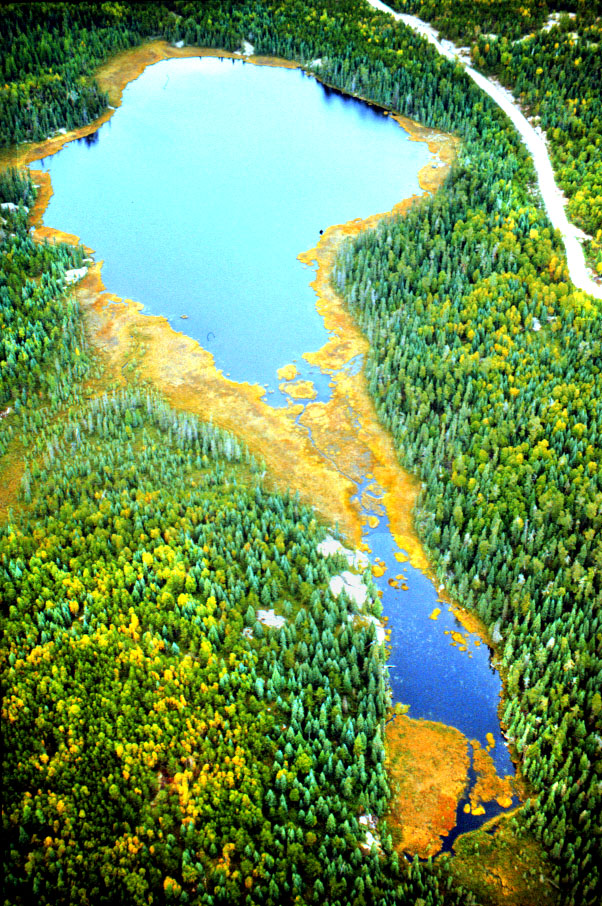
    The Experimental Lakes Area near Kenora, Ontario has been used to study the effects of detergents, heavy metals and acid rain on lakes and their watersheds.
    Budget fall-out hits environmental research stations

    The Canadian government has cancelled its funding for the Experimental Lakes Area (ELA), a research site in northwestern Ontario that has led to the re-shaping of international policies. It is the latest target in a string of research programmes to have been scaled back, shut down or left in limbo in the wake of massive cuts to this year’s federal budget.

    Fisheries and Oceans Canada — the government department that runs the site —  told its staff on 17 May that the ELA, a collection of 58 remote lakes and a laboratory complex, would be shut down in March 2013. “It is completely shocking,” says Jim Elser, an aquatic ecologist at Arizona State University in Tempe, who ran experiments at the site in the 1990s. “It is sort of like the US government shutting down Los Alamos — its most important nuclear-physics site — or taking the world’s best telescope and turning it off.”

    The ELA has attracted scientists from around the world to its shores since field research started there in 1968. It is possibly the only place where aquatic scientists can use lakes and their ecosystems as test tubes as well as having access to long-term environmental data and a decent place to sleep and eat.

    Many scientists say that the government is making a mistake. “If you try to base policy on small-scale experiments you miss some key ecosystem process, and that can have huge implications,” says David Schindler, a freshwater scientist at the University of Alberta, who founded the ELA and ran it until 1989.

    Scientists have manipulated the area’s lakes to show how acid rain destroys lake ecosystems1, how the ingredients found in birth-control pills can cause the collapse of fish populations2 and how wetland flooding for hydroelectric dams leads to increased production in methyl mercury and greenhouse gases3, while unmanipulated lakes have provided long-term comparative data. Studies done there have influenced policy, most notably the creation of an air quality agreement between the United States and Canada in 1991, which led to reductions in acid rain.

    More in Nature.
  • Regime Change: Q&A with John Smol

    Nature

    A freshwater ecologist at Queen’s University in Kingston, Ontario, Canada, Smol studies lake sediments to understand climatic and environmental change. Nature Outlook asks him to share his experience.

    What can we learn from lake sediments?
    One of the biggest challenges in environmental science is the lack of long-term data, so we have to use indirect proxies. All over the planet, lakes act as passive samplers of the environment, recording information 24 hours a day. They contain biological, chemical and physical information. The deeper you go in the sediment, the older it gets. Typically, in North America you can go back 12,000 years to the last Ice Age. In ponds near the Arctic Ocean, it’s closer to 5,000 years, because before that those areas were below sea level. We focus on the changes that have occurred in the past few hundred years and compare them with the long-term record. So we can ask: is there anything peculiar going on now, or is this just part of a long-term cycle?

    What have these remote ponds told us about climate change?

    We chose shallow ponds because they would be the most sensitive. They’re the bellwethers. The palaeo-data show that some very striking ecological changes started happening since the 1800s. The most plausible interpretation is that it was climate change and that it was human related. This conclusion was very controversial when we published it in 1994 (ref.1).

    We started going to these ponds on Cape Herschel in far northern Canada in 1983. We were going up every two or three years, and we could see they were getting shallower. We thought they could eventually disappear, but none of us thought it could happen in our lifetime. By 2006, many of the ponds had gone dry. It was stunning. We wondered if it was a one-off event, but we checked the 2005 data from the probes that we had left in some of the ponds in 2004 and saw that they were dry even then. We could tell that the ponds were evaporating, not draining, because the water’s conductivity — which is proportional to the concentration of dissolved ions — had steadily been increasing. Nothing like this had ever happened before, although the drying trend has occurred since. We called it crossing the final ecological threshold.

    Keep reading this article in Nature

  • Acidic oceans threaten fish

    Acidic oceans threaten fish

    Stocks could suffer as seas soak up more carbon dioxide. 

    Ocean acidification looks likely to damage crucial fish stocks. Two studies published today in Nature Climate Change reveal that high carbon dioxide concentrations can cause death and organ damage in very young fish.

    The work challenges the belief that fish, unlike organisms with shells or exoskeletons made of calcium carbonate, will be safe as marine CO2 levels rise.

    Fish could be most susceptible to carbon dioxide when in the egg, or just hatched.

    Oceans act like carbon sponges, drawing CO2 from the atmosphere into the water. As the CO2 mixes with the water, it forms carbonic acid, making the water more acidic. The drop in pH removes calcite and aragonite — carbonate minerals essential for skeleton and shell formation — from the marine environment.

    This can mean that corals, algae, shellfish and molluscs have difficulty forming skeletons and shells or that their shells become pitted and dissolve.

    Flawed belief? 

    At present, atmospheric CO2 levels exceed 380 parts per million and are expected to climb throughout the century to approximately 800 p.p.m. if emissions are not kept in check. And the oceans are expected to continue to sop up the gas, dropping ocean pH by 0.4 units to about 7.7 by 2100 [2].

    However, many scientists have suggested that acidification wouldn’t be problematic for marine fish because they don’t have exoskeletons and because as adults they possess mechanisms that allow them to tolerate high concentrations of CO2.

    But a handful of studies have shown that increased CO2 levels can wreck the sense of smell of orange clown fish larvae and increase the size of the otolith — a bony organ akin to the human inner ear — in white sea bass larvae.

    Continue reading this story at Nature.

    Image: Hannes Baumann

  • Frozen Assets

    Frozen Assets

    Maclean’s

    Ice cores tell the history of Canada’s climate, but now the government doesn’t want them anymore. (more…)