Category: climate science

  • Canada’s ice cores seek new home

    Confusion over fate of valuable climate record chills researchers.

    An unusual ‘help wanted’ advertisement arrived in the inboxes of Canadian scientists last week. The e-mail asked the research community to provide new homes for an impressive archive of ice cores representing 40 years of research by government scientists in the Canadian Arctic.

    The note was sent out by Christian Zdanowicz, a glaciologist at the Geological Survey of Canada (GSC) in Ottawa. He claimed that the collection faced destruction owing to budget cuts at Natural Resources Canada (NRCan), the government department that runs the survey, and a “radical downsizing” of the Ice Core Research Laboratory. The e-mail pressed scientists at universities and other institutions to take in the ice cores before they were left to melt.

    But David Scott, director of the GSC’s northern Canada division, denies this and says that there have been no budget cuts at GSC. He says that GSC management did not approve the letter, and it contains a number of factual errors. “There is no shutdown of the ice-core facility being contemplated. We’re not actively dispersing the collection,” he says. “Nothing that meets the criterion of having scientific value would be destroyed.”

    >> Continue reading at Nature.com

    This story was posted on ScientificAmerican.com, and mentioned on Mother Jones‘ Blue Marble blog


  • Banking on biodiversity

    Banking on biodiversity

    The diversity of life on Earth gives ecosystems the resilience they need to thrive. Yet every day scores of plants and animals go extinct, victims of activities we humans undertake to feed, clothe, house and trans­port ourselves. How can we meet our own needs without destroying that which sustains us?

    The west coast of Vancouver Island in British Columbia, Canada, has a rugged, involuted shoreline, etched by fjords, sand dunes and shel­tered coves. It is sandwiched between two biospheres, the dark swelling sea and the emerald temperate rain forest, and it attracts all sorts—from salmon to surfers.

    As idyllic as it seems, the island is under pressure. Wild salmon populations seem to ebb and flow unpredictably, and logging, transporta­tion and aquaculture—activities that promise economic prosperity for the people who live here—are chipping away at the natural coastal ecosystem and the species it contains.

    The tug-of-war between opposing priorities—the conservation of natural assets and de­velopment—poses a challenge for West Coast Aquatic, the public-private partnership in charge of creating a marine spatial plan for the 285-mile-long shoreline. How to lay out a plan that allows the area to develop while preserving its natural resources, ecosystems and habitat?

    This balance of development and conservation is a challenge wherever people are found. At its core is the ability to understand and factor in the true impact—economic and otherwise—of human activity, whether it’s shipping, aquaculture or recreation, on the environment. Would con­struction of an offshore wave energy installation cut into revenues brought in by recreation? If so, by how much? Is it worth it? What effect would expansion of aquaculture have on native finfish and shellfish? At what price to ecosystem (and economic) integrity?

    For West Coast Aquatic, the answers may come from “SimCity”-like software that can illustrate the impacts of different scenarios on human well-being and biodiversity.

    Called Marine InVEST, the software considers a region’s underwater topography, native habitats, species distribution, fishing practices, aquaculture sites, coastline features (such as dunes and sea grasses), wave height and periodicity, and recreational activities. Once those data have been collected, Marine InVEST can calculate the outcomes of a variety of scenarios, such as establishing a protective area or shellfish aquaculture sites.

    “The tool is flexible in terms of outputs, whether it’s in meters of shoreline not eroded or pounds or number of fish—or dollars,” says Anne Guerry, lead scientist for the project’s marine initiative.

    The west coast of Vancouver Island is the first demonstration site of Marine InVEST by the Natural Capital Project, a partnership among Stanford University, The Nature Conservancy, World Wildlife Fund, and the University of Minnesota’s Institute on the Environment.

    “In the past, we didn’t think too much about the spatial overlap of marine activities. We tended to think of them in silos,” says Guerry. “A tool like Marine InVEST allows us to make clear connections between different activities, so we can understand and value each one and how emphasizing one can come at the cost of another.”

    The group plans to use Marine InVEST in other demonstration sites around the world, including Belize, Puget Sound, Chesapeake Bay and Galveston Bay.

    Already, governments, nongovernmental organizations and scientists at universities and institutes in Indonesia, Hawaii, Tanzania, Colom­bia, Ecuador and China are adopting InVEST, the Natural Capital Project’s land-focused companion to Marine InVEST, in their decision making. In the East Cauca Valley, Colombia, The Nature Conservancy and ASOCAÑA, an association of sugarcane producers, formed a water fund called Fondo de Agua por la Vida y la Sostenibilidad (Water Fund for Life and Sustainability) to invest in key areas to keep the water sediment-free and available. The group then used InVEST to map carbon storage, habitat quality and soil stabiliza­tion within the region—showing, for example, where the group should invest in reforestation or in fencing off an area, while taking into account the communities that live within the watersheds.

    “Spatial mapping [like InVEST] lets us map out impacts, letting stakeholders better view and understand impacts and trade-offs,” says Ken Bag­stad, a postdoctoral associate at the University of Vermont. Bagstad is applying InVEST models for water, carbon, biodiversity and cultural services to the exceptionally biodiverse San Pedro River watershed in southeastern Arizona. Home to one of the last free-flowing rivers in the Southwest and a key bird migration corridor, the region is struggling to balance the water needs of the com­munity with the riverbank ecosystem. Bagstad is using InVEST and another mapping tool, ARIES, to test several scenarios, including an option that would restore an invasive mesquite shrubland to native grasslands. The main challenge of using such tools, says Bagstad, is that they are still in their infancy and require some more work before they can be considered a generalized global tool.

    The Planet’s Heartbeat

    Biodiversity is the measure of the variety of life. It is the seed from which all ecosystems spring. It is the foundation of the wetlands that purify water and offer protection against floods, the forests that capture carbon dioxide from the atmosphere and store it in biomass, and the coral reefs that offer breeding grounds for fish. Biodiversity provides societies with goods—food, fuel, fiber and medicinal plants—and services—erosion control, hydropower, cultural significance, recreation, carbon sequestration. Clean air, Vermont maple syrup, opportunities to ice fish, plant-sustaining soil and much more all trace back to thriving living things. Each species is like a spot of paint in one of Seurat’s pointillist masterpieces—an element of the whole picture.

    Environmentalists Tina Fujikawa and Joseph Dougherty recently wrote, “Monitoring trends in biodiversity is like listening to the heartbeat of the planet.” If so, the planet’s pulse is weak and sluggish. Many of Earth’s mammal, bird and amphibian species—10 to 30 percent—are threatened with extinction due to human activities. Some, like corals, which have long been identified as extinction risks, are moving closer to extinction, and ecosystems continue to deteriorate and be splintered apart. Scientists say that if current trends endure, societies could suffer heavy consequences.

    In a 2009 article in Nature, an international group of scientists and economists led by Johan Rockström of the Stockholm Resilience Centre at Stockholm University identified and quantified nine planetary boundaries—from climate change and ocean acidification to global fresh water use and biodiversity loss. These boundaries map out humanity’s safe operating space on Earth. Species loss, the group acknowledged, was a natural process, albeit one that has acceler­ated under human influence. If the extinction rate could be kept at or below 10 species per million species per year, they reasoned, the Earth’s ecosystems might survive. Alas, the current rate is 10 times the goal. For biodiversity loss, the planetary boundary has been exceeded.

    Continue reading the article in Momentum, the magazine of the University of Minnesota’s Institute on the Environment.

  • Cold cash for cold science

    Cold cash for cold science

    The recent funding wrap-up from the international polar year (IPY) has left many Canadian researchers scratching their heads, trying to find a way to continue their arctic science projects. A new grant from the Natural Sciences and Engineering Research Council of Canada may help close that research-funding gap.

    In its announcement yesterday, NSERC opened a competition to fund large-scale research with a focus—for this round of funding—on northern earth systems. The Discovery Frontiers initiative will heft Can$4 million over five years on the successful research team to study the physical, chemical, biological and social factors that affect the North and its inhabitants—and to come up with solutions. Fresh water, sea level, permafrost, weather patterns, biodiversity or climate change adaptation could be part of the successful pitch. The northern community will help define the projects and their goals.

    The story continues at Nature’s blog The Great Beyond.

  • River metals linked to tar sand extraction

    River metals linked to tar sand extraction

    Researchers find that pollutants in Canada’s Athabasca River are not from natural sources.

    Oil-mining operations in Canada’s main tar sands region are releasing a range of heavy and toxic metals — including mercury, arsenic and lead — into a nearby river and its watershed, according to a new study.

    Research published online yesterday in the Proceedings of the National Academy of Sciences shows that 13 elements classified as priority pollutants (PPEs) by the US Environmental Protection Agency were found in the Athabasca River in the province of Alberta1. Seven of these were present at high enough concentrations to put aquatic life at risk. The findings are also of concern to human health.

    Almost all of Alberta’s known oil reserves — 172 billion barrels — are found within tar sands. The provincial government expects that oil production will increase from about 1.3 million barrels per day to 3 million barrels per day by 2018.

    Tar sands mining and upgrading — the process of extracting fuel from the mix of petroleum and sand or clay — produces sand, water, fine clays and minerals that are contained within tailing ponds.

    A team led by ecologist David Schindler of the University of Alberta in Edmonton set out to test the government and oil industry’s claims that the concentrations of elements in the Athabasca River and its tributaries were from natural sources and not tar sands development.

    The team took samples of surface water from the waterways upstream of the tar sands region and compared them with samples taken within the region — both upstream and downstream of mining projects. The researchers also looked at snow samples from many of the same areas towards the end of winter to look for airborne sources of PPEs, which would be discharged to surface waters when the snow melted.

    → Keep on reading at Nature

    Image courtesy of NormanEinstein and Wikimedia Commons.

  • Canada picks site for Arctic Research Station

    Canada picks site for Arctic Research Station

    Cambridge Bay location offers a wealth of opportunities for studying the far north.

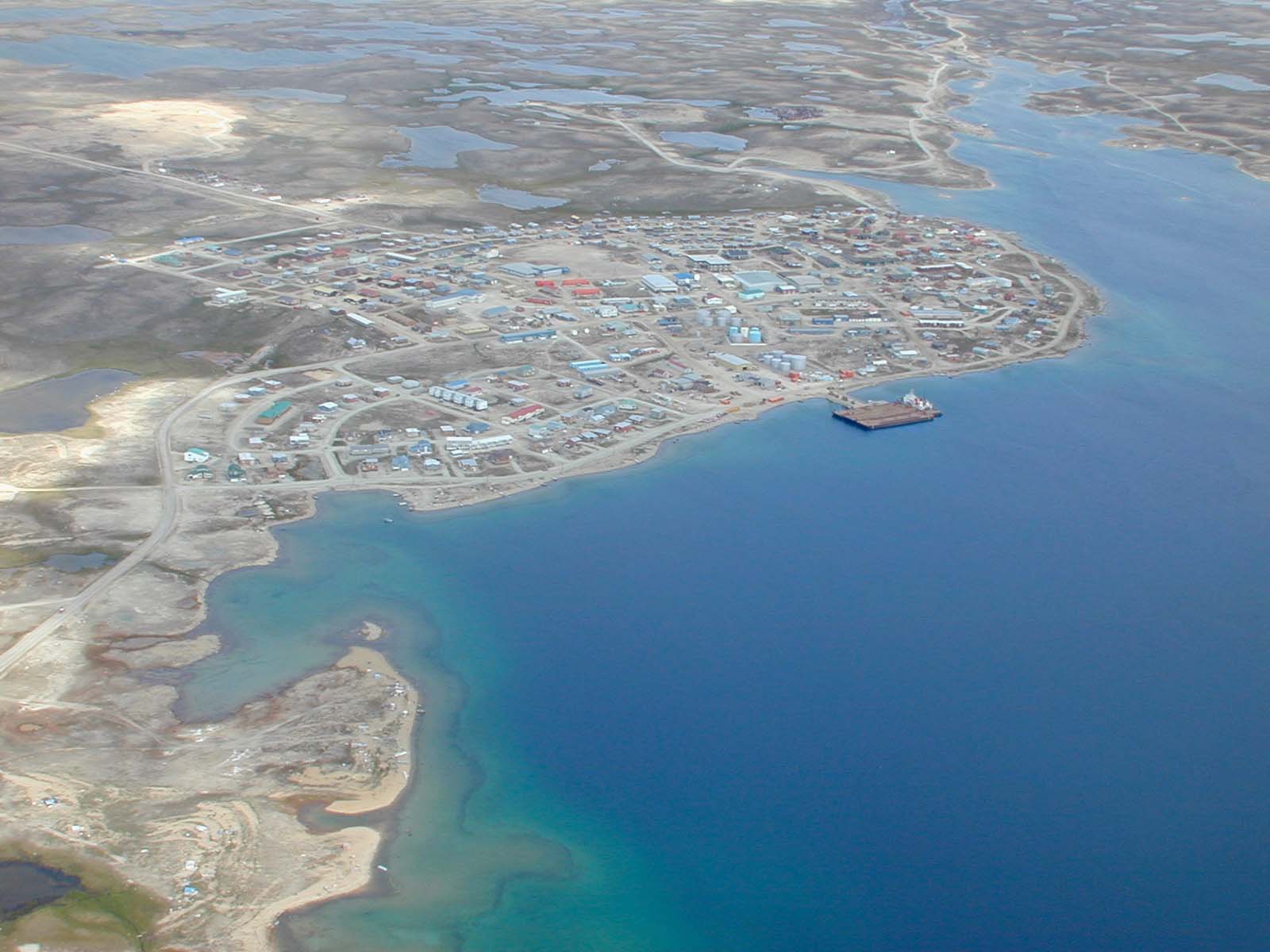
    After months of deliberation, the Canadian government has chosen Cambridge Bay — a hamlet midway along the Northwest Passage in the country’s far north — as the site for a world-class Arctic research station.

    Once built, the station will house scientists all year round, giving them a modern space to study Arctic issues, including climate change and natural resources. It will host conference facilities and laboratories for research on marine biology and geophysics, provide ecologists with the space to do long-term ecological monitoring in aquaria and greenhouses, and give researchers in the health and social sciences a base for their studies.

    “It’s a very exciting and long-awaited announcement,” says Warwick Vincent, director of the Centre for Northern Studies at Laval University in Quebec City, who was part of the committee consulted by the government during the selection process.

    The proposal for the Canadian research station was first sketched out in 2007 and a shortlist of sites was released in 2009. A Can$2-million (US$1.9-million) feasibility study for the proposed station established its functions, preliminary costs and construction schedule and involved an analysis of three possible locations: Pond Inlet, Resolute Bay and Cambridge Bay, all in the northern territory of Nunavut.

    Details about the new facility’s size or overall cost have yet to be released by the government, but sources suggest that it will be completed some time in 2017 at a cost of about Can$200 million.

    → Read more at the Nature website

    → Also found in WorldChanging’s Arctic Round-up (September 3)