Category: environment

  • Climate change may alter malaria patterns

    Climate change may alter malaria patterns

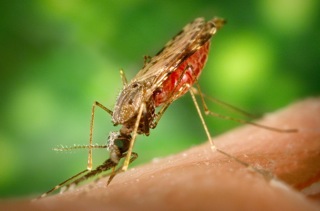
    mosquitoMalaria has long been endemic in Kenya’s humid lowlands and its tropical coast. But in recent decades there has been a spike in the number of malaria epidemics in the East African Highlands—an area where the people living there have little experience with the disease.

    The East African Highlands are high above sea level. Traditionally, the cool breezy climate has been inhospitable to mosquitoes. But in the late 1990s average temperatures in Kenya’s highlands were as much as 4 degrees higher than normal and the incidence of malaria jumped 300 percent. Many experts believe that climate change is fueling this new epidemic.

    Matt Thomas, an entomologist at Penn State University. He believes that temperature plays a key role in the development of malaria parasites in the mosquito, but that it is the daily temperature fluctuations that matter. Understanding these temperature fluctuations will be an important factor in understanding the spread of malaria. He’s studying malaria from the mosquito’s perspective: trying to understand its basic biology so that he can fill in the knowledge gaps of how temperature and environmental change might trigger a malaria epidemic.

    :: Listen on CKUT, 90.3FM ::

    * CKUT’s servers are down. Check back later for the mp3 of the show.

  • Permafrost that lives up to its name

    Permafrost that lives up to its name

    Ancient Canadian ice survived previous warm periods.

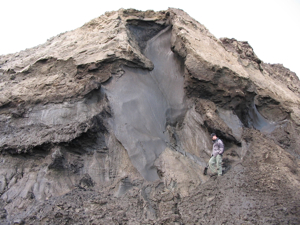
    A 740,000-year-old wedge of ice discovered in central Yukon Territory, Canada, is the oldest known ice in North America. It suggests that permafrost has survived climates warmer than today’s, according to a new study.

    “Previously, it was thought that the permafrost had completely disappeared from the interior about 120,000 years ago,” says Duane Froese, an earth scientist at the University of Alberta in Edmonton, Canada, who is the author of the study published today in Science. “This deep permafrost appears to have been stable for more than 700,000 years, including several periods that were warmer and wetter.”

    Keep reading in Nature.

    Image credit: Duane Froese, University of Alberta

  • The missing greenhouse gas

    Growth of the electronics industry will boost emissions of a ‘hidden’ — but extremely potent — greenhouse gas.

    Our insatiable appetite for gadgets — mobile phones, MP3 players and flat-screen TVs — may be adding a hidden greenhouse gas to the Earth’s atmosphere. Countries that ratified the Kyoto Protocol committed to reducing their emissions of carbon dioxide and five other heat-trapping gases: methane, nitrous oxide, hydrofluorocarbons, perfluorocarbons and sulfur hexafluoride. But these aren’t the only climate-altering chemicals being produced by human activity. In the 13 years since the Protocol was first drawn up, scientists have discovered that other gases, such as nitrogen trifluoride (NF3), could become an increasing part of the climate problem.

    :: Read more in Nature Reports: Climate Change ::

  • Rapid Ice Retreat Threatens Arctic Interior

    Rapid Ice Retreat Threatens Arctic Interior

    Nature Reports: Climate Change

    The rapid decline of sea ice could accelerate inland warming over the Arctic region, radically transforming the landscape.

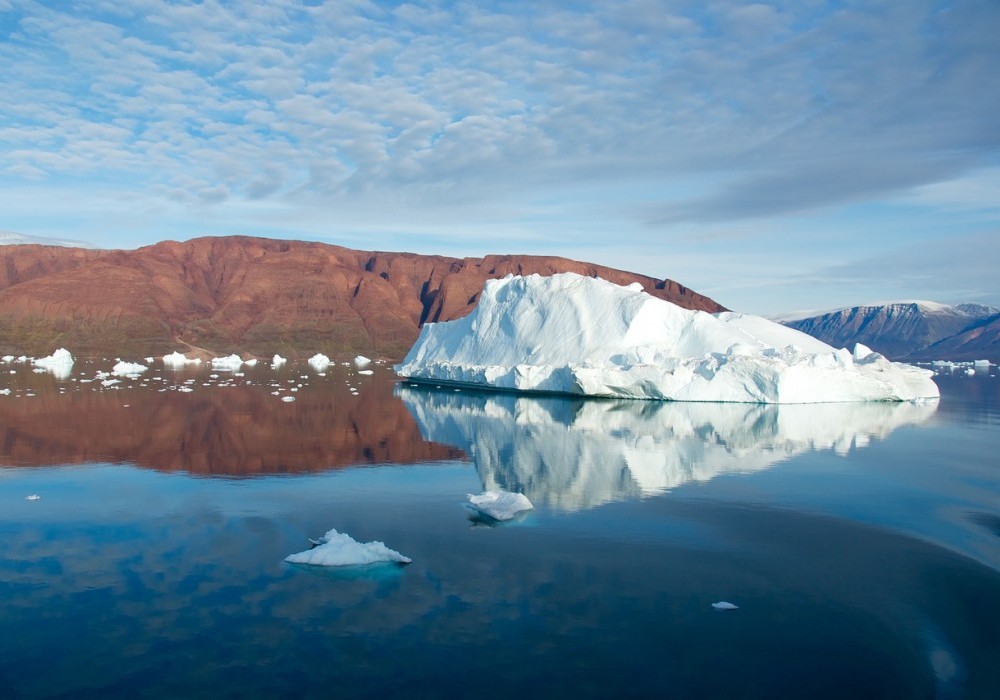
    One of the Northern Hemisphere’s natural cycles is the expansion and contraction of the floating Arctic ice cap. Typically, sea ice decreases during the Arctic summer, reaching a low in September, before recovering as temperatures drop in winter. From as far back as satellite measurements began in 1978 until 2000, the average sea-ice extent, or the area of ocean covered by at least 15 per cent ice, has routinely hovered around 7 million square kilometres during the summer minimum.

    But in 2002, scientists noticed a sharp drop in the region’s minimum ice coverage. By September 2007, the area covered by ice had been whittled down to a startling 4.3 million square kilometres — 40 per cent smaller than in the 1980s. Scientists say the retreat witnessed last year was drastic, unexpected and more than 20 per cent below the previous record minimum.

    Not only will the loss affect the marine ecosystem and its dependents, from indigenous communities to marine mammals that rely on the ice for hunting and travel; it stands to alter the Arctic landscape much further afield. According to a new study in the 13 June issue of Geophysical Research Letters, the rapid retreat of Arctic sea ice could accelerate warming 1,500 kilometres inland in northern Alaska, Canada and Russia. During rapid ice retreat, the rate of inland warming could be more than three times that previously predicted from global climate models.

    :: Read more in Nature Reports: Climate Change ::