Category: environment

  • Wasp Venom Can Save Lives. But the Supply Chain Is Shaky.

    Wasp Venom Can Save Lives. But the Supply Chain Is Shaky.

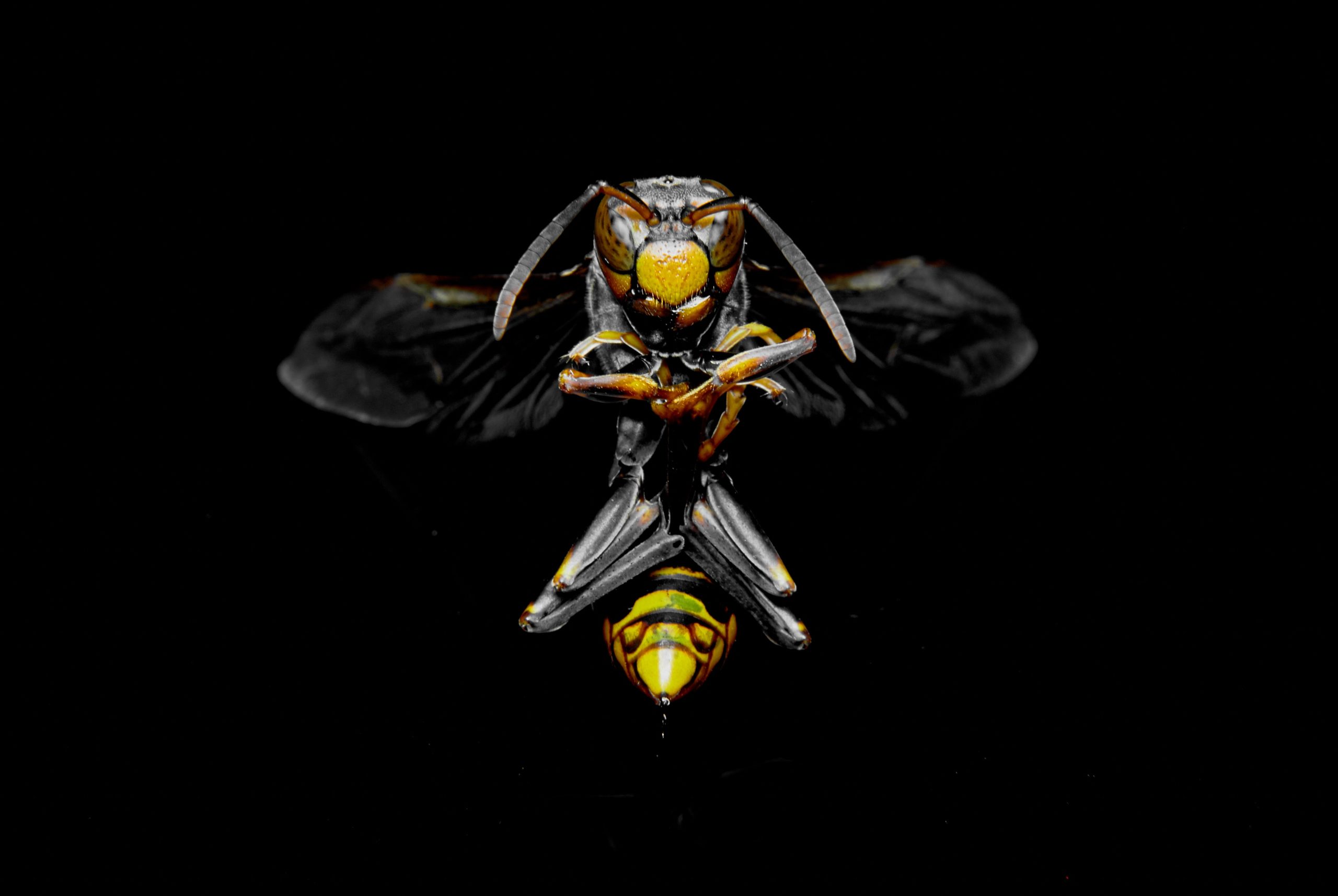
    Venom is crucial to make medicines for those with severe allergic reactions to wasp, hornet, and yellow jacket stings.

    UNDARK

    One morning in the fall of 2019, Zach Techner stepped into a heavily woven white beekeeper’s suit, pulled on rubber boots and thick orange gloves, and wrapped duct tape around his cuffs and along the zipper. He slid safety glasses over his eyes and a netted hood over his head and zipped it shut. He was preparing to collect one of the most dangerous wild creatures in the United States: yellow jackets.

    Techner carried a portable vacuum he had MacGyvered into a wasp-sucking machine to a low thicket of blackberry brambles. A dozen of the flying insects made large descending loops towards their nest in the ground. Over the next 45 minutes, he siphoned the yellow jackets — uninjured but surely a little upset — into a plastic juice jug. He stored the trapped insects beneath a layer of dry ice in a cooler to kill them quickly — and avoid damaging the proteins in their venom.

    Wasp collecting isn’t always so uneventful, Techner warned. Yellow jackets can attack — especially in the fall when colonies swell and food is scarce — with sharp stings or by contracting their abdomens to spray their venom in their assailant’s eyes. “When you’re in the middle of a nest and there are thousands of them attacking you, hitting the veil, the venom can still get into your eyes,” he said. “It hurts really bad. It can be blinding.”

    … read more

  • How Ron Pittaway developed his acclaimed winter finch forecast

    How Ron Pittaway developed his acclaimed winter finch forecast

    LIVING BIRD MAGAZINE, Winter 2020 —

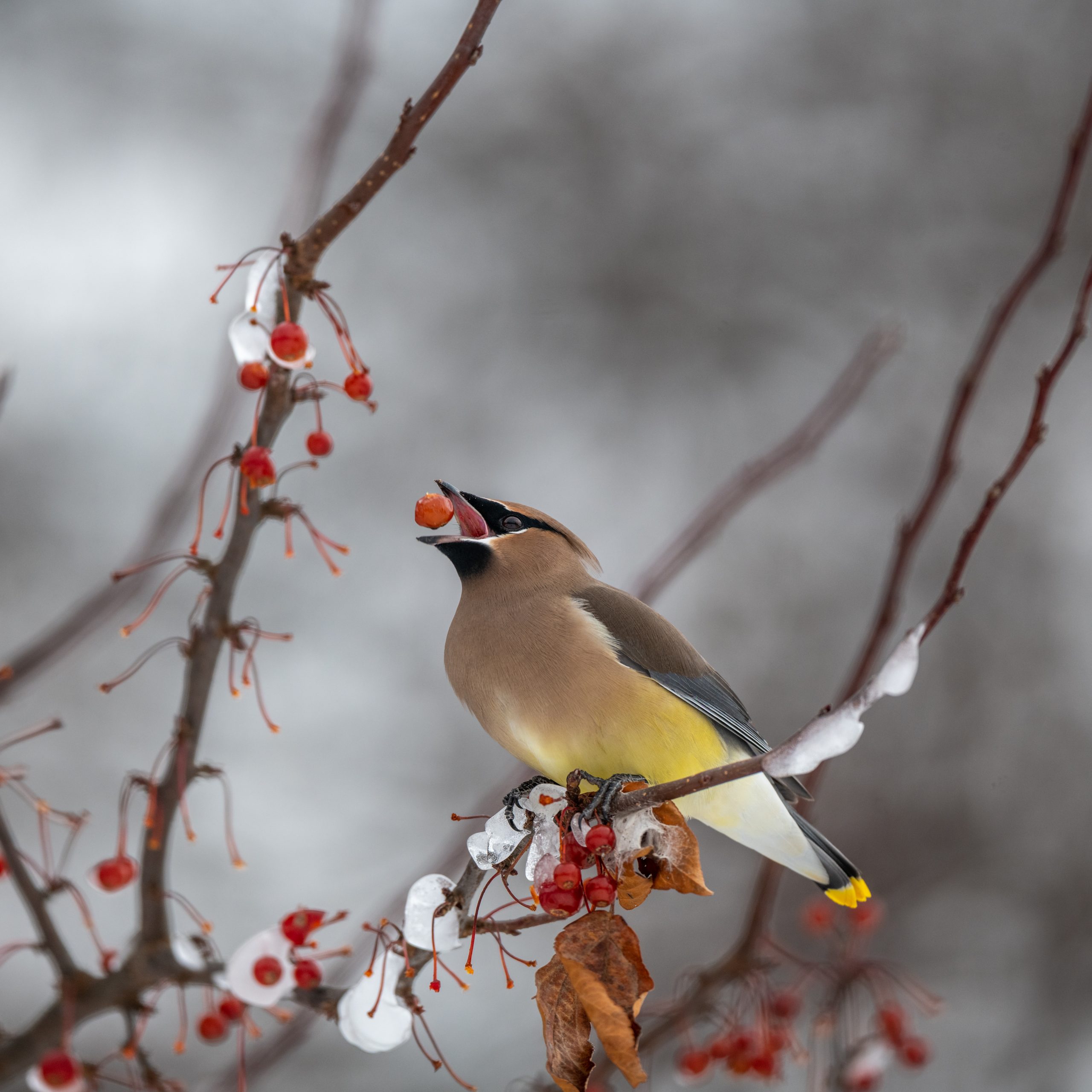
    In early February of 2019, WhatsApp birding groups in southern Ontario were firing off finch alerts. More than a dozen Pine Grosbeaks spotted in Durham, northwest of Toronto. Evening Grosbeaks at Long Point, on the northern shore of Lake Erie. A flock of redpolls around Point Pelee on Lake Erie.

    Ron Pittaway was ready. In the yard of his home in the northeastern corner of Toronto, he had his feeders filled with oil-rich nyjer seed and a buffet of sunflower and safflower seed, peanut butter and suet spread across his tree-studded urban property.

    “See those big conifers? That’s an important finch tree, especially for siskins, and we have a whole ravine full of them here. This forest over here is full of eastern hemlocks,” he said.

    During short, cool days, the cheery jewel-toned winter finches are a welcome addition to a cold season that is often bleak and gray. But their winter whereabouts can be somewhat erratic. Some years there are few to no grosbeaks or siskins, crossbills or redpolls to be found. Other years, they descend en masse to bird feeders across southern Canada and the U.S., decorating wintry backyards like yellow and red ornaments flitting about the trees.

    Pittaway is North America’s principal prognosticator of when and where—and importantly, if—these birds will arrive each winter. Birders eagerly anticipate the latest edition of his annual Winter Finch Forecast, released every autumn for the past 21 years. Last winter, he bolstered his winter-finch bona fides by predicting the waves of grosbeaks and redpolls descending south four months before those WhatsApp alerts.

    Pittaway has made it his mission to lend some predictability to winter finch sightings by compiling intelligence from his network of naturalists across Canada and the U.S. and analyzing the data to reveal his predictions. The annual reports have made him a bit of a celebrity among eager winter birders.

    “There’s an air and a mystique about it,” says Matt Young, a Cornell Lab of Ornithology scientist who studies crossbills and contributes to Pittaway’s data collection. Young is also an avid birder.

    “Ron’s Winter Finch Forecast is one of the most eagerly anticipated events of the year, like Punxatawney Phil and his shadow. But better, because instead of shadows, Ron sees winter finches.”

    .::. Read the story at Living Bird.

  • In Canada’s boreal forest, a new national park faces the wrongs of the past — and guards our climate future

    In Canada’s boreal forest, a new national park faces the wrongs of the past — and guards our climate future

    AUDUBON

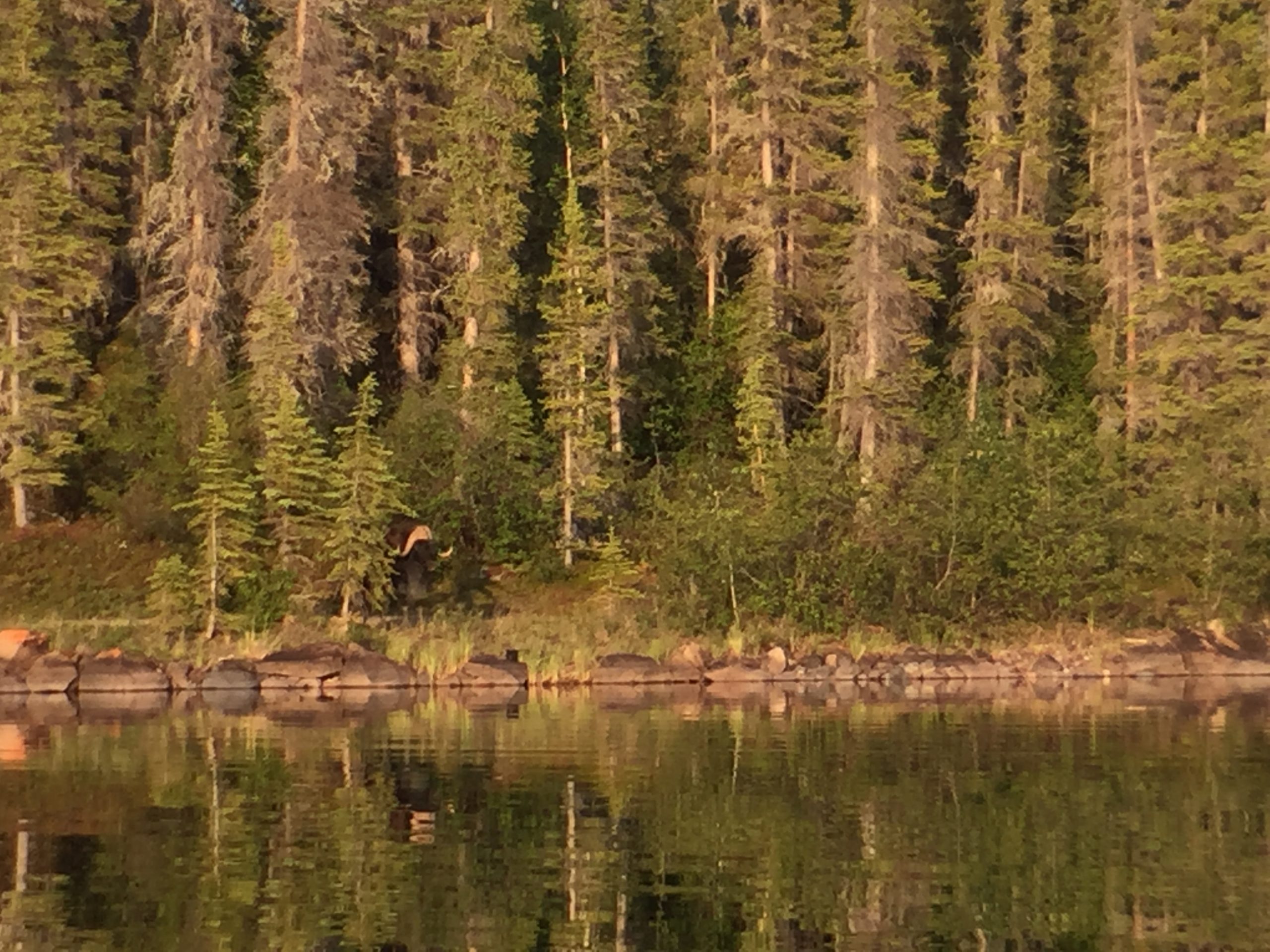
    James Marlowe zips along the glassy lake surface of the water in his aluminum fishing boat, and the town of Łutsël K’é quickly falls from sight. We stay close to the shoreline, avoiding hidden reefs, and steer straight for his net. It’s closing in on midnight, but Great Slave Lake—the deepest lake in North America and the 10th largest in the world—is flashing with fish and the tree-covered hills are aglow in the setting summer sun. Marlowe cuts the motor and begins hauling in the 150-foot net hand-over-hand.

    Splop! The first fish lands in a large plastic bin. Splop! Splop! Marlowe moves along the net, plucking whitefish from its mesh. With some effort, he untangles a 30-pound trout and heaves the rare find into the bin. “Oh, there are still more fish! It’s not going to stop, man,” he says with a laugh.

    Since he was a teen, Marlowe has hunted, trapped, and fished these wilds for caribou, moose, ducks, whitefish, and lake trout. Like his neighbors and ancestors of the Łutsël K’é Dene First Nation, he’s followed traplines that meander from the forest to  tundra and strung nets under the lake ice to harvest food. “We depend on the land and the water for survival,” says Marlowe. “It’s like our grocery store.”

    In the early 1990s, however, diamond mining and mineral exploration in Canada’s Northwest Territories began to threaten this tradition of living off the land. The mines produced some jobs and revenue for the community, but they also caused problems. The industry’s high interest in the area concerned the elders, who then directed Marlowe’s generation to find a way to protect the land, water, and animals for their own children—and for the survival of the Dene culture, language, and way of life.

    After more than 15 years of discussion, the Łutsël K’é Dene First Nation has now signed a landmark agreement with the governments of Canada and the Northwest Territories to form a massive new protected area called Thaidene Nëné, or “Land of the Ancestors.” Almost twice as large as the Grand Canyon, Yosemite, and Yellowstone national parks combined, Thaidene Nëné encompasses more than 6.4 million acres, stretching from the easternmost tip of Great Slave Lake northeast toward the Arctic territory of Nunavut. It spans the boreal forest and its transition to the heath-dominated tundra, making it one of the only protected areas in Canada to straddle the tree line—an important bridge for plants and animals that may migrate as the climate changes.

    .::. Read more at Audubon Magazine.

  • Researchers pull together to get fuller picture of Greenland sled dog

    Researchers pull together to get fuller picture of Greenland sled dog

    Greenland’s sled dogs are a distinctive part of the nation’s culture — but they’re also declining. (Carsten Egevang / The Qimmeq Project)

    ARCTIC TODAY —

    The Qimmeq Project is an interdisciplinary effort to better understand and preserve Greenland’s distinctive sled dogs.

    For more than 10,000 years, dogs have been an integral part of Arctic culture. They have guided sleds across frozen seas, barked warnings of polar bears and sniffed out seal breathing holes.

    “Having sled dogs is a big part of our history and identity. It is one of the main reasons that we as a culture are still alive, that we still live in the Arctic,” said Manumina Lund Jensen, a Ph.D. student at the University of Greenland, who presented her project at the Arctic Circle Assembly in Reykjavik, Iceland in October.

    Despite their dominant role in the culture, sled dogs have been in decline in Greenland for the past century. Their numbers have dwindled as traditional hunting tailed off, motorized vehicles gained traction, fatal diseases took root, and elders, who had deep knowledge about breeding and training sled dogs, passed on.

    “Climate change has had a really big impact on how we use our dogs and if we have dogs at all,” said Jensen. “If we don’t have sea ice you cannot go dog sledding and you cannot hunt for food.” Jensen’s research focuses on understanding the importance of the dog and dogsled culture.

    Greenland’s sled dogs and their cultural heritage are at risk of extinction. The number of dogs has declined from 25,000 in 2002 to fewer than 15,000 in 2016.

    Jensen is part of an interdisciplinary research team working on the Qimmeq Project, the “sled dog” project. These anthropologists, archaeologists, geneticists, biologists and veterinarians are studying the health, genetics and cultural and historical significance of the Greenland sled dog, in an effort to understand its history, use and significance.

    Morten Meldgaard, a professor at the University of Greenland and the Natural History Museum of Denmark, who is leading the project, says that recent research on pre-contact dogs in the Americas highlights the risk that the Greenland sled dog could die out.

    Dogs arrived in the Americas from Siberia and spread throughout the continents alongside people, according to a recent study. When the Europeans arrived, they brought their own dogs, and native American dogs virtually disappeared. Almost no trace of their legacy remains in modern American dogs. “It puts into perspective what we’re dealing with in the Arctic,” said Meldgaard, who also presented in Reykjavik.

    After the project launched, Meldgaard and his colleagues realized sled dog health needed a more prominent role in the project. “We’re identifying the science questions with the people who are going to use the knowledge we create,” he said. Access to vaccines that protect against highly contagious diseases, including canine distemper and parvovirus, and veterinary care is limited in many parts of Greenland.

    “People say that if the sled dog disappears, part of their soul and identify disappears,” said Meldgaard. “It is of great importance to be able to keep the animal — and the culture — alive.”

    .::. Read the story at ArcticToday.

  • Even small reductions in warming matter to the Arctic

    Even small reductions in warming matter to the Arctic

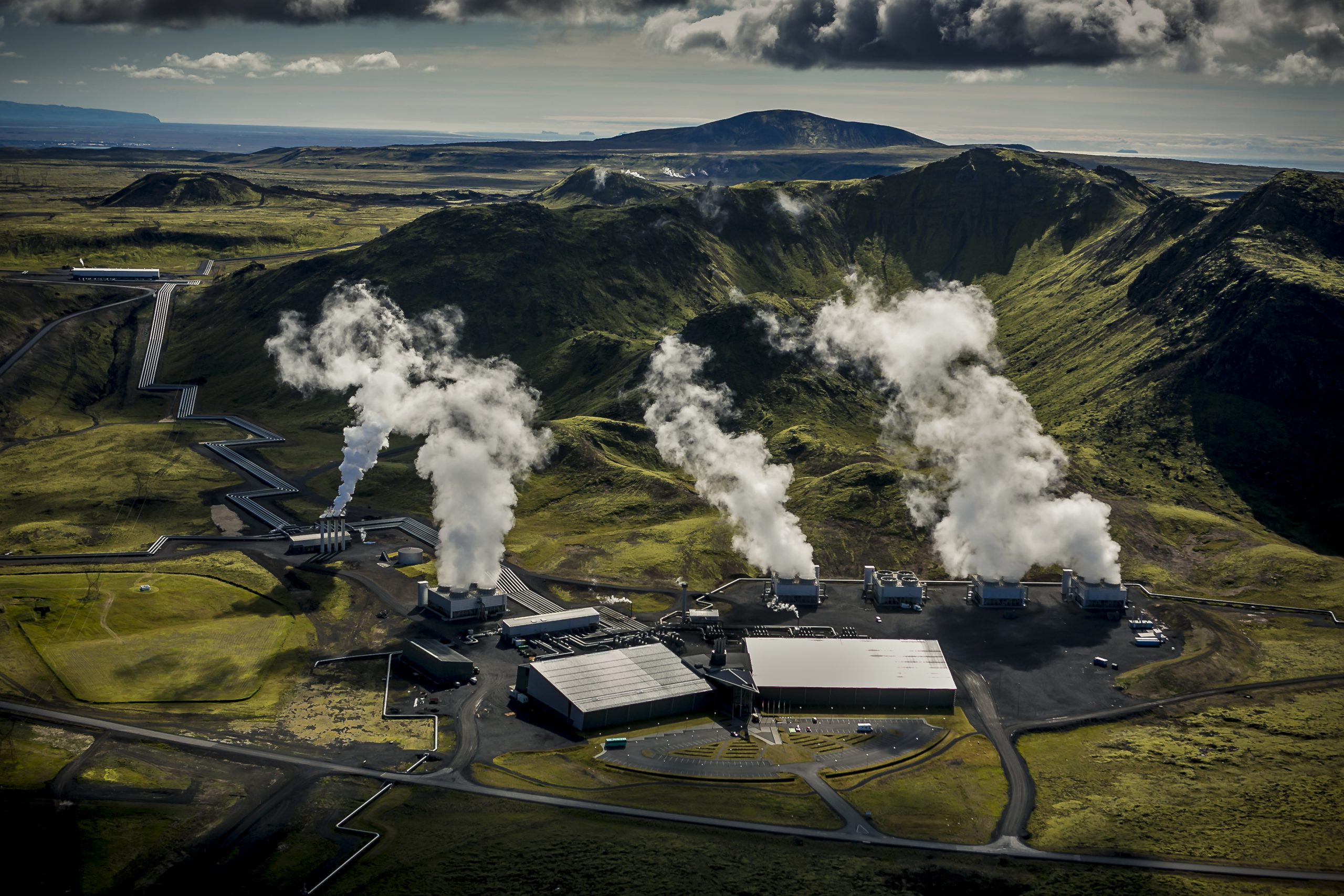
    A difference of half a degree Celsius would make a huge difference in the future of the Arctic. A carbon sequestration project in Iceland offers hope of keeping warming under control.

    ARCTIC TODAY — Half a degree difference in temperature may seem inconsequential, but it matters a great deal in the Arctic.

    The Earth has already warmed 1 degree Celsius (1.8 degrees Fahrenheit) since the 19th Century, but the Arctic is warming two or three times faster. Now, a recent United Nations report is looking at what is likely to happen if global temperatures vault past 1.5 to 2C — and the Arctic heats up even more.

    “The Arctic takes a leading role in the concerns expressed in the report,” Hans-Otto Pörtner, a senior scientist at the Alfred Wegener Institute and one of the report’s 91 authors, said during the Arctic Circle Assembly in Reykjavik, Iceland last month.

    Half a degree could be the difference between having summer Arctic sea ice or not. Under 1.5C of global warming, the Arctic Ocean is likely to be ice-free in the summer once in a century. That risk rises to once per decade at 2C. The change would affect organisms on all levels, from algae and copepods to fish, whales and other marine mammals — and the people who rely on them for food and other uses.

    Warming of 2C would also bring a later ice freeze-up and a longer ice-free open water season. There would be more storm surges and extreme weather events, and accelerated permafrost thaw. If warming remained at 1.5C, on the other hand, approximately 2 million square kilometers of permafrost — an area larger than Alaska — would remain frozen. In Alaska alone, the impact of climate change on public infrastructure could cost as much as $5.5 billion.

    The Arctic has already endured the strain of global warming. For example, land ice loss has doubled since 2008. Canada’s Arctic glaciers are melting faster than ever before due to warming air temperatures; in the past 16 years, five glaciers have been lost entirely.

    .::. Keep reading at ArcticToday.