Category: environment

  • Bats before bedtime

    Bats before bedtime

    Scientists find new animal species in old rainforests

    Deep in the heart of a small South American country called Guyana lies a protected forest. As night falls, you will find this tropical rainforest pulses with life. It is anything but quiet. The whistle of a bird called the screaming piha pierces the thick canopy of trees, as if competing with the chorus of crickets, cicadas and mosquitoes. Other strange creatures make themselves heard too. A sheep frog bleats while red howler monkeys spookily wail from the treetops. On this evening, it seems no one in the rainforest is sleeping — including the scientist making his way down a narrow path.

    Night is a great time to collect animals. To catch flying bats, it is also the only time. That is why Burton Lim is at work in the dark here in this forested region known as Iwokrama (EE WOE kram ah). It’s part of the greater Amazon ecosystem.

    Some people call Lim the Bat Man. He’s a curator of mammals at the Royal Ontario Museum, in Toronto, Canada. Tonight, he forges into the dark rainforest to look for bats. He’s wearing a bright headlamp and rubber boots. A machete hangs from his belt.

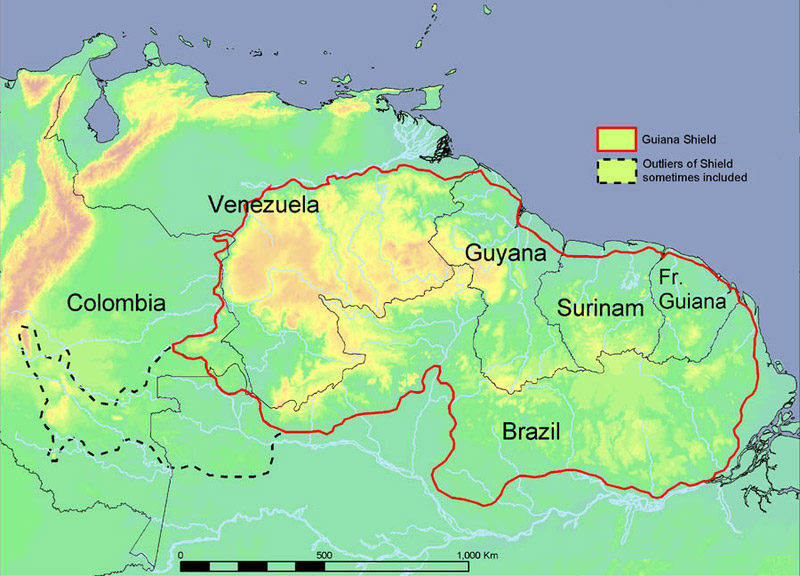
    Lim has come to the Iwokrama Forest because it is a hotspot for bats. Eighty-six species of them, roughly half of all the bats found across the Amazon, call this roughly circular zone of protected land home. The area is only about the size of Delaware. By comparison, the United States and Canada together host only 47 bat species.

    A region called the Guiana Shield includes the South American countries of Guyana, Suriname, French Guyana and parts of Venezuela, Brazil and Colombia. Much of the tropical rainforest in this area is undisturbed. Credit: Shadowxfox, Wikimedia Commons

    Lim is on this expedition with a small team of scientists working with a conservation organization called Operation Wallacea. They’re here to study the rainforest’s large mammals, amphibians, birds, insects, reptiles and other animals. Luckily, a reporter for Science News for Kids is tagging along for part of the expedition. Exploring this richness of life, or biodiversity, lets scientists pinpoint areas that have rare or unique species. It also gives them clues useful in monitoring the health of this rainforest now — and in the future.

    Continue reading this story at Science News for Kids.

  • Glimmer of hope for freshwater research site

    Glimmer of hope for freshwater research site

    This story was originally posted on the Nature News Blog. 

    The government of Ontario, Canada, has stepped in to keep open the Experimental Lakes Area (ELA). The freshwater research facility, located in northern Ontario, was closed in March by the government of Canada, despite protests from scientists.

    Ontario premier Kathleen Wynne announced today that the government of Ontario will provide support to keep the ELA running this year and in the future, as it works to transfer the facility to the International Institute for Sustainable Development (IISD), a United Nations think tank based in Winnipeg, Manitoba.

    “We have had many conversations with members of the public and our scientific and academic communities who want to see the Experimental Lakes Area stay open,” Wynne said in a statement. But the statement did not elaborate on how much money the government has designated for operations, whether the facility will be fully operational this summer or the fate of the long-term climate data set the facility has kept up for 45 years. Meanwhile, the federal government released its own statement today noting that it “has been leading negotiations with third parties”.

    “We remain hopeful that an agreement can be reached and we welcome Ontario’s willingness to play an active role,” reads the statement from Fisheries and Oceans Canada.

    Many university scientists say that they are still not sure whether they will be able to continue their experimental work this summer. Several are sceptical that negotiations will be wrapped up in time for experiments to proceed as planned. “It’s somewhat exciting news, but quite frankly I don’t know what it means for us yet,” says Maggie Xenopoulos, an aquatic biologist at Trent University in Peterborough, Ontario. Xenopoulos and her colleagues had planned to contaminate one of ELA’s lakes with nanosilver this summer and measure its ecological impact.

    A statement from the IISD’s leader offered few specifics about its potential deal with the government of Ontario. “If the ELA does come to IISD, we would work with other stakeholders to ensure it remains an independent, world-class research facility that continues to produce leading-edge freshwater ecosystems science in the public domain and in the public interest,” said Scott Vaughan, the institute’s president and chief executive.

    Vincent St. Louis, a biogeochemist at the University of Alberta in Edmonton, says that the plan “is a good first start”. The plan to close the lake area “has always been baffling from a scientific perspective, given how much it provides at such a low cost,” says St. Louis, who has studied acid rain, reservoir creation and mercury emissions at the ELA — and would like to see scientists use the facility to study the impact of chemicals found in oil sands tailing ponds, such as polyaromatic hydrocarbons, on aquatic biota.

    The federal government announced last May that it would stop funding the facility, which cost about Can$2 million (US$2 million) to operate, and that it would begin a search for a new operator. Federal funding dried up on 31 March, and university scientists who had planned experiments for the summer field season were told that they were not allowed on the site.

  • Air pollution delivers smaller babies

    Air pollution delivers smaller babies

    Study of 3 million infants suggests connection between inhaled particles and birth weight.

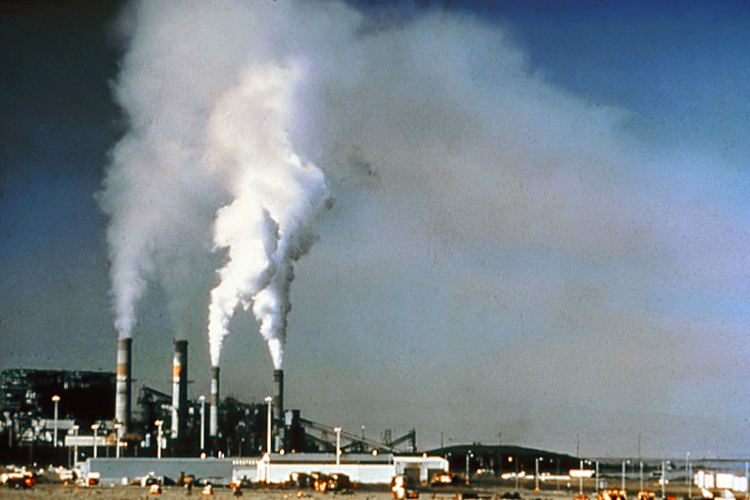
    Pregnant women who have been exposed to higher levels of some types of air pollution are slightly more likely to give birth to underweight babies, a large international study has found. The results are published online today inEnvironmental Health Perspectives1.

    Low birth weight — defined as a newborn baby weighing less than 2.5 kilogrammes — increases the risk of infant mortality and childhood diseases, and has been associated with developmental and health problems later in life, including diabetes and cardiovascular disease.

    Previous studies have looked at whether exposure to tiny airborne particles during pregnancy leads to more low-birth-weight babies. Although many studies have found links, others have failed to establish a connection.

    “The thorn in the side of many studies of air-pollution exposure and impact on fetal growth has been the variability in study design and in exposure assessment,” says Leonardo Trasande, a children’s environmental-health researcher at New York University in New York city. “This one does a tremendous service by making them very comparable.”

    Read more.

  • Arctic snow cover shows sharp decline

    Arctic snow cover shows sharp decline

    Earlier spring could spell trouble for permafrost

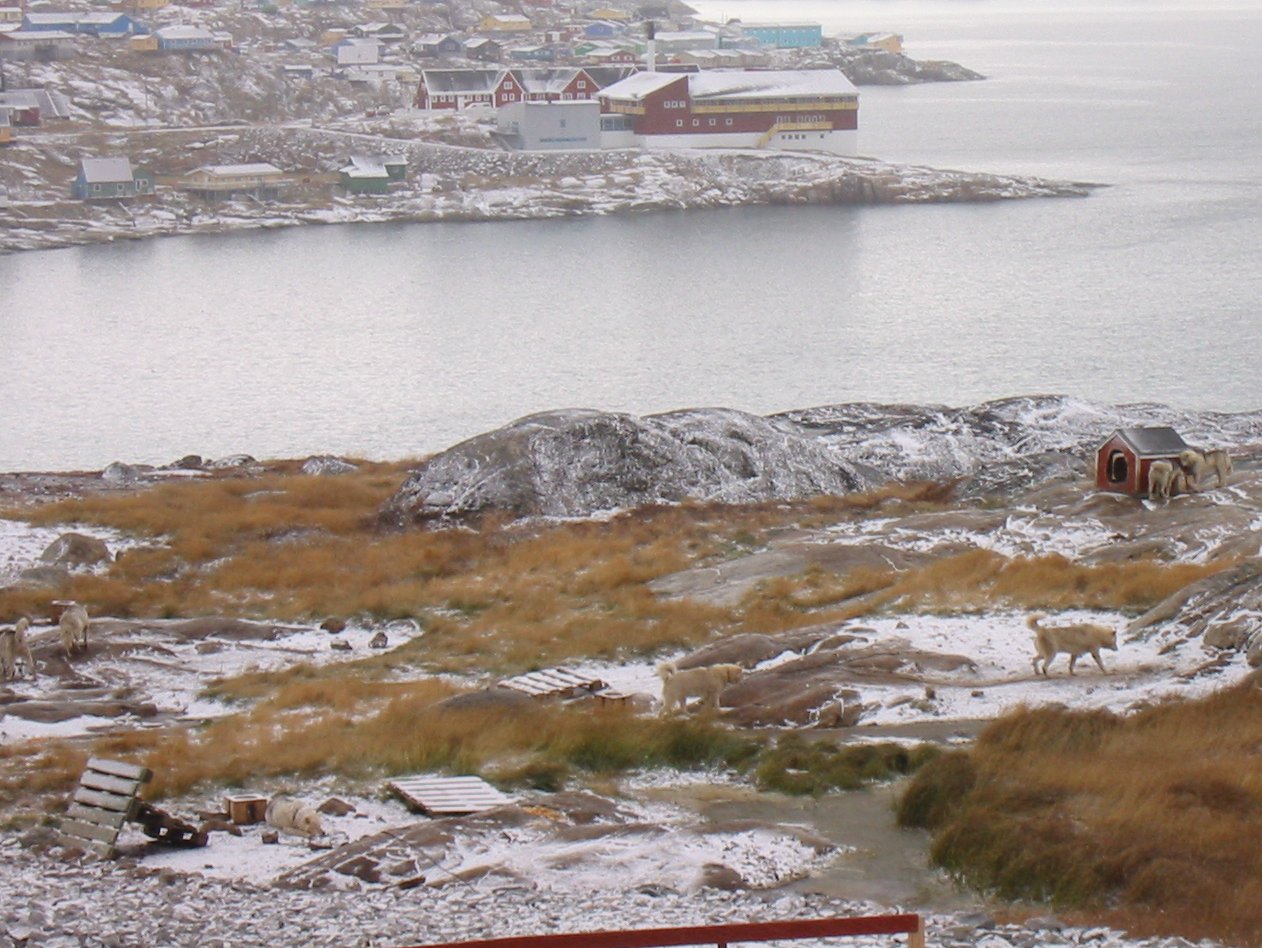
    Arctic snow is fading fast. June snow cover in the Northern Hemisphere has dropped by almost 18% per decade during the past 30 years, according to a study published in Geophysical Research Letters1.

    The drop in snow extent will lower the amount of sunlight reflected away from the planet — a process that has a cooling effect — by exposing darker and less reflective soil, shrubs and trees, which absorb solar radiation and re-emit the heat into the atmosphere. The change also stands to warm the permafrost, alter the timing of spring runoff into rivers and lead to earlier plant growth in spring.

    “It was a bigger number than we initially thought we might have seen, but when you look at the changes in Arctic sea ice, we would expect a similarly large number,” says Chris Derksen, a cryosphere scientist at Environment Canada in Toronto and a co-author on the paper. The swift pace of the snowmelt between 1979 and 2011 exceeds the rate of decline in Arctic sea ice, which clocked in at just under 11% per decade over the same period. September 2012 saw the lowest extent of sea ice in the satellite record — and when this year’s data were included in calculations, they revealed a 13% per decade decline in sea ice and a 21.5% per decade drop in snow cover.

    :: Get the full story at the Nature News website

  • Test lakes face closure

    Test lakes face closure

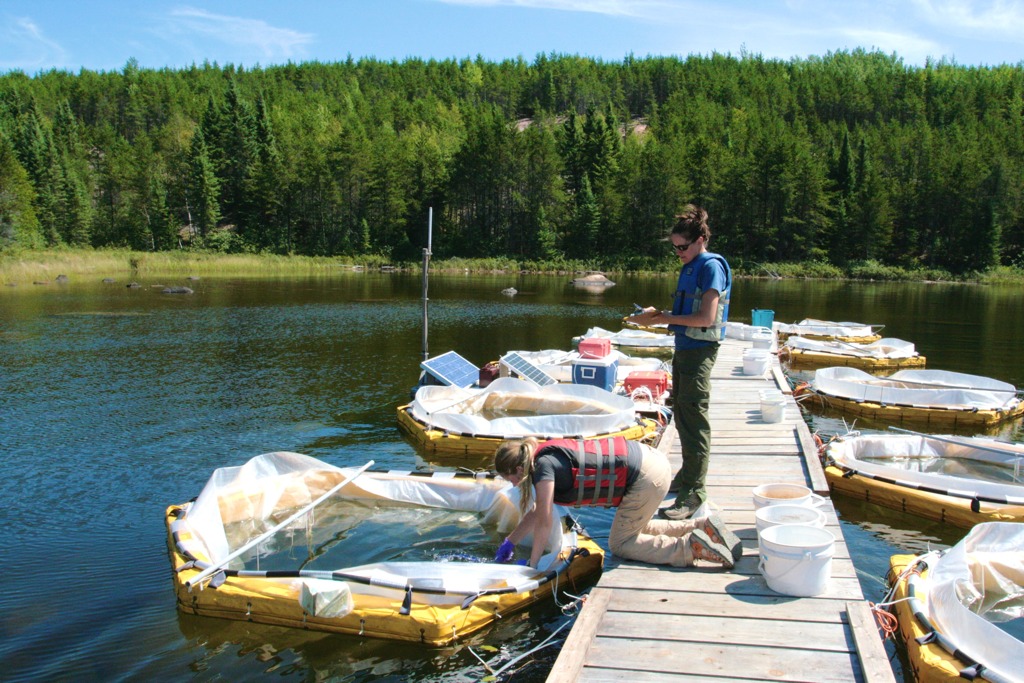
    Lake 239 looks inviting. Pines and spruce fringe the shoreline and waves lap against outcrops of weathered granite. But on this hot August afternoon in northwestern Ontario (see ‘Water works’), one feature stands out. At the far end of the 800-metre-long lake, a series of plastic-walled columns descend from a floating dock to the muddy bottom about 2 metres down. They are the sign that the lake’s placid setting disguises an experiment in controlled environmental abuse.

    Jennifer Vincent, a graduate student at Trent University in Peterborough, Ontario, kneels by one of the columns and empties a vial of silver nanoparticles into it. An iridescent purple cloud blooms in the water for a moment before the metal particles are mixed and disperse. These experiments are the first stage of a three-year, Can$720,000 (US$728,000) project to understand the biological effects of ‘nanosilver’ — an antibacterial agent commonly added to commercial products — and its possible effect on the environment. Previous work has shown that the chemical alters bacterial-community structure, affects algae and may change phosphorus cycling. Next year, the project intends to add nanosilver to an entire lake (Lake 222) and measure its effects across the ecosystem.

    With 58 such lakes serving as sites for a broad range of studies, the Experimental Lakes Area (ELA) is unique in the world. “I don’t take it lightly that you’re basically poisoning a lake,” says Chris Metcalfe, an environmental toxicologist from Trent University, and a leader on the project. But at the ELA, he adds, “you can graphically demonstrate what goes on in a whole lake ecosystem.”

    Yet the ELA project, with its laboratory buildings, residences and workshops, may soon disappear. Earlier this year, Canada announced that it would cease funding the ELA after March 2013, a development that dismayed scientists who have made use of the 44-year-old facility for investigations ranging from chemical contamination to the effects of climate change.

    The decision was unexpected. On 17 May, ELA employees at the Freshwater Institute in Winnipeg, were called to an emergency meeting, where they were told that the government was no longer interested in experiments requiring whole-lake manipulation. The 17 ELA staff at the institute, including four scientists, who are employed by the Department of Fisheries and Oceans (DFO), were told that their positions will be axed as of April 2013. (more…)

    Related stories

    More related stories

    Nature 488, 437–438

    Published 21 August 2012