Category: featured

  • On this Social Network, Sea Ice, Traditional Foods, and Wildlife Are Always Trending

    On this Social Network, Sea Ice, Traditional Foods, and Wildlife Are Always Trending

    Using an app developed by Inuit in Nunavut, Indigenous communities from Alaska to Greenland are harnessing data to make their own decisions.

    HAKAI MAGAZINE

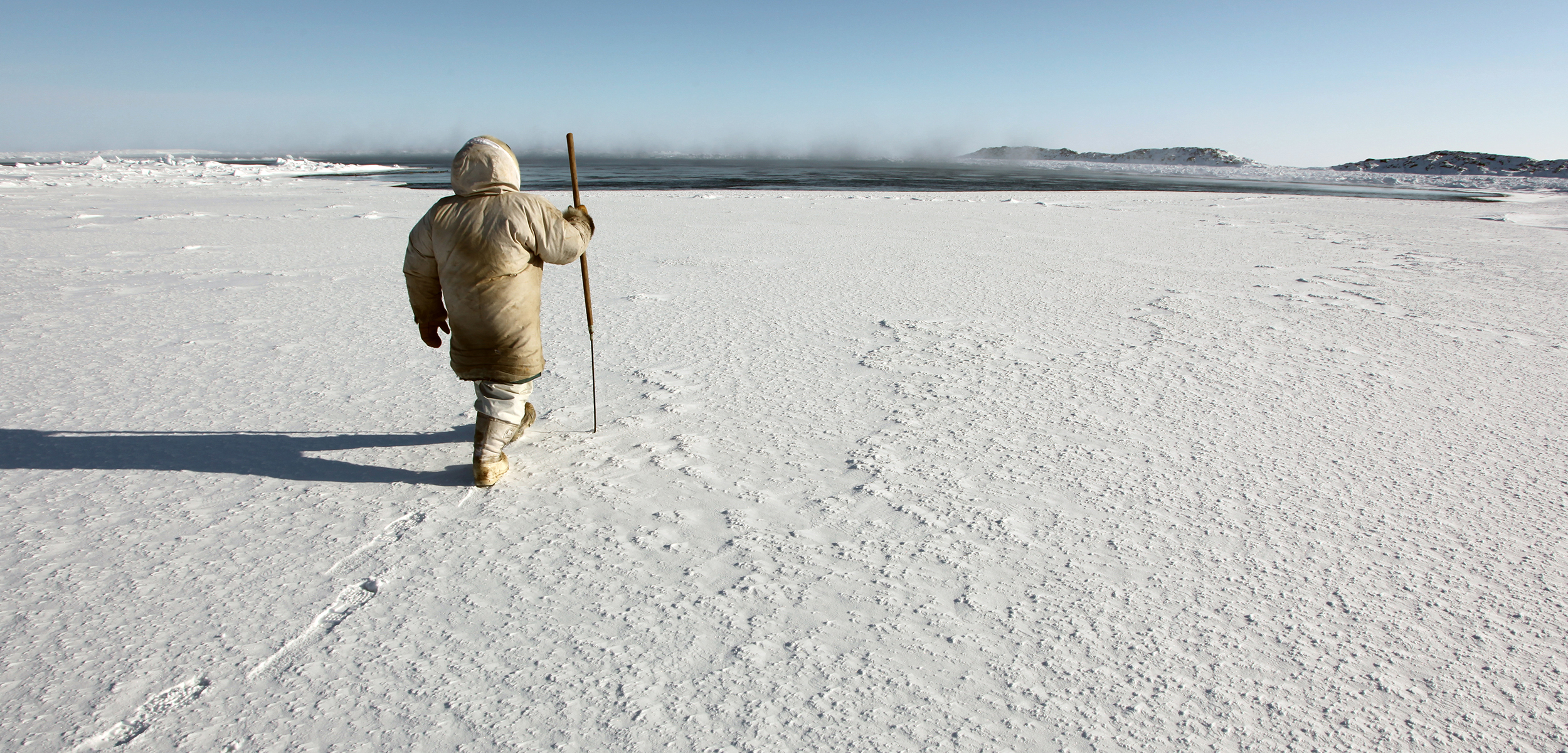
    Few social networking platforms are known for inspiring positive social change these days, but an Inuit-developed app is helping Indigenous communities from Alaska to Greenland advance their self-determination. Named SIKU after the Inuktitut word for “sea ice,” the app allows communities in the North to pull together traditional knowledge and scientific data to track changes in the environment, keep tabs on local wild foods, and make decisions about how to manage wildlife—all while controlling how the information is shared.

    A group of Inuit elders and hunters from Sanikiluaq, Nunavut, came up with the idea for SIKU more than a decade ago to document and understand the changing sea ice they were witnessing in southeastern Hudson Bay. The group turned to the local nonprofit Arctic Eider Society to develop a web-based platform where hunters in nearby coastal communities could upload photos and videos and share knowledge. Contributors began using the portal in 2015 to log water temperature and salinity data, note observations of important wildlife species—such as beluga and common eider ducks—and track the flow of contaminants through the food web.

    Over the years, SIKU has evolved, and recently, the elders saw that the platform could help address a familiar challenge: sharing knowledge with younger people who often have their noses in their phones. In 2019, SIKU relaunched as a full-fledged social network—a platform where members can post photos and notes about wildlife sightings, hunts, sea ice conditions, and more. The app operates in multiple languages, such as Inuktitut, Cree, Innu, and Greenlandic, and includes maps with traditional place names. Since early 2024, over 25,000 people from at least 120 communities have made more than 75,000 posts on SIKU.

    Members’ photos demonstrate the breadth and bounty of northern foods: They show plump bags of berries sitting on the tundra, clusters of sea urchins nestled on smooth gray stones, and boxes of fresh Arctic char placed in the snow. They depict harp sealsringed seals, ptarmigan, beluga, common eider, and neat rows of colorful eggs laid out next to smiling kids. The posts tell stories of hunting and traveling, the impacts of climate change and industrial activity, and the migrations, diets, and illnesses of local animals. In effect, SIKU captures everyday Indigenous life in a rapidly changing landscape.

    Keep reading this article at Hakai Magazine.
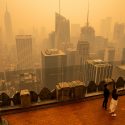
  • Climate change is making forest fire season longer, more extreme

    Climate change is making forest fire season longer, more extreme

    Wildfire smoke from Quebec blankets New York City on June 7, 2023. (Anthony Quintano, CC BY 2.0, via Wikimedia Commons.)

    “How’s the smoke in Ottawa?” I texted my friend early Wednesday morning. Toronto smelled like yesterday’s campfire and the sky had a golden glow to it, but the haze had thinned.

    “It’s so bad,” came the response. “Climate anxiety is at an all-time high. It feels apocalyptic.”

    Ottawa’s Air Quality Health Index, a measure of the health risk floating by on the breeze at a given hour, was off the charts at 6 a.m., measuring 28 out of 10. Local hospitals were already seeing a surge in patients.

    It’s hard to ignore climate change when it’s scratching the back of your throat and making it hard to breathe.

    In Toronto, the arrival of summer isn’t usually marked by hazy mornings, air quality warnings and cancelled outdoor children’s programs. The AQHI has been around for nearly a decade, but many of us have hardly used it. In the years to come, smoky days may become normal as human-caused climate change worsens wildfires across the country and makes them harder to control.

    Quebec wildfires

    The smoke spreading through eastern Ontario was coming from Quebec, where 149 active fires were burning as of Wednesday afternoon, mostly out of control. Federal officials counted 414 blazes across the country, with 239 raging uncontrollably.

    In Canada, the wildfire season typically spans April to October and peaks in July. On average, more than 8,000 fires occur annually, burning about 2.1 million hectares across the country. This year, more than 3.8 million hectares of forest have already been torched.

    … continue reading at the Toronto Star.

  • This is your brain on trees — why is urban nature so good for the mind?

    This is your brain on trees — why is urban nature so good for the mind?

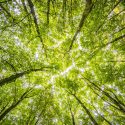
    worms eyeview of green trees
    (Felix Mittermeier/Pexels)

    Green space helps people feel less depressed and fatigued, and science is still exploring all the other ways it lifts our spirits. In a global crisis, we could all use more time in nature

    THE GLOBE AND MAIL

    As temperatures warmed last spring, Montrealers flocked to Mount Royal Park. Trapped inside – first by winter, then by lockdowns – the city’s residents were desperate for nature. The winding trails, lush forests and steep escarpments of Mount Royal offered an ideal remedy for their cabin fever. And as the pandemic has dragged on, the 700-acre green space has become such a popular destination that the city has repeatedly closed its parking lots to limit access during peak periods.

    “The mountain has been intensely used during the pandemic,” says Juan Torres, a professor in the school of urban planning and landscape architecture at the University of Montreal, which is set on the north slope of the mountain. Unable to travel to Mexico to visit his mother and go to the sea, Prof. Torres and his family have spent much of the past year exploring the mountain and the island’s riverside green spaces. “It has been a great stress reliever,” he says.

    Humans, it turns out, often seek out nature more earnestly in times of crisis. War, pandemics and natural disasters have led to the launch of community gardens for veterans and widows, and compelled people to tend to trees that survived bombings. That phenomenon, called “urgent biophilia,” may bring emotional balance to people overwhelmed by a crisis.

    Urban nature is important for mental health over all – city dwellers who live near green spaces are less depressed and anxious than those who don’t.

    More people are grasping nature’s benefits as the pandemic has put people out of work, forced families to juggle jobs and school from the kitchen table and curbed social interactions.

    In a national survey from the not-for-profit group Park People, 82 per cent of Canadians said parks had become more important to their mental health during the pandemic, and 55 per cent of cities said park use had increased.

    “Many people may think that urban nature is nice to have, that it’s pretty or a bonus. But actually, it’s absolutely essential to our mental and physical health,” says Carly Ziter, an urban landscape ecologist at Concordia University.

    Nature in cities provides people with a place to exercise. Parks also gives people places to socialize with friends and family, which makes people happier. During the pandemic, urban green spaces have become rare hubs of acceptable social activity when public-health authorities have urged people to stay one caribou (Yukon), two lobster traps (Halifax) or three racoons (Toronto) apart.

    But research suggests there’s something about how our brains interact with nature that yields psychological benefits. A visit to a natural area delivers sights, sounds and smells – the varied greens of a spring forest; the trill of a redwing blackbird; the whiff of petrichor, the earthy odour produced after rain falls on dry soil – that can improve our mental health by resetting our mood, focus and creativity.

    With more than 80 per cent of Canadians now living in urban and suburban environments, understanding the links between nature and mental health could go a long way to improving our well-being. City dwellers tend to be healthier over all than their rural neighbours, except when it comes to mental health. They are 20 per cent more likely to have anxiety and 40 per cent more likely to develop depression.

    .::. Read more at the Globe and Mail.

  • Wasp Venom Can Save Lives. But the Supply Chain Is Shaky.

    Wasp Venom Can Save Lives. But the Supply Chain Is Shaky.

    Venom is crucial to make medicines for those with severe allergic reactions to wasp, hornet, and yellow jacket stings.

    UNDARK

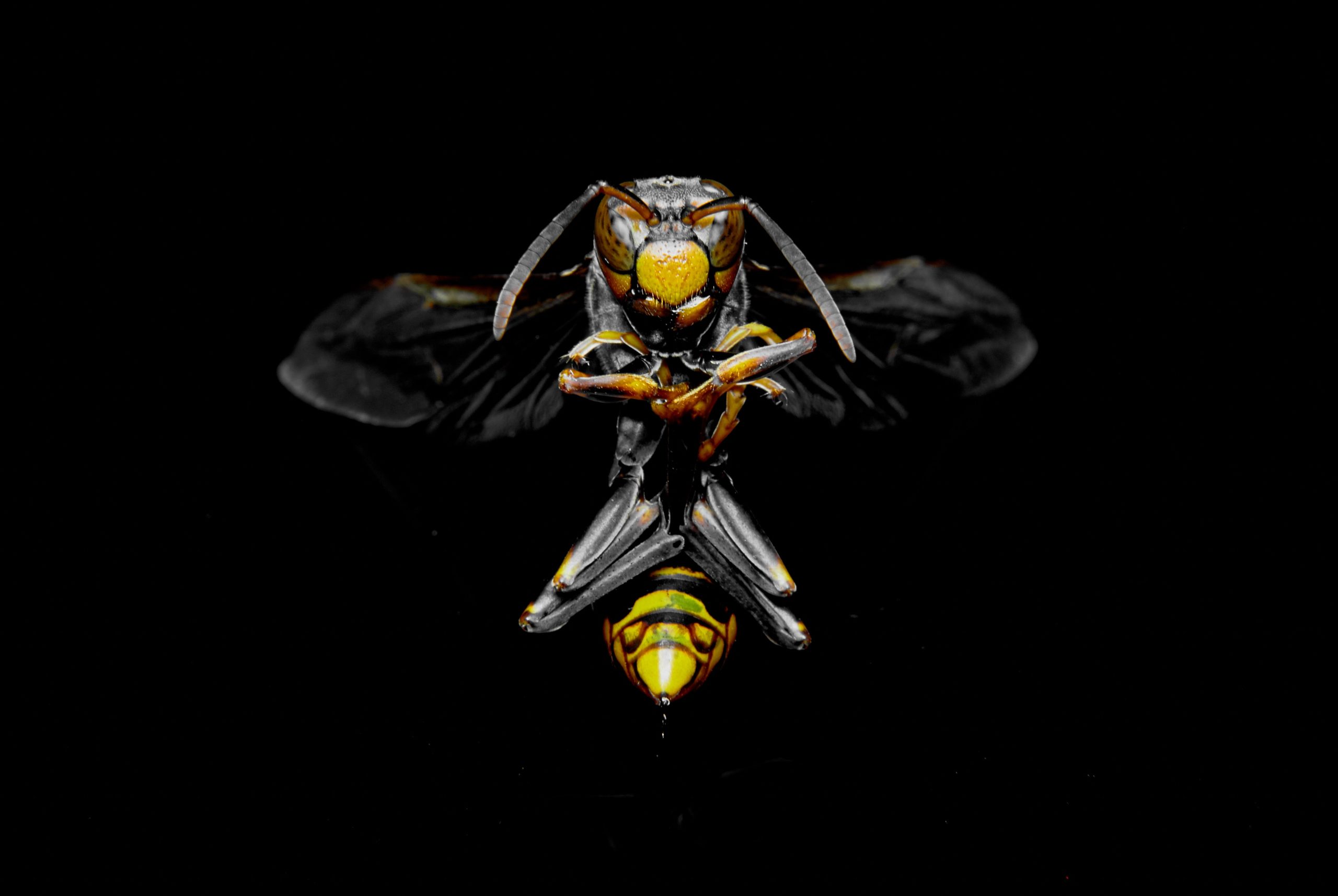
    One morning in the fall of 2019, Zach Techner stepped into a heavily woven white beekeeper’s suit, pulled on rubber boots and thick orange gloves, and wrapped duct tape around his cuffs and along the zipper. He slid safety glasses over his eyes and a netted hood over his head and zipped it shut. He was preparing to collect one of the most dangerous wild creatures in the United States: yellow jackets.

    Techner carried a portable vacuum he had MacGyvered into a wasp-sucking machine to a low thicket of blackberry brambles. A dozen of the flying insects made large descending loops towards their nest in the ground. Over the next 45 minutes, he siphoned the yellow jackets — uninjured but surely a little upset — into a plastic juice jug. He stored the trapped insects beneath a layer of dry ice in a cooler to kill them quickly — and avoid damaging the proteins in their venom.

    Wasp collecting isn’t always so uneventful, Techner warned. Yellow jackets can attack — especially in the fall when colonies swell and food is scarce — with sharp stings or by contracting their abdomens to spray their venom in their assailant’s eyes. “When you’re in the middle of a nest and there are thousands of them attacking you, hitting the veil, the venom can still get into your eyes,” he said. “It hurts really bad. It can be blinding.”

    … read more

  • How Ron Pittaway developed his acclaimed winter finch forecast

    How Ron Pittaway developed his acclaimed winter finch forecast

    LIVING BIRD MAGAZINE, Winter 2020 —

    In early February of 2019, WhatsApp birding groups in southern Ontario were firing off finch alerts. More than a dozen Pine Grosbeaks spotted in Durham, northwest of Toronto. Evening Grosbeaks at Long Point, on the northern shore of Lake Erie. A flock of redpolls around Point Pelee on Lake Erie.

    Ron Pittaway was ready. In the yard of his home in the northeastern corner of Toronto, he had his feeders filled with oil-rich nyjer seed and a buffet of sunflower and safflower seed, peanut butter and suet spread across his tree-studded urban property.

    “See those big conifers? That’s an important finch tree, especially for siskins, and we have a whole ravine full of them here. This forest over here is full of eastern hemlocks,” he said.

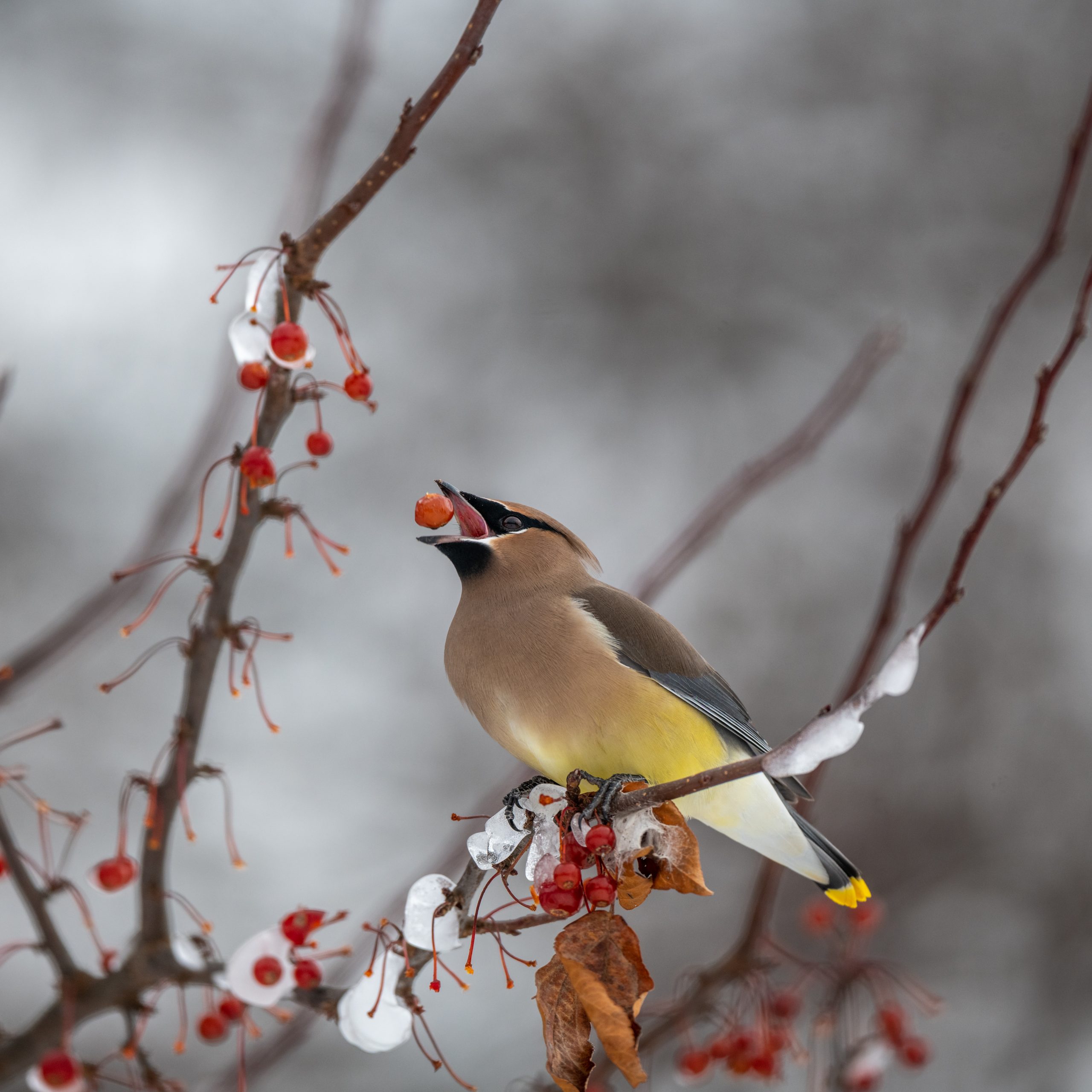
    During short, cool days, the cheery jewel-toned winter finches are a welcome addition to a cold season that is often bleak and gray. But their winter whereabouts can be somewhat erratic. Some years there are few to no grosbeaks or siskins, crossbills or redpolls to be found. Other years, they descend en masse to bird feeders across southern Canada and the U.S., decorating wintry backyards like yellow and red ornaments flitting about the trees.

    Pittaway is North America’s principal prognosticator of when and where—and importantly, if—these birds will arrive each winter. Birders eagerly anticipate the latest edition of his annual Winter Finch Forecast, released every autumn for the past 21 years. Last winter, he bolstered his winter-finch bona fides by predicting the waves of grosbeaks and redpolls descending south four months before those WhatsApp alerts.

    Pittaway has made it his mission to lend some predictability to winter finch sightings by compiling intelligence from his network of naturalists across Canada and the U.S. and analyzing the data to reveal his predictions. The annual reports have made him a bit of a celebrity among eager winter birders.

    “There’s an air and a mystique about it,” says Matt Young, a Cornell Lab of Ornithology scientist who studies crossbills and contributes to Pittaway’s data collection. Young is also an avid birder.

    “Ron’s Winter Finch Forecast is one of the most eagerly anticipated events of the year, like Punxatawney Phil and his shadow. But better, because instead of shadows, Ron sees winter finches.”

    .::. Read the story at Living Bird.