Category: featured

  • Sea change

    Sea change

    The Arctic Ocean is beginning to look and act more like the Atlantic. It’s a shift that threatens to upend an entire food web built on frigid waters.

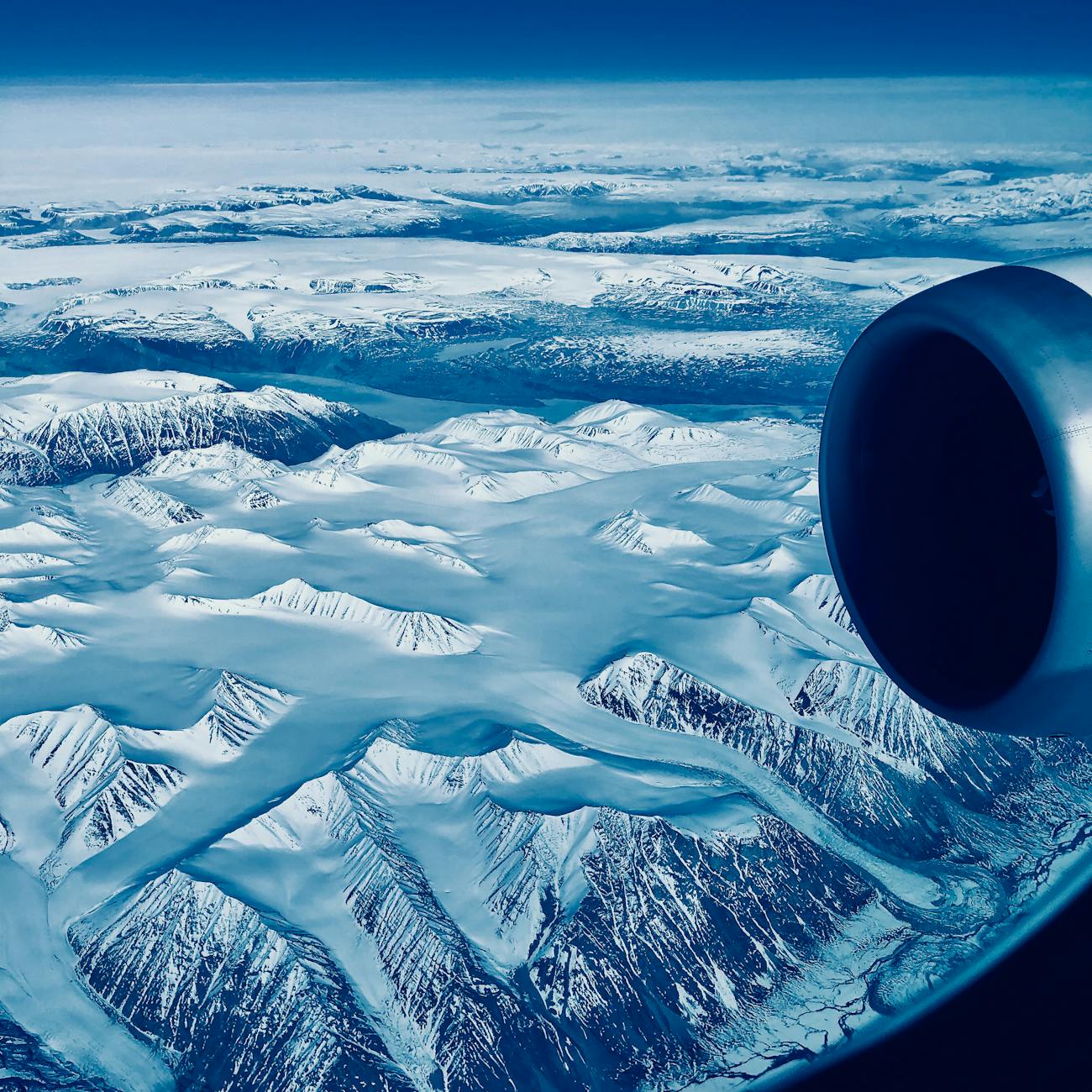
    On a cool morning in late July, the Oceania, a blue and white, three-masted research vessel, maneuvers through the dark waters of a fjord on the west coast of the Arctic island of Spitsbergen. Craggy peaks streaked with snow rise sharply out of the water. Expansive sweeps of glacial ice plow between mountains and into the fjord, ending abruptly in towering turquoise walls. Chunks of ice drift by, sizzling and popping like sheets of bubble wrap as they melt and release air captured ages ago.

    As the ship sets anchor, scientists in wool sweaters, knit hats, rubber boots, and insulated marine jackets spill onto the deck and begin their work. One lowers a silver box of an instrument into the water to record its temperature, salinity, and depth. Another uses a winch to drop a cone-shaped net over the side of the ship to the seafloor. On its way back up, the fine mesh gathers a menagerie of tiny sea creatures, including krill, copepods, other tiny crustaceans, and a couple of grape-sized sea jellies.

    The copepods, tiny and transparent with slim red antennae, are the least beguiling of the hoard, but they are the main target. “We want to find out who they are, where they are, and how many of them there are,” says marine ecologist Sławomir Kwaśniewski who works at the Institute of Oceanology of the Polish Academy of Sciences (IO PAN) in Sopot, Poland. These minute crustaceans form the key middle links in a compressed Arctic food web: They are the primary food for Arctic cod, marine birds, and bowhead whales—and the energy and nutrients they contain help sustain seals, reindeer, and polar bears. By studying copepods, along with the Arctic ecosystem they support, from seafloor to bird-covered cliffs, the researchers hope to gain a better understanding of how climate change is restructuring that food web and changing the entire biological character of the Arctic.

    At its core, the scientists’ interest in the tiny copepods lies in a relatively recent phenomenon—one they’re calling the “Atlantification” of the Arctic. Years of sampling have shown that the Arctic Ocean is losing its distinctly Arctic traits and becoming increasingly more like the Atlantic. Its sea ice is melting, its water warming. In response, animals from warmer climes are encroaching, leading to a reorganization of its biodiversity. One particular copepod species is providing clues about the extent of the disruption and just how grave it might become.

    Keep reading this story at bioGraphic.

  • Nations put science before fishing in the Arctic

    Nations put science before fishing in the Arctic

    Nine nations and the European Union have reached a deal to place the central Arctic Ocean (CAO) off-limits to commercial fishers for at least the next 16 years. The pact, announced yesterday, will give scientists time to understand the region’s marine ecology—and the potential impacts of climate change—before fishing becomes widespread.

    “There is no other high seas area where we’ve decided to do the science first,” says Scott Highleyman, vice president of conservation policy and programs at the Ocean Conservancy in Washington, D.C., who also served on the U.S. delegation to the negotiations. “It’s a great example of putting the precautionary principle into action.”

    The deal to protect 2.8 million square kilometers of international waters in the Arctic was reached after six meetings spread over 2 years. It includes not just nations with coastal claims in the Arctic, but nations such as China, Japan, and South Korea with fishing fleets interested in operating in the region.

    Thus far, thick ice and uncertain fish stocks have kept commercial fishing vessels out of the CAO, but the region is becoming increasingly accessible because of rapid loss of summer sea ice. In recent summers, as much as 40% of the CAO has been open water, mostly north of Alaska and Russia, over the Chukchi Plateau.

    As the summer sea ice becomes thinner and its edge retreats northward, more sunlight is penetrating the water, increasing production of plankton, the base of the Arctic food web. These sun-fed plankton are gobbled up by Arctic cod, which in turn are hunted by animals higher up the food chain, including seals, polar bears, and humans. Some parts of the Arctic Ocean’s adjacent seas, such as the Barents Sea (off the northern coasts of Russia and Norway), saw steep increases in primary production in 2016, approaching 35% above the 2003–15 average.

    .::. Keep reading this story in Science.

  • Europe’s triumphs and troubles are written in Swiss ice

    Europe’s triumphs and troubles are written in Swiss ice

    Pollen frozen in ice in the Alps traces Europe’s calamities, since the time Macbeth ruled Scotland

    NEW YORK TIMES

    As plague swept through Europe in the mid-1300s, wiping out more than a third of the region’s population, a glacier in the Alps was recording the upheaval of medieval society. While tens of millions of people were dying, pollen from the plants, trees and crops growing in Western Europe were being swept up by the winds and carried toward the Alps.

    They became trapped in snowflakes and fell onto the region’s highest mountain, the Monte Rosa massif. Over time, the snow flattened into ever-growing layers of ice, storing a blow-by-blow record of regional environmental change.

    Centuries later, the crop pollens trapped in the ice reveal the collapse of agriculture associated with the pandemic, as bad weather led to poor harvests and fields lay fallow because there was no one left to work them.

    For more than 50 years, scientists have drilled ice cores in the Arctic and Antarctica to reconstruct uninterrupted records of climate change over hundreds of thousands of years. But these glaciers can be difficult to get to and they are far from where most people on Earth live.

    Mid- to low-latitude glaciers, on the other hand, tend to be more accessible and lie at the heart of thousands of years of human activity. The Colle Gnifetti glacier, sitting near the Swiss-Italian border, and with a central location on the continent, has put it on a crash course with Europe’s dust for roughly 10,000 years.

    Sandra Brügger, a climate scientist at the Institute of Plant Sciences and the Oeschger Centre for Climate Change Research at the University of Bern, developed a technique to study the pollen, fungal spores, charcoal and soot locked in an ice core drilled from this Swiss glacier. She is aiming to disentangle the ways extreme weather, innovation, crop failures and pollution have shaped Europe since 1050, when Macbeth ruled Scotland.

    … read more

  • High stakes in the High North

    High stakes in the High North

    BIOGRAPHIC

    A stiff wind buffeted the helicopter as it set down near the gravel shore of Wrangel Island, a remote spot of land 300 miles north of the Arctic Circle in Russia’s extreme Far East. After flying two and a half hours from Pevek, Russia, mostly over open water, the aircraft smelled of vodka and gasoline from the extra fuel cans secured inside. Joel Berger peered up at the white hills that rose around him and spotted several black flecks on the slopes: his quarry, muskoxen.

    These shaggy, horned creatures are one of the many archetypal Arctic species that thrive on Wrangel Island, a little-known hotspot for polar biodiversity. Berger, a wildlife biologist at Colorado State University, came to Wrangel as part of a joint Russian-American project to understand how climate change and other factors, such as predation by polar bears, might be affecting the island’s roughly 900 muskoxen. The island’s isolation, along with its cold, dry polar climate, have created a unique and surprisingly biodiverse ecosystem. Despite the harsh conditions, more than 400 varieties of plants persist here—twice the number found on any other similarly sized piece of Arctic tundra—as well as hundreds of mosses and lichens. Some of them are not found anywhere else on Earth.

    .::. Read the rest of this story at bioGraphic.

  • Global warming is threatening Alaska’s prized wedding flower

    Global warming is threatening Alaska’s prized wedding flower

    THE ATLANTIC

    A little more than a decade ago, Ron Illingworth and his wife, Marji, planted 25 peony roots on their family farm in North Pole, Alaska. They did it on a whim, really, curious whether the bright, ruffled blossoms would thrive alongside the runner beans, peas, and tomatoes they sold at the local farmers market. A horticulture-professor friend of theirs had planted some test plots on the grounds of the University of Alaska Fairbanks, and she was looking for some more data on their hardiness in subarctic conditions. Could peonies become a commercially viable export crop?

    The next year, Ron and Marji had 50 roots. A year later, 100. Now, the couple has 15,000 roots in ground, with the goal of reaching 18,000. Their company, North Pole Peonies, will ship close to 30,000 stems to the continental United States this year for hotel floral displays and showy wedding bouquets. “We started with just a few back here, and now everything you see is peonies,” says Marji.

    Alaska is home to 200 commercial peony farmers, clustered in the three hot spots around its center and south-central coast. The state isn’t known for its agricultural exports, but peonies have quickly become a cash crop for its entrepreneurial farmers. Last year, these growers shipped more than 200,000 stems to local, state, and international markets, including Taiwan, Canada, and Korea. Ron Illingworth, who is also president of the Alaska Peony Growers Association, expects it will be closer to 1 million by 2020.

    But as average temperatures in Alaska increase due to greenhouse-gas emissions, the state’s peony farmers are left wondering if their new enterprise may be nipped in the bud. Peonies are grown around the world in a variety of climates, but they’re typically available only for a short time, from late spring to early summer. That gives Alaskan growers a competitive advantage: While peony farms in Chile, the Netherlands, and Canada have generally peaked by May and June, Alaska’s late summers and midnight sun means near-Arctic farmers have peonies available in July and August. This advantage could disappear, however, if climate change shifts the Alaska season so that it overlaps with growers in the other parts of the world.

    “The biggest thing that we’re worried about right now is what’s happening with global warming,” says Illingworth.

    Read more at The Atlantic.