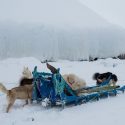
Kunuk Abelsen’s sled dogs, blond, brown, and almost black, stood on the bright white snow outside his home and pulled on their chains. It was January, but the sea ice surrounding his island village in eastern Greenland still wasn’t firm. Abelsen and his dogs were eager to get out on the ice, but they were marooned.
“I really wanted good ice conditions, but nature is the boss,” says the 26-year-old hunter.
Most years, the sea ice arrives in the inlets along the east coast of Greenland in November. As its frozen expanse grows throughout the winter, it connects rocky islands and remote villages, and helps pave the way for hunters and their dog teams to reach the seals that congregate beneath the ice. But last year, the sea ice didn’t take shape the way people in Kulusuk had expected it to.
A stiff wind buffeted the helicopter as it set down near the gravel shore of Wrangel Island, a remote spot of land 300 miles north of the Arctic Circle in Russia’s extreme Far East. After flying two and a half hours from Pevek, Russia, mostly over open water, the aircraft smelled of vodka and gasoline from the extra fuel cans secured inside. Joel Berger peered up at the white hills that rose around him and spotted several black flecks on the slopes: his quarry, muskoxen.
These shaggy, horned creatures are one of the many archetypal Arctic species that thrive on Wrangel Island, a little-known hotspot for polar biodiversity. Berger, a wildlife biologist at Colorado State University, came to Wrangel as part of a joint Russian-American project to understand how climate change and other factors, such as predation by polar bears, might be affecting the island’s roughly 900 muskoxen. The island’s isolation, along with its cold, dry polar climate, have created a unique and surprisingly biodiverse ecosystem. Despite the harsh conditions, more than 400 varieties of plants persist here—twice the number found on any other similarly sized piece of Arctic tundra—as well as hundreds of mosses and lichens. Some of them are not found anywhere else on Earth.
One morning in July 2005, Amy Mundorff rode into the Bosnian countryside, tagging along with a team from the International Commission on Missing Persons. The roads wound past forests, farmland and villages. The group stopped near a filed in a hilly area on the outskirts of a village to meet an informant. From the gestures and the translator’s comments, Mundorff understood that the ground beneath the field might hold bodies.
The war in Bosnia-Herzegovina had ended 10 years earlier, but thousands of people remained missing, many presumed buried in hidden graves scattered across the country. Mundorff, a forensic anthropologist wanted to learn how the team excavated and exhumed graves, and then sorted and identified the co-mingled human remains–her area of expertise.
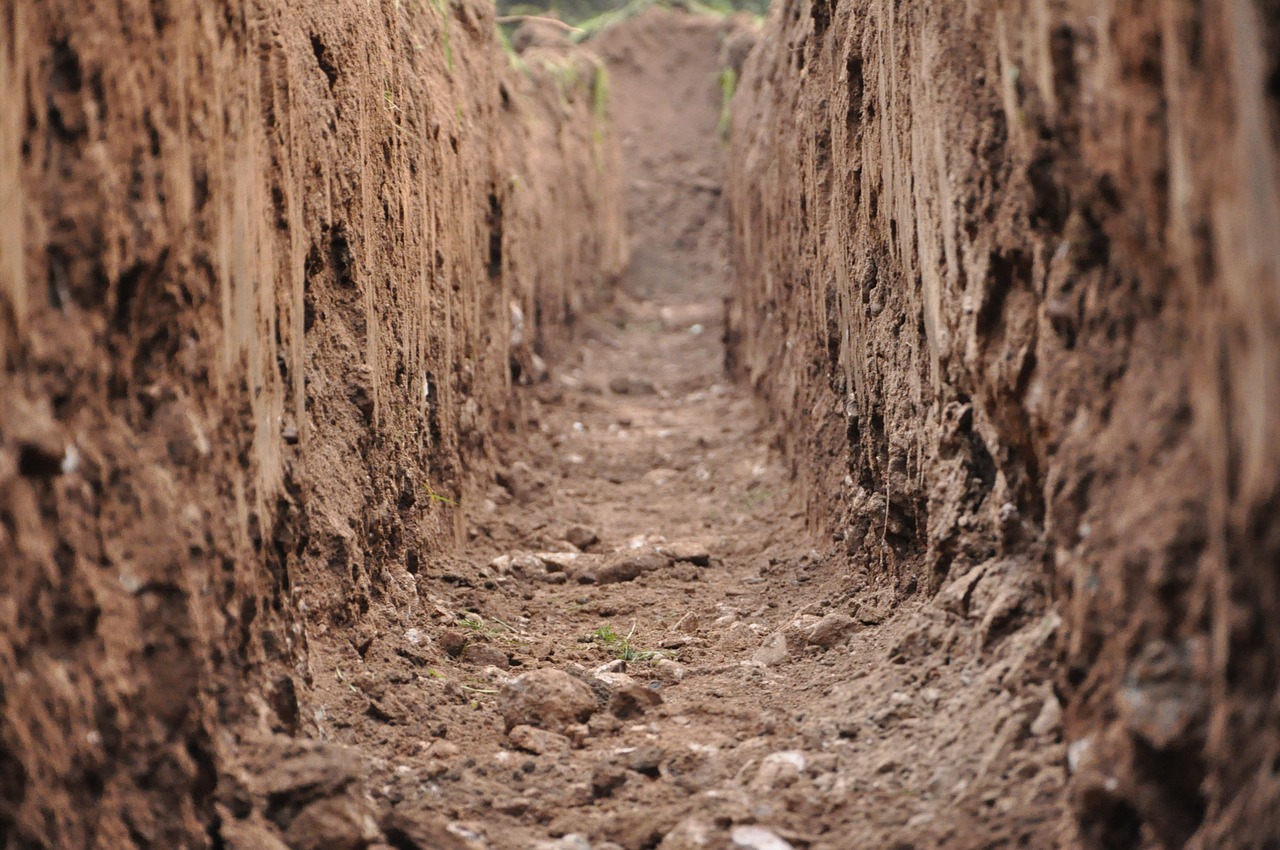
Backhoes scraped away the topsoil, peeling back the earth inches at a time. “they just dug and dug and dug,” recalls Mundorff. Once in a while, the machinery operators would stop and call over an investigator. “It was never anything human. There were roots, animal bones, rocks…but there were no graves,” says Mundorff. By the end of the day, the entire hillside had been dug up, and the team found nothing.
Witness and survivor testimonies remain the most reliable way to locate hidden graves, but the approach is not foolproof. Many of the conflicts under investigation occurred years ago. Elderly witnesses may have fading memories that offer incomplete or incorrect accounts of atrocities. Sometimes the geography of a place changes. Roads get rerouted, forest are cleared, and the edges of villages expand.
Mundorff knew from her own searches for buried murder victims in the United States that investigators often fail to locate hidden graves, but she didn’t expect it to be so difficult in Bosnia-Herzegovina: The country is smaller than Louisiana, and the whereabouts of 8,000 people remain unknown.
“Even if we didn’t find that one grave, I thought we would find something because…where are they?” says Mundorff. She was disappointed and frustrated. “I thought, ‘God, there has to be something better out there.’”
Rising temperatures are threatening urban areas, but efforts to cool them may not work as planned.
The greenhouses that sprawl across the coastline of southeastern Spain are so bright that they gleam in satellite photos. Since the 1970s, farmers have been expanding this patchwork of buildings in Almería province to grow produce such as tomatoes, peppers and watermelons for export. To keep the plants from overheating in the summer, they paint the roofs with white lime to reflect the sunlight.
That does more than just cool the crops. Over the past 30 years, the surrounding region has warmed by 1 °C, but the average air temperature in the greenhouse area has dropped by 0.7 °C. It’s an effect that cities around the world would like to mimic. As Earth’s climate changes over the coming decades, global warming will hit metropolitan areas especially hard because their buildings and pavements readily absorb sunlight and raise local temperatures, a phenomenon known as the urban heat island effect. Cities, as a result, stand a greater chance of extreme hot spells that can kill. “Heat-related deaths in the United States outpace — over the last 30 years — all other types of mortality from extreme weather causes,” says Kim Knowlton, a health scientist at Columbia University in New York. “This is not an issue that is going away.”
Some cities hope to stave off that sizzling future. Many are planting trees and building parks, but they have focused the most attention on rooftops — vast areas of unused space that absorb heat from the Sun. In 2009, Toronto, Canada, became the first city in North America to adopt a green-roof policy. It requires new buildings above a certain size to be topped with plants in the hope that they will retain storm water and keep temperatures down. Los Angeles, California, mandated in 2014 that new and renovated homes install ‘cool roofs’ made of light-coloured materials that reflect sunlight. A French law approved in March calls for the rooftops of new buildings in commercial zones to be partially covered in plants or solar panels.
But the rush to act is speeding ahead of the science. Although cool roofs and green roofs can strongly curb temperatures at the tops of buildings, they do not always yield benefits at the street level, and they may trigger unwanted effects, such as reducing rainfall in some places. “There was a notion that the community had reached a conclusion and there was a one-size-fits-all solution,” says Matei Georgescu, a sustainability scientist at Arizona State University in Tempe. “But that is not the case.”
When a key member of a team is lost, the work does not have to come to an end.
When Michael Pisaric was two years into his PhD, he travelled to Watson Lake in Canada with his supervisor, Julian Szeicz, and graduate student Tammy Karst-Riddoch, to collect sediment from several lakes in Yukon and in northern British Columbia. Szeicz was a geographer at Queen’s University in Kingston, Canada, who worked on reconstructing ancient climates. The trio hoped that the samples would reveal how climate had influenced tree-line dynamics in the region over the past 10,000 years.
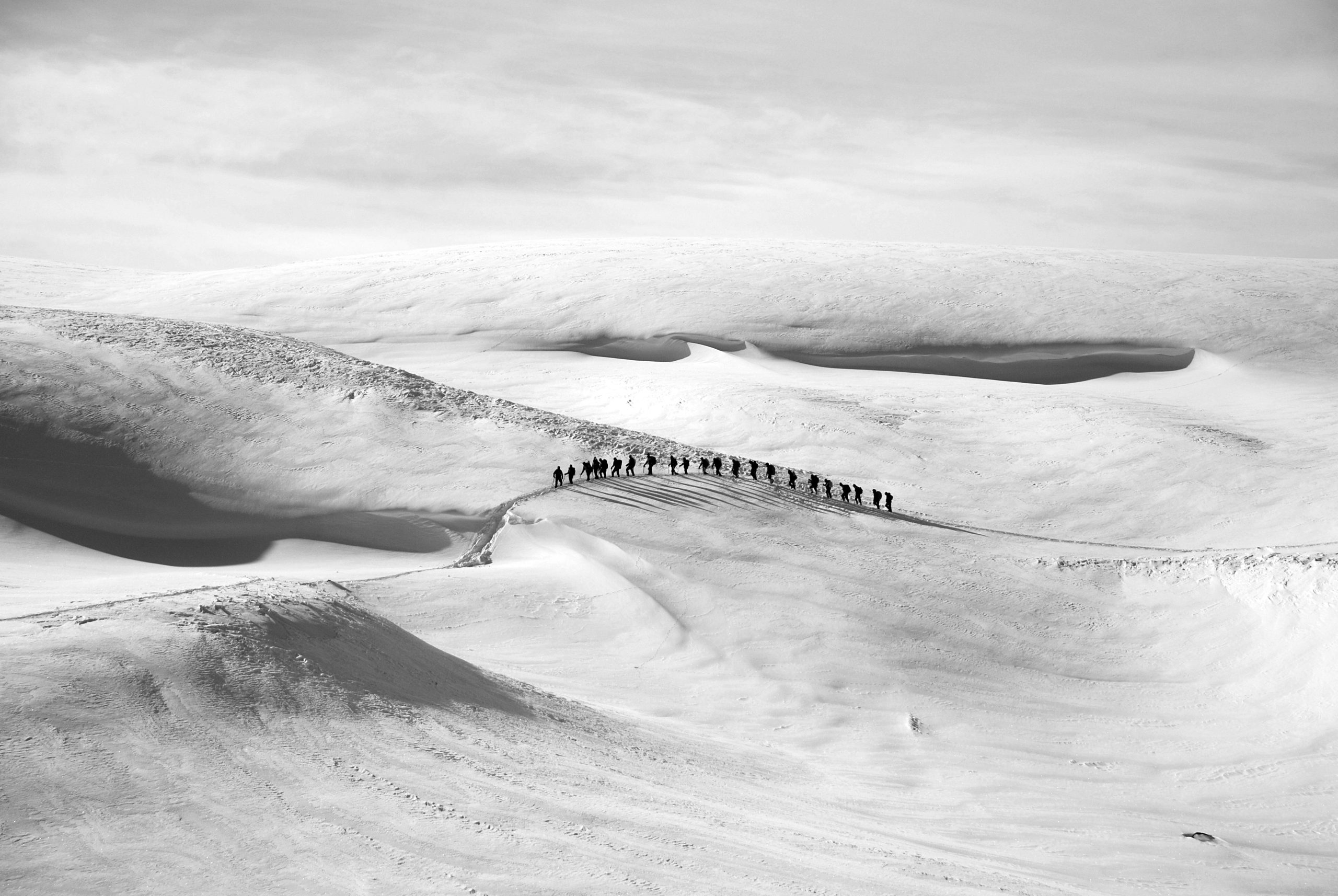
As they trudged through the snow and negotiated a series of switchbacks, a snow avalanche roared down the hill and covered them. When it cleared, Pisaric was buried up to his shoulders and there was no sign of Szeicz. Karst-Riddoch dug Pisaric out and they ran down the hillside to call the Royal Canadian Mounted Police, who recovered Szeicz’s body later that day. (more…)