Category: features

  • The Manning Awards: how four Canadian inventors became market leaders

    For three decades, the Ernest C. Manning Awards Foundation has recognized Canadians who develop and market successful innovations. This year, the awards are about imagination and stamina, says David Mitchell, the foundation’s president. Each of the four winners created a homegrown, breakthrough product. (Two of the prizes, the Innovation Awards, go to those who haven’t had access to research facilities or advanced education in their fields). All of the inventors refined their ideas constantly—sometimes over decades—until they had something they knew would make a difference.

    Critical deliveries

    Encana Principal Award $100,000

    In the mid-1990s, Geoffrey Auchinleck and his business partner Lyn Sherman visited a small hospital in England to sell an electronic system to manage their lab test requests. During the sales call, the laboratory manager listened politely, shook his head and pointed to a refrigerator of donor blood. Help me with that, he said.

    The lab manager fielded requests for blood transfusions and matched blood units to the patients. But after the units were picked up he lost control. Some units were transfused, others were returned or went missing. He needed a way to track who had picked up what, what had been used and how long a unit had been out of the fridge. It was basic information that could help the flow of a scarce resource.

    :: Read the full Maclean’s magazine article on this year’s Manning Award winners, Geoffrey Auchinleck (BloodTrack), Roger Lecomte (University of Sherbrooke, LabPet), Geoffrey Gyles and Kerry Green (Wolf Trax Inc.) and Terry Bigsby (Aspenware).


  • Test lakes face closure

    Test lakes face closure

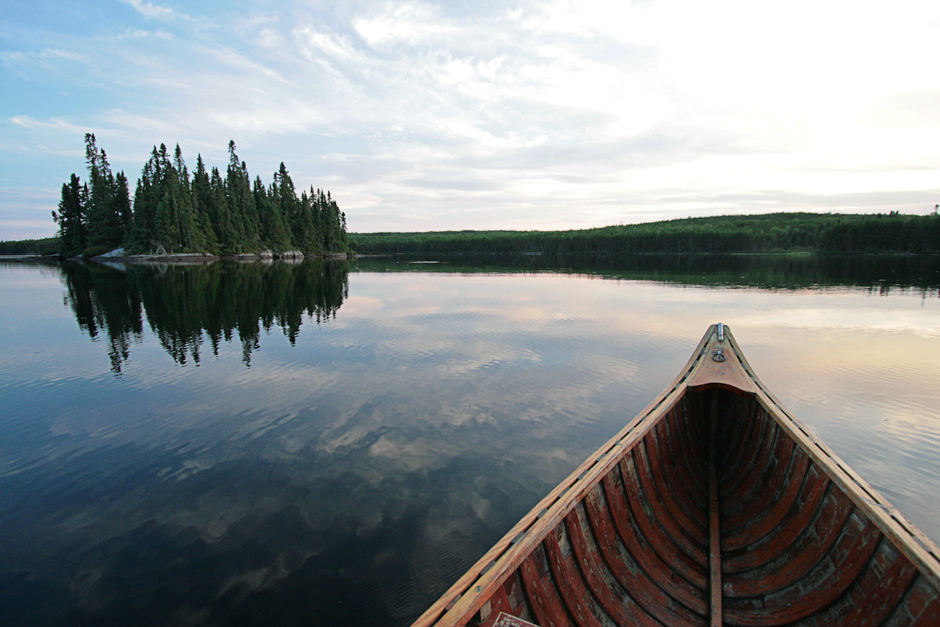
    Lake 239 looks inviting. Pines and spruce fringe the shoreline and waves lap against outcrops of weathered granite. But on this hot August afternoon in northwestern Ontario (see ‘Water works’), one feature stands out. At the far end of the 800-metre-long lake, a series of plastic-walled columns descend from a floating dock to the muddy bottom about 2 metres down. They are the sign that the lake’s placid setting disguises an experiment in controlled environmental abuse.

    Jennifer Vincent, a graduate student at Trent University in Peterborough, Ontario, kneels by one of the columns and empties a vial of silver nanoparticles into it. An iridescent purple cloud blooms in the water for a moment before the metal particles are mixed and disperse. These experiments are the first stage of a three-year, Can$720,000 (US$728,000) project to understand the biological effects of ‘nanosilver’ — an antibacterial agent commonly added to commercial products — and its possible effect on the environment. Previous work has shown that the chemical alters bacterial-community structure, affects algae and may change phosphorus cycling. Next year, the project intends to add nanosilver to an entire lake (Lake 222) and measure its effects across the ecosystem.

    With 58 such lakes serving as sites for a broad range of studies, the Experimental Lakes Area (ELA) is unique in the world. “I don’t take it lightly that you’re basically poisoning a lake,” says Chris Metcalfe, an environmental toxicologist from Trent University, and a leader on the project. But at the ELA, he adds, “you can graphically demonstrate what goes on in a whole lake ecosystem.”

    Yet the ELA project, with its laboratory buildings, residences and workshops, may soon disappear. Earlier this year, Canada announced that it would cease funding the ELA after March 2013, a development that dismayed scientists who have made use of the 44-year-old facility for investigations ranging from chemical contamination to the effects of climate change.

    The decision was unexpected. On 17 May, ELA employees at the Freshwater Institute in Winnipeg, were called to an emergency meeting, where they were told that the government was no longer interested in experiments requiring whole-lake manipulation. The 17 ELA staff at the institute, including four scientists, who are employed by the Department of Fisheries and Oceans (DFO), were told that their positions will be axed as of April 2013. (more…)

    Related stories

    More related stories

    Nature 488, 437–438

    Published 21 August 2012

  • Are your genes your destiny? (Not if your mom has anything to say about it.)

    Are your genes your destiny? (Not if your mom has anything to say about it.)

    McGill scientists are playing a leading role in explaining how the nature vs. nurture debate is even more complicated than we thought.

    This article originally appeared in the Spring-Summer 2011 issue of the McGill News

    What if your ability to pay the rent, to buy groceries or the nature of your relationships set up your children for cardiovascular problems, diabetes or even mental health issues? Although it’s not a far-fetched idea, researchers struggled for years to find biological explanations that linked socioeconomic status or trauma to health. And then, beginning in 2004, scientists at McGill began to untangle some of those connections.

    Piece by piece, study by study, a trio of scientists, backed by a talented crew of post-doctoral fellows, graduate students and research associates, has found evidence that early life experiences can leave lasting marks on the brain. They’ve dismantled the long-standing debate over nature versus nurture, and discovered that it’s not one or the other, but both.

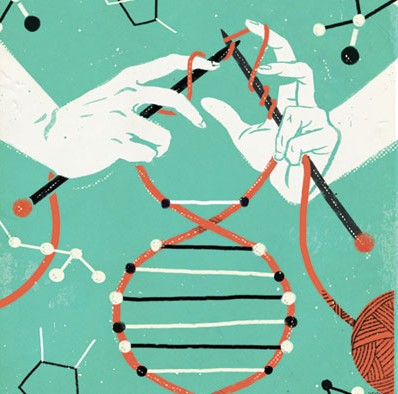
    Though the early 2000s were marked by gushing enthusiasm over the sequencing of the human genome and the secrets it would uncover, Michael Meaney, Moshe Szyf and Gustavo Turecki, PhD’99, targeted their study of health and heredity at another level of genetic information. They looked above the genome, at the epigenome, a code of biochemical tags, often attached to DNA, that turn genes on or off.

    Their research has run the gamut of experimental design: they’ve studied rodents to understand the impact of maternal care on stress, looked at post-mortem tissue to get at the biological effects of childhood abuse, and are currently following 500 mothers and their children to learn how maternal stress and well-being influence child development. Their group has published in the top  scientific journals and their work has been featured in media around the world, including the New York TimesBBCTime, the Economist, and, more recently, the New Yorker. Together they’ve helped usher into the spotlight this new field of epigenetics and put Montreal at its epicentre.

    Getting a good licking

    Michael Meaney is a neurobiologist and clinical psychologist who splits his time between the Douglas Mental Health University Institute at McGill and the Singapore Institute for Clinical Science. In his lab, there are two kinds of rat mothers: those that lick and groom their pups and those that don’t. He and his team have found that the well-licked pups are even-tempered critters that produce less of the stress hormone cortisol when faced with a pressure-filled situation. These cool-headed traits persist into adulthood. But Meaney wanted to understand how an environmental signal, such as the nuzzles and caresses of a nurturing mother, could reshape the genome and change the rat’s response to stress.

    At a research meeting in Madrid, Meaney encountered Szyf, a molecular biologist and a fellow McGill scientist. The two hadn’t really known each other in Montreal, but as they sipped beer together in a Spanish bar, they launched into an animated discussion about how experiences could leave a lasting mark on the genome and a new research partnership was soon forged.

    Szyf, the University’s James McGill professor of pharmacology and therapeutics, has long studied epigenetics in tumour cells—the dynamic modification of the genome through a process called methylation. The pair thought methylation, which alters how genes function, might be the mechanism they were looking for.

    Switching the signals

    The genetic code is written in letters, each one representing a different chemical: guanine (G), cytosine (C), adenine (A) and thymine (T). Three billion of these letters are strung end to end like patio lanterns, coiled and wrapped around proteins and packed into each cell. The genome is the ultimate insider’s guidebook to the human: it contains all the information a cell needs to produce a neuron, an acid-producing cell in the stomach, or any of the other 200 different cell types crowded into the human body.

    But it is the epigenome that provides the directions, revealing which genes should be expressed by adding or removing chemical tags composed of carbon and hydrogen from the genome. A tag planted near a gene will shut it down.

    When the researchers looked at the epigenomes of the rats, they found that when a mother licks her pups, she switches on a gene that dials down the amount of stress hormones that get released in times of duress. Meaney and Szyf had found a mechanism to link environmental cues and gene expression.

    It was an unconventional conclusion. Though scientists have known about these tags for some time, many thought their role was restricted to cell differentiation, the process that ensures that, for example, a heart cell remains a heart cell when it divides by expressing only the genes a heart cell requires. Instead, Meaney and Szyf, working with graduate student Ian Weaver, PhD’06, and their team, found evidence that life experiences alter DNA by painting it with chemical tags and altering nearby gene expression.

    They also showed that they could remove the stress-related methylation by putting unlicked pups with nurturing foster-mothers, or by injecting a drug called trichostatin A into the brains of adult rats—in effect erasing the negative effects of early life experiences.

    They submitted the study to Nature and Science and elsewhere. “We got mixed responses. Some were really excited, others were really skeptical,” says Szyf. The reviewers took issue with the idea that such epigenetic changes could occur after birth. How could a complex system that made sure your eye was always an eye also be manipulated by motherly love? Szyf speculates that the system has a highly organized component that is very strict, “and can’t be messed up,” and a responsive component that allows the system to adapt. The study was finally published in Nature Neuroscience in 2004, and it made a huge splash.

    Traumatized brains

    One of the scientists who took note was Gustavo Turecki. “The nature vs. nurture debate has been very divisive and created very strong rivalries between the different factions, dividing psychiatry departments,” he says.

    A psychiatrist and the director of the McGill Group for Suicide Studies, Turecki approached Meaney after hearing him speak about his research at a scientific meeting. Turecki, who is also the director of the Réseau Québécois de recherche sur le suicide, had access to the Quebec Suicide Brain Bank, an almost unique resource for scientists keen on understanding the neurobiology of suicide.

    In 2005, Patrick McGowan joined Meaney’s lab as a postdoctoral fellow after finishing his PhD at Duke University. He’d jumped at the chance to come back to Montreal (he’d obtained his undergraduate degree from Concordia) and to work with Meaney in the field of epigenetics. “I was interested in the epigenetics story from the beginning. It had always been an interesting question: Why do these effects of early life experiences persist? And why do [traumatic experiences] lead to an increased risk for mental disorders? There hadn’t really been a good explanation, but epigenetics offered the first clues as to how that can happen,” says McGowan.

    McGowan thought that when he joined Meaney’s lab he’d be working with animals, where his background lay. Instead, because of Turecki’s involvement, McGowan found himself examining human tissue. “Humans are so variable. A lot of people asked, ‘How could you possibly pull out the effects of early life experiences?’” he says. “We had to find the right population, the right cohort, and with Gustavo Turecki’s subjects, we had that. These people had committed suicide. [We] also had the life histories of these individuals and [we knew] they’d suffered terrible, terrible experiences.”

    McGowan identified 36 brain tissue samples for the study. They came from men who had been abused as children and who had later committed suicide, and men who had committed suicide, but had no history of abuse. The last group came from otherwise healthy men and made up the control group.

    The researchers chose to focus on the stress response genes that are expressed in the hippocampus, one of the brain structures involved in anxiety, depression, placing events in place and time, and storing long-term memories. The researchers discovered something consistent among the suicide victims who had troubled pasts. They found methyl groups fixed to the genes that control the production of stress hormone receptors in the brain, making these individuals far more biologically sensitive to stress.

    “What we did was pretty cool. It might take us somewhere that lets us understand why the genome operates differently in one individual versus another, and why environmental events might explain that,” says Meaney.

    In 2003, Meaney and other investigators began recruiting pregnant women to participate in the Maternal Adversity, Vulnerability and Neurodevelopment (MAVAN) project. They enrolled 500 women, some of whom suffered from depression or lived in poverty. They visited the mothers to evaluate the type of stressors they faced: Did they have enough money to pay for rent, or buy food for the family? Were they in a violent relationship? What sort of social support did they have? And they followed the children from birth, checking in at three, six, 12, 18 and 24 months, and every year after until they turned eight. The researchers did a battery of tests, measuring cognitive and physical development, attention, food preferences and mother-child interaction. They measured hormone levels and collected DNA.

    “MAVAN is unique in Canada,” says Hélène Gaudreau, MAVAN’s study coordinator.

    A question of confidence

    The study is ongoing, so few of the results have been published. Part of the project measures the kids’ confidence and compares it to their genetic backgrounds and upbringing. Generally, a child’s confidence level drops following the experiencing of a failure. But what Meaney and Gaudreau have found is that genetics and maternal care combine to determine whether confidence plummets or only dips following failure.

    The serotonin transporter is one of the proteins associated with emotion. Individuals who possess a shorter version of the gene are at a greater risk of developing depression. But genetics alone can’t predict which children will be most upset when they fail a test. It also depends on the child’s attachment to his mother, they discovered. The study found that those with the shorter gene avoided the emotional crash if they were cuddled and cooed over, and formed a strong bond with their mothers.

    “There are two points to this: one is the interdependence of genes and environment, and the other is that your genes don’t make you sick. They make us more or less susceptible to environmental influences. It’s a much more sophisticated way of thinking about what genes do,” says Meaney.

    “Hopefully, we’ll be able to see which children are more sensitive to developing vulnerabilities, and we can find a way to help those families,” says Gaudreau. “A lot of people talk about maternal stress and its impact on the baby. But it’s not fixed—you can reverse some of those effects and that is good news.”

    Over the last decade, Montreal has become an epigenetics hotspot. In addition to the MAVAN study, Meaney continues to study rodents, taking a broader look at the genome to understand whether particular types of genes are more vulnerable to the maternal influence than others. Szyf recently received funding through a European neurosciences and mental illness research network to study the effects of prenatal, perinatal and postnatal stress and its epigenetic impacts on depression. McGowan, who is now an assistant professor in biological science at University of Toronto Scarborough, is collaborating with Szyf and researchers at Université de Montréal and Université Laval on a study of twins that will examine such things as parenting behaviour and family functioning. The study could help explain how environmental factors affect early mental health development. McGowan is also preparing to teach a university-level course in epigenetics, introducing the next generation of scientists to a field he helped pioneer.

  • Everyday tales of trauma

    Everyday tales of trauma

    A young woman who lost half her blood in a terrifying car crash, and lived. A man with a fractured skull from a simple fall on his stairs. A crack team of nurses, surgeons and specialists on call 24/7. Welcome to the daily drama of the region’s trauma HQ.

    It was late on a Thursday afternoon in early December last year. Santanna and her mother-in-law had just finished installing a set of holiday flower arrangements at a client’s house in King Township, near Nobleton, Ont. The pair planned to fit in one more client visit before Santanna met her husband Dan for a dinner date.

    As they turned out of the driveway, their truck collided with another car. Though both vehicles were badly damaged, no one was seriously injured. While Santanna waited for the police to turn up, Santanna’s husband and her father-in-law arrived.

    About 40 minutes later, without warning, another car cleared the corner, slid on the ice and spun. It was followed by a black truck that swerved to avoid the car. It too struck the ice, hit Santanna and tossed her through the air. The truck then ran over her and dragged Santanna about four metres before it came to rest, with her buried in the snow under its rear wheels.

    “The last thing I remember is being underneath the truck and having Dan dig me out. He was crying and freaking out. I said, ‘I love you, and ‘goodbye’,” recalls Santanna. “I didn’t think I was going to make it.”

    Santanna owes her survival to a set of coincidences, some quick thinking by an off-duty emergency physician and a first-rate trauma team at Sunnybrook.

    The crash took place not far from the home of a pair of Sunnybrook doctors. Dr. Valerie Krym was outside, cleaning snow off the steps of their house when her husband telephoned. He is the Medical Director at ORNGE, the transport medical service provider for the province of Ontario, and was on duty in ORNGE’s Communication Centre that evening. He’d heard about the crash and called home to check on his wife.

    By now it was dark. The ORNGE helicopter did not land at the scene because these landings are not safe to do at night, and there wasn’t a nearby helipad or airport available. A land ambulance was dispatched and already en route to the scene.

    Dr. Krym, an emergency physician at Sunnybrook, walked to the end of her long driveway. The crash scene was a kilometre away and Dr. Krym’s car was in the shop, but because there were so many emergency vehicles on the scene she decided to walk there.

    When Dr. Krym arrived, she saw that Santanna was critically injured—her pelvis and lower legs were crushed and one of the major blood vessels in one of her legs had opened up. Her blood pressure was very low. Sunnybrook was not the closest hospital, but “I knew it was her only chance of survival. She needed a trauma centre,” recalls Dr. Krym. “While we were speeding down the 401, I told the driver to notify Sunnybrook’s trauma team and tell them to be ready and waiting for us in the trauma room for our arrival.”

    Santanna’s injuries were so severe, the health care team didn’t think she would live. “The injuries were clearly horrific and life threatening. She’d lost more than half her blood,” says Dr. Doreen Yee, the trauma team leader who directed Santanna’s care that night.

    ———————–

    Sunnybrook’s Tory Regional Trauma Centre provides care for patients suffering from a wide range of traumatic injury from motor vehicle collisions, stabbings and gunshot wounds, cycling and other recreational activities, and falls in the GTA and south central Ontario.

    When Sunnybrook receives notice that a trauma is en route, it activates an internal network that draws the on-call trauma team composed of anaesthesiologists, orthopaedic surgeons, general surgeons, neurosurgeons, respiratory therapists and nurses to the trauma centre.

    On a Monday afternoon in late February, Heather Mazurenko, a registered nurse, picks up the receiver of the red phone on the nurses’ desk in the emergency department. “How far out are they?” she asks the dispatcher. A screen mounted on a nearby wall has begun to flash. An older man has fallen down the stairs at his home and hit his head. EMS has scored the injury a level 2 out of 5 on the Canadian Triage and Acuity Scale, where 1 is the most severe.

    “It’s coded as a trauma, so they’ll come to the nearest trauma centre, which is us. We’ll treat it as such until we know what’s going on,” says Ms. Mazurenko, taking off her glasses. It’s just after 5 p.m. and nearly 10 hours into her shift. As the scheduled Clinical Care Leader, Ms. Mazurenko’s role is to manage the movement of patients through the hospital’s emergency department and its health care staff. “I need to know where everyone is and what beds are available. I run around all day—I’m the rabbit. That’s why I have lunch at 7 p.m.,” she says. When the ambulance is on its way to Sunnybrook she pages the trauma surgical team. Most traumas will reel in seven staff; a major trauma will draw in closer to 10.

    At 5:40 p.m. four paramedics wheel the patient stretcher into the trauma room, a large open space with four trauma bays. Metal storage racks stacked with blue boxes stocked with syringes, gloves and other medical supplies line one wall. A low fridge tucked against the opposite wall holds blood. A Kodak Direct View DR 95000 system X-ray machine is suspended from the ceiling.

    The man is intubated, hooked up to an intravenous line, sedated and attached to a portable monitor that measures his heart rate, blood pressure and blood oxygen levels. Dr. Paul Engels, the on-call trauma team leader, leans over the table and rubs his knuckles into the centre of the man’s chest.

    At the scene of the crash, the man had scored an 11 on the Glasgow Coma Scale, which assesses a patient’s eye, verbal and motor responses following a head injury. The pain response was a good sign, but the patient’s score had dropped to a five, and considered severe. “Pupils are 2, and reactive bilaterally,” says Dr. Engels.

    Dr. Sebastian Tomescu, the on-call orthopaedic resident, runs his hands along the man’s legs and flexes his knees and rotates each hip, checking for broken and dislocated bones. He moves quickly, finding no injuries.

    The team of seven rolls the man onto his side so that Dr. Tomescu can check his spine. Amidst the chatter, the beeps and the pings, there are the sounds of the patient’s flannel shirt ripping and metal hitting the floor as his belt and pants are dropped. Discarded packaging and medical tape accumulate around the stretcher. A kidney-shaped tray holds the patient’s dentures. They remove the neck brace, staple shut the laceration over the man’s right ear, and roll him back. “Let’s do a chest and a pelvis X-ray,” says Dr. Engels. It’s 5:59 p.m.

    Less than 10 minutes later, the room is noticeably calmer and quieter. The trauma team continues to check the patient’s vitals noting the numbers in his chart, and tidy up the tubes and wires that connect him to the IV bags and machines, before he is wheeled a short distance down the hall to the trauma centre’s dedicated CT scanning room.

    Ten staff lift the man from the stretcher to the narrow CT table to scan for bleeds and breaks. Dr. Martin Shoichet, a radiologist, spreads his elbows wide and leans on the desk peering at the computer screen in front of him. He spots a crescent-shaped sliver of blood between the brain and the skull. “There’s also a rib fracture, and probably a small hemothorax [blood in the chest cavity], maybe two,” says Dr. Shoichet. Dr. Engels picks up the phone and books an operating room.

    Ginny Cosby, a registered nurse on the trauma team, pops into the room to speak to Dr. Engels. “I’ve told the family he’s critical and that you’ll come to see them. I put them in the family room. They’re a little anxious,” she says.

    A minute later, Ms. Mazurenko leans into the room, phone tucked under her ear. “I’ve got an OR,” she says. The trauma team stops the scan and moves the patient onto the elevator to take him up to an operating room. It’s 6:51 p.m.

    Back at the nursing station in the Emergency Department, staff dressed in jackets and carrying coffee begin streaming in and study a large white board to find their assignment for the night. There are two minutes left in Ms. Mazurenko’s shift and she has yet to eat her lunch. The red phone rings. She picks it up. “Tell me, what’s on the ticket?” she asks.

    ———————–

    Santanna’s heart stopped while she was in the CT scanner. “When people’s hearts stop because of blood loss, it is not easy to get them back,” says Dr. Yee. The team did CPR and gave Santanna epinephrine to keep her alive and rush her up to the OR. “I had an excellent trauma team that night, we were a well-oiled machine,” she says. “Dr. Krym made a good decision to bring Santanna to Sunnybrook and not waste time going to one of the smaller hospitals that might not have had the resources to help her,” says Dr. Yee.

    Santanna’s pelvis was crushed. The doctors amputated her left leg above the knee and performed a through-the-knee amputation on her right leg. But she is alive. Three months after the accident, Santanna remains in a rehabilitation hospital receiving occupational and physical therapy daily. “My goal is to get my prosthetic legs, so I can get back on my horses. I miss my animals so much,” she says. Santanna’s other goal is to have a helipad built in the Nobleton region so that other trauma victims don’t face the same risks she did. “If it wasn’t for Dr. Krym, I wouldn’t be here,” says Santanna.

    Published in the Globe and Mail as a special informational supplement on Sunnybrook.

  • Think small

    The Canadian forestry industry could hinge on the most abundant nanomaterial on earth.

    A pale grey slurry roils about in a waist-high blue plastic drum at the centre of a garage-like space at the National Research Council’s Biotechnology Research Institute in Montreal. It looks a little like slush, but when it is dried it more closely resembles one of the fine white powders chefs stock in their kitchens. For the handful of chemists hovering about the room, it’s the stuff dreams are made of. For Canada’s faltering forestry industry, it is a beacon of optimism.

    Nanocrystalline cellulose (NCC) is nature’s Superman fibre; it is stronger than steel, lightweight and durable; its unique optical qualities make it desirable for use in everything from cosmetics and sunscreens to security documents, switchable optical filters, coatings and adhesives, and its anti-microbial properties open the door for a bunch of medical applications. All that from a little crystal made from tree trunks.

    It’s no surprise then that the Canadian forestry industry–straining under a slumped U.S. housing market and pricing pressures from developing countries–has high hopes that this possibly miraculous crystal will be their ticket to stage a much-needed comeback. The question now is, can this superhero compound make the leap from the lab, to large-scale production and into the marketplace?

    Read more in the April 2011 issue of Canadian Chemical News.