Category: health

  • On this Social Network, Sea Ice, Traditional Foods, and Wildlife Are Always Trending

    On this Social Network, Sea Ice, Traditional Foods, and Wildlife Are Always Trending

    Using an app developed by Inuit in Nunavut, Indigenous communities from Alaska to Greenland are harnessing data to make their own decisions.

    HAKAI MAGAZINE

    Few social networking platforms are known for inspiring positive social change these days, but an Inuit-developed app is helping Indigenous communities from Alaska to Greenland advance their self-determination. Named SIKU after the Inuktitut word for “sea ice,” the app allows communities in the North to pull together traditional knowledge and scientific data to track changes in the environment, keep tabs on local wild foods, and make decisions about how to manage wildlife—all while controlling how the information is shared.

    A group of Inuit elders and hunters from Sanikiluaq, Nunavut, came up with the idea for SIKU more than a decade ago to document and understand the changing sea ice they were witnessing in southeastern Hudson Bay. The group turned to the local nonprofit Arctic Eider Society to develop a web-based platform where hunters in nearby coastal communities could upload photos and videos and share knowledge. Contributors began using the portal in 2015 to log water temperature and salinity data, note observations of important wildlife species—such as beluga and common eider ducks—and track the flow of contaminants through the food web.

    Over the years, SIKU has evolved, and recently, the elders saw that the platform could help address a familiar challenge: sharing knowledge with younger people who often have their noses in their phones. In 2019, SIKU relaunched as a full-fledged social network—a platform where members can post photos and notes about wildlife sightings, hunts, sea ice conditions, and more. The app operates in multiple languages, such as Inuktitut, Cree, Innu, and Greenlandic, and includes maps with traditional place names. Since early 2024, over 25,000 people from at least 120 communities have made more than 75,000 posts on SIKU.

    Members’ photos demonstrate the breadth and bounty of northern foods: They show plump bags of berries sitting on the tundra, clusters of sea urchins nestled on smooth gray stones, and boxes of fresh Arctic char placed in the snow. They depict harp sealsringed seals, ptarmigan, beluga, common eider, and neat rows of colorful eggs laid out next to smiling kids. The posts tell stories of hunting and traveling, the impacts of climate change and industrial activity, and the migrations, diets, and illnesses of local animals. In effect, SIKU captures everyday Indigenous life in a rapidly changing landscape.

    Keep reading this article at Hakai Magazine.

  • This is your brain on trees — why is urban nature so good for the mind?

    This is your brain on trees — why is urban nature so good for the mind?

    worms eyeview of green trees
    (Felix Mittermeier/Pexels)

    Green space helps people feel less depressed and fatigued, and science is still exploring all the other ways it lifts our spirits. In a global crisis, we could all use more time in nature

    THE GLOBE AND MAIL

    As temperatures warmed last spring, Montrealers flocked to Mount Royal Park. Trapped inside – first by winter, then by lockdowns – the city’s residents were desperate for nature. The winding trails, lush forests and steep escarpments of Mount Royal offered an ideal remedy for their cabin fever. And as the pandemic has dragged on, the 700-acre green space has become such a popular destination that the city has repeatedly closed its parking lots to limit access during peak periods.

    “The mountain has been intensely used during the pandemic,” says Juan Torres, a professor in the school of urban planning and landscape architecture at the University of Montreal, which is set on the north slope of the mountain. Unable to travel to Mexico to visit his mother and go to the sea, Prof. Torres and his family have spent much of the past year exploring the mountain and the island’s riverside green spaces. “It has been a great stress reliever,” he says.

    Humans, it turns out, often seek out nature more earnestly in times of crisis. War, pandemics and natural disasters have led to the launch of community gardens for veterans and widows, and compelled people to tend to trees that survived bombings. That phenomenon, called “urgent biophilia,” may bring emotional balance to people overwhelmed by a crisis.

    Urban nature is important for mental health over all – city dwellers who live near green spaces are less depressed and anxious than those who don’t.

    More people are grasping nature’s benefits as the pandemic has put people out of work, forced families to juggle jobs and school from the kitchen table and curbed social interactions.

    In a national survey from the not-for-profit group Park People, 82 per cent of Canadians said parks had become more important to their mental health during the pandemic, and 55 per cent of cities said park use had increased.

    “Many people may think that urban nature is nice to have, that it’s pretty or a bonus. But actually, it’s absolutely essential to our mental and physical health,” says Carly Ziter, an urban landscape ecologist at Concordia University.

    Nature in cities provides people with a place to exercise. Parks also gives people places to socialize with friends and family, which makes people happier. During the pandemic, urban green spaces have become rare hubs of acceptable social activity when public-health authorities have urged people to stay one caribou (Yukon), two lobster traps (Halifax) or three racoons (Toronto) apart.

    But research suggests there’s something about how our brains interact with nature that yields psychological benefits. A visit to a natural area delivers sights, sounds and smells – the varied greens of a spring forest; the trill of a redwing blackbird; the whiff of petrichor, the earthy odour produced after rain falls on dry soil – that can improve our mental health by resetting our mood, focus and creativity.

    With more than 80 per cent of Canadians now living in urban and suburban environments, understanding the links between nature and mental health could go a long way to improving our well-being. City dwellers tend to be healthier over all than their rural neighbours, except when it comes to mental health. They are 20 per cent more likely to have anxiety and 40 per cent more likely to develop depression.

    .::. Read more at the Globe and Mail.

  • The New Lice Wars

    The New Lice Wars

    Maclean’s

    Despite evidence that it’s time to abandon the no-nit rule requiring kids be sent home, schools have yet to get the message.

    When her three-year-old daughter was in daycare, Lisa got her first lice-alert telephone call. There were a slew of calls during senior kindergarten and more in Grade 1. The message was the same each time: Her daughter had nits in her hair and needed to be picked up. Lisa, who lives in Toronto, would postpone client meetings and collect her. “Thank God I work for myself. I have great clients,” says Lisa, who asked that her full name be withheld.

    The Toronto District School Board (TDSB) is one of the few school boards in Canada that sends kids home when head lice or their eggs, called nits, are discovered. Its no-nit policies require children to be free of nits before they return to school.

    These dreaded lice calls peak after school breaks—in September, January, and after the March break. Children pick up the bugs at sleepovers, camp, or on family vacations when they visit friends and relatives, and bring the hitchhikers to class.

    “There has been a concern about head lice in school for years, and the board developed a procedure for how best to deal with it,” says Chris Broadbent, the manager of health and safety at the TDSB. The policy, in place since January 2001, has been reviewed every few years, most recently, in May 2012. “We always look at the medical advice out there,” says Broadbent.

    But the current policy runs counter to the latest recommendations of the Canadian Paediatric Society (CPS). “We don’t think a no-nit policy makes any sense,” says Joan Robinson, a member of the Canadian Paediatric Society’s infectious disease and immunization committee. In 2008—and again in 2014—the CPS evaluated the available evidence on controlling nits and lice, and determined there was no medical rationale for excluding children from school because they had nits or lice. “Unless you inspect every child, every day, how do you know there isn’t a child in school who does have head lice?” asks Robinson. “It becomes discriminatory.”

    → Keep reading this story at Maclean’s

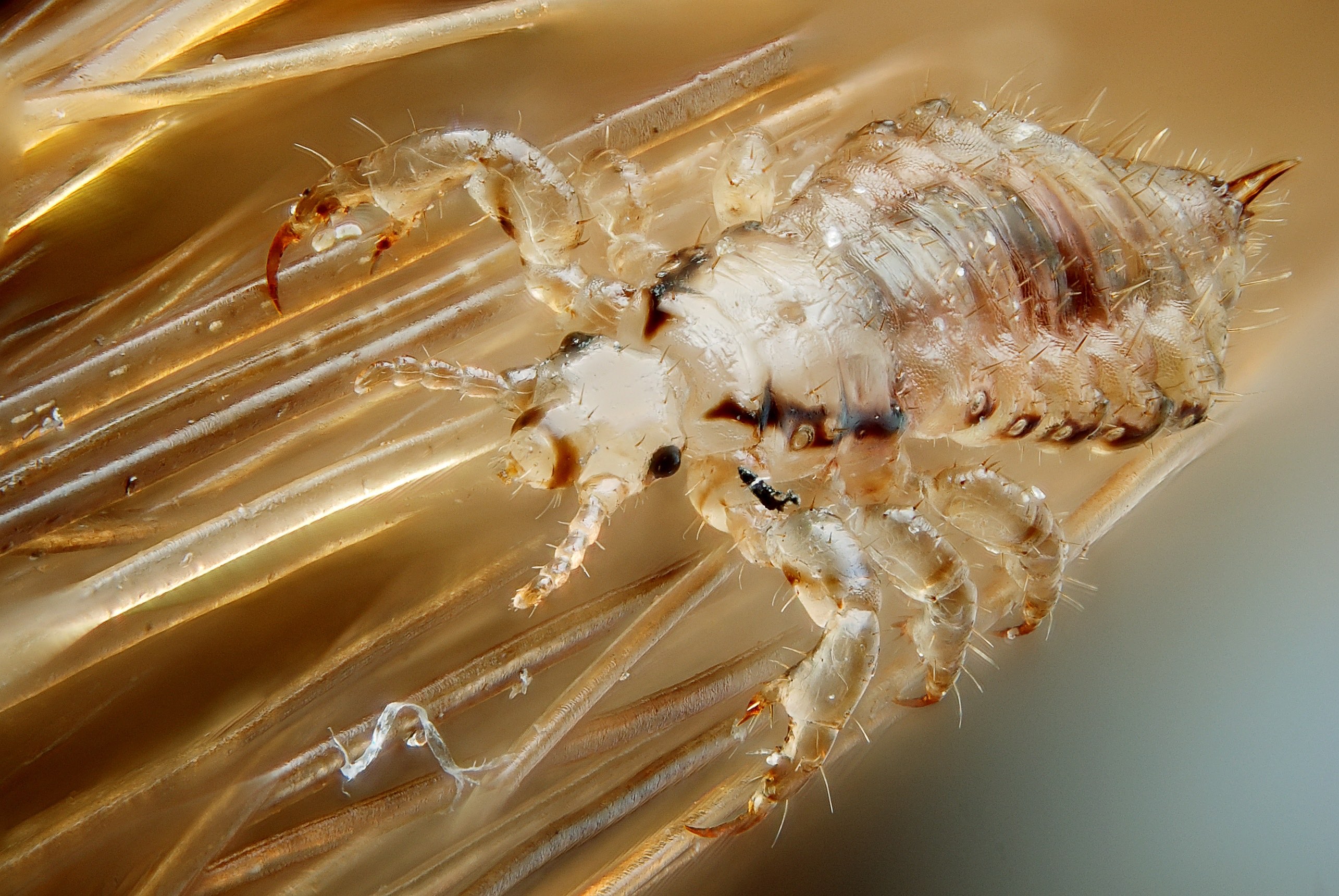
    “Male human head louse” by Gilles San Martin – originally posted to Flickr as Male human head louse. Licensed under CC BY-SA 2.0 via Commons – https://commons.wikimedia.org/wiki/File:Male_human_head_louse.jpg#/media/File:Male_human_head_louse.jpg