Category: infectious disease

  • Bird origin for 1918 flu pandemic

    Bird origin for 1918 flu pandemic

    Nature

    Model also links avian influenza strains to deadly horse flu.

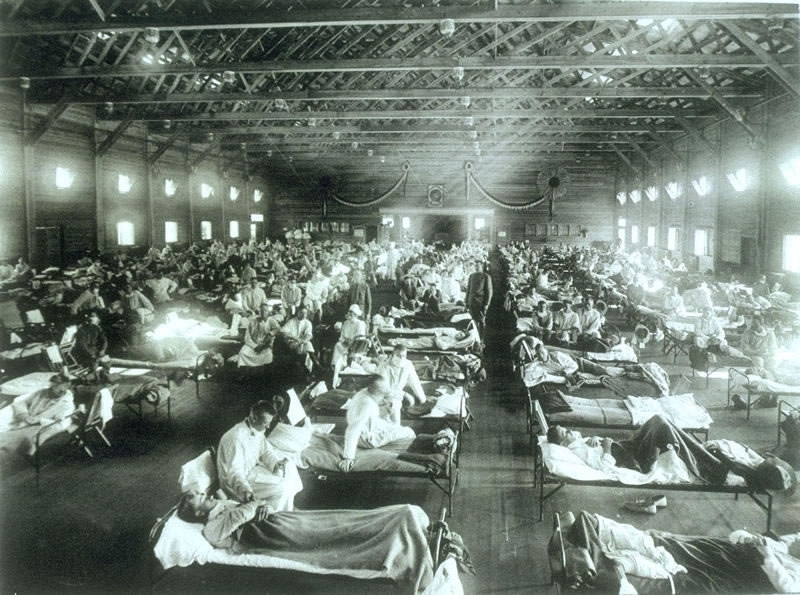
    The virus that caused the 1918 influenza pandemic probably sprang from North American domestic and wild birds, not from the mixing of human and swine viruses. A study published today in Nature reconstructs the origins of influenza A virus and (more…)

  • A brief history of what made biomedical news this year

    A brief history of what made biomedical news this year

    Nature Medicine

    Biomedical research in 2013 saw some dramatic developments, with unprecedented government action in the US ranging from the budget sequester in the spring to a dramatic government shutdown in autumn. But throughout the year, bright spots in science around the globe continued to dazzle, including multimillion-dollar partnerships to advance drug discovery and the go-ahead for highly anticipated trials of regenerative medicine.

    Read the rest of the story in the December issue of Nature Medicine. (Subscription required)

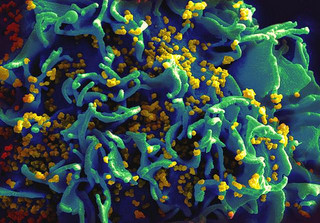
    Image Credit NIAID CC by 2.0. 

  • Lyme bacteria show that evolvability is evolvable

    Lyme bacteria show that evolvability is evolvable

    Nature

    Natural selection favours those with a greater capacity to generate genetic variation.

    Some gamblers succeed by spiriting cards up their sleeves, giving them a wider range of hands to play. So do some bacteria, whose great capacity for genetic variability helps them evolve and adapt to rapidly changing environments.

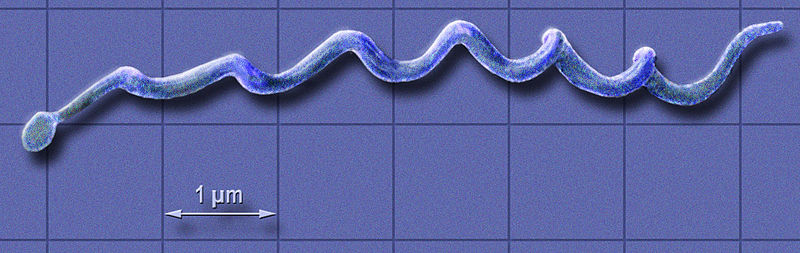
    Now research on Borrelia burgdorferi, the bacterium that causes Lyme disease, shows that the capacity to evolve can itself be the target of natural selection. The results were published today in PLoS Pathogens1.

    “There are other data that suggest that there could be selection on evolvability, but this is the first example where there really aren’t any other confounding answers for the data,” says lead author Dustin Brisson, an evolutionary biologist at the University of Pennsylvania in Philadelphia.

    B. burgfdorferi can cause a chronic infection even if its animal host mounts a strong immune response — evading those defences by  tweaking the shape and expression of its main surface antigen, VIsE. A series of unexpressed genetic sequences organized into ‘cassettes’ recombine with the VIsE gene, changing the resulting protein such that it escapes detection by the host’s immune system.

    “They make a clever case that the variation in these cassettes tells you something about evolvability and the results back up the idea,” says Tim Cooper, an evolutionary biologist at the University of Houston in Texas.

    Continue reading the story in Nature.

    Image by Lamiot via Wikimedia Commons.

  • As millions gather for Kumbh Mela, doctors are watching

    As millions gather for Kumbh Mela, doctors are watching

    When a cholera outbreak gripped a London neighbourhood in 1854, physician John Snow carefully mapped its deaths. The thin bars he traced under each address clustered around a water pump on Broad Street, which turned out to be the source of the bacteria. Snow’s studies of disease patterns won him recognition as the father of modern epidemiology—and crushed the prevailing theory that cholera was spread by bad air.

    Faced with the same challenge today, Snow might use a tablet computer. In mid-January, as the Indian city of Allahabad began ushering in millions of Hindu pilgrims for the religious festival Kumbh Mela, emergency physician and epidemiologist Gregg Greenough settled into a temporary field hospital with his tablet computer. He and his team from the Harvard School of Public Health were on the lookout for signs of influenza, tuberculosis, cholera and other diarrheal diseases. The plan is to record the temporary residence of each pilgrim admitted to hospital and plot it on a digital map that geolocates the festival’s toilets and drinking water. “We’re helping them digitize the data and analyze it in real time,” says Greenough. “It should help keep the pulse of the community and see if anything is emerging so they can act on it quickly.”

    CONTINUE…

  • Few bats for Quebec’s belfries. White-nose syndrome killing North American bats.

    Few bats for Quebec’s belfries. White-nose syndrome killing North American bats.

    Photograph by: Nancy Heaslip, New York Department of Environmental Conservation

    MONTREAL – In March, Frédérick Lelièvre found himself crawling through a narrow passage into the final chamber of the Laflèche Cave in Val des Monts. Raising his eyes to the hibernating bats on the rock above him, his heart dropped. The tiny lime-size animals were dusted with a white powdery substance. Most of them had it on their muzzles, and it was on the wings and the feet of others. It wasn’t a good sign.

    Wildlife biologists in the United States have come across similar sights over the last four years. Since 2006, a strange new fungus has been spreading through bat roosts, from New Hampshire to Oklahoma, leaving a grisly mess of rotting bat carcasses and toothpick-size bones in its wake.

    Until recently, the fungus had remained south of the border. But by March, the illness – dubbed white-nose syndrome – had spread to Ontario as well as Quebec.

    Despite the scene before him, Lelièvre clung to the faint hope that this was something different. Unlike the bat hibernacula in the U.S., the Laflèche Cave wasn’t littered with carcasses.

    “We looked at many, many bats, and we found the mould on them, but we found only a few dead bats,” says Lelièvre, a biologist at the Quebec Department of Natural Resources and Wildlife.

    Lelièvre sent whole bats to the Centre québécois sur la santé des animaux sauvages at the Université de Montréal faculty of veterinary medicine in St. Hyacinthe for necropsies to look more closely at the bats’ condition. Skin samples taken during the necropsy were then sent to the National Wildlife Health Centre in Madison, Wis., where a genetic test was used to identify the fungus. Both studies are necessary for diagnosis.

    André Dallaire, a veterinary pathologist, studied the animals – outside and in – for signs of the infection. The fungus looks like “what you’d see if you had a piece of bread that you left too long on the countertop,” he says. Some of the bats he examined were emaciated, having burned though their body fat and muscle to try to stay alive.

    By mid-April, Lelièvre had received word that the bats from the Outaouais area cave carried the same fungus as those in the U.S.

    “I was very worried. I thought, ‘Oh, no! Are we also going to lose our bat populations?’ ” says Lelièvre.

    More than one million bats have died in the U.S. In some hibernacula, 90 to 100 per cent of the bats have been reduced to a pile of bones. Aeolus Cave in East Dorset, Vt., – the largest hibernaculum in New England – once held an estimated 300,000 bats, says Scott Darling, a wildlife biologist with the Vermont Fish and Wildlife Department. Now about one-tenth of the initial population remains.

    The loss of so many bats has ramifications for humans and the ecosystem. Bats are ravenous predators of night-flying insects, moths, beetles and mosquitoes, some of which transmit human diseases and others that may damage crops and trees.

    Some have likened their vanishing to bee colony collapse disorder.

    “We’ve put a dollar value on what bees do for conservation, but I don’t know anyone who can put a dollar value on bats,” says Brock Fenton, a bat biologist at the University of Western Ontario, in London.

    > More photos from the US Fish and Wildlife Service, via Flickr
    > Listen to Dave Blehert on NPR’s Science Friday (October 32, 2008.) Video, too.