Category: medicine

  • A universal problem

    A universal problem

    Recent headlines have promised that a ‘universal flu vaccine’ may be within reach, pointing to antibodies that offer broad protection in animal studies. But the scientists behind this effort had to first overcome great skepticism from their peers—as well as an imperfect laboratory test. Hannah Hoag reports on one virologist’s 20-year effort to challenge the tenets of the field.

    Influenza is the Lady Gaga of viruses: it reinvents itself each year, often in unexpected ways. But the flu virus is far more dangerous than an infectious tune. Although the flu usually manifests as a mild illness, the virus kills as many as 500,000 people worldwide each year, and it continues to provide a challenge from a vaccination standpoint. Whereas most vaccines for illnesses such as measles or polio offer years or decades of protection, influenza vaccines tend to work for only one season. The relentless refashioning means new influenza vaccines must be routinely reformulated, all at a cost to consumers and global health systems of more than $4 billion each year.

    A new type of vaccine could be on the way. In the past few years, a flurry of papers has provided firm evidence of antibodies capable of neutralizing multiple subtypes of the influenza virus. Immunologists say that isolating such antibodies is the first step toward the creation of a universal influenza vaccine that protects against seasonal flu year after year—and possibly prevents hundreds of millions of deaths when the next influenza pandemic sweeps across the globe. Several such universal flu vaccines are already in early human clinical testing. But convincing the biology community of the existence and potential of such antibodies was an uphill battle, and one complicated by a ‘gold standard’ test that masked the key findings.

    Yoshinobu Okuno, who has chased the dream of a universal antibody against flu since 1989, knows these challenges well. Okuno, a virologist at Osaka University in Japan, is now viewed by many experts in the field as an important and early champion of the idea. Yet his discovery two decades ago of a broad-acting antibody called C179 didn’t make waves at the time. “People didn’t pay attention to it,” says Ian Wilson, a structural biologist at the Scripps Research Institute in La Jolla, California. “In those days, most people weren’t thinking about broadly neutralizing antibodies that you could develop for flu.”

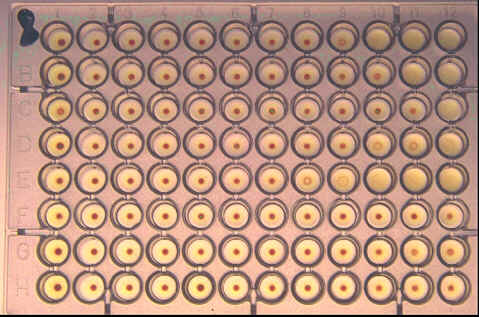
    The very test that prompted Okuno to look for these special antibodies—a tool known as the hemagglutination inhibition assay—tripped up the efforts of others in the field. In hindsight, the fault in the assay provides a cautionary tale of how the shortcomings of a test can mean that biomedical researchers miss what they are not looking for.

    Continue reading this story at Nature Medicine.

  • The Manning Awards: how four Canadian inventors became market leaders

    For three decades, the Ernest C. Manning Awards Foundation has recognized Canadians who develop and market successful innovations. This year, the awards are about imagination and stamina, says David Mitchell, the foundation’s president. Each of the four winners created a homegrown, breakthrough product. (Two of the prizes, the Innovation Awards, go to those who haven’t had access to research facilities or advanced education in their fields). All of the inventors refined their ideas constantly—sometimes over decades—until they had something they knew would make a difference.

    Critical deliveries

    Encana Principal Award $100,000

    In the mid-1990s, Geoffrey Auchinleck and his business partner Lyn Sherman visited a small hospital in England to sell an electronic system to manage their lab test requests. During the sales call, the laboratory manager listened politely, shook his head and pointed to a refrigerator of donor blood. Help me with that, he said.

    The lab manager fielded requests for blood transfusions and matched blood units to the patients. But after the units were picked up he lost control. Some units were transfused, others were returned or went missing. He needed a way to track who had picked up what, what had been used and how long a unit had been out of the fridge. It was basic information that could help the flow of a scarce resource.

    :: Read the full Maclean’s magazine article on this year’s Manning Award winners, Geoffrey Auchinleck (BloodTrack), Roger Lecomte (University of Sherbrooke, LabPet), Geoffrey Gyles and Kerry Green (Wolf Trax Inc.) and Terry Bigsby (Aspenware).


  • Accord could make Canadian generics industry a ‘rust bucket’

    Accord could make Canadian generics industry a ‘rust bucket’

    A trade agreement in negotiations between Canada and the EU is drawing the ire of generic drugmakers, provincial governments and patient advocates over proposals to extend drug patents by several years in Canada, a move that critics say would delay the arrival of generic medicines to market in that country and inflate healthcare costs.

    According to Canada’s Department of Foreign Affairs and International Trade, Canada imports C$8.4 billion ($8.2 billion) of pharmaceutical products from the EU annually, making Canada the fifth largest export market for the continent’s drugmakers. The sweeping Comprehensive Economic and Trade Agreement (CETA) could add another $2.8 billion to the annual bill, according to a report by health economists Paul Grootendorst, from the University of Toronto, and Aidan Hollis, from the University of Calgary (J. Generic Med. 8, 81–103, 2011). This cost is largely shouldered by the provincial and territorial governments, which pay for healthcare.CETA—first proposed in 2009 and subsequently leaked in 2010—calls on Canada to beef up its intellectual property rights for pharmaceuticals. The proposed changes would add five years to patents for drugs that are unduly bogged down in the regulatory approval process, lengthen the period of time clinical trial data is kept off-limits for use by generics companies from eight years to ten years (or even longer in the case of pediatric drugs) and grant brand-name companies an appeal process to challenge generics companies on their patent compliance. (more…)

    Nature Medicine 18, 991 (2012)

    Published online 06 July 2012

  • To catch a cheat

    To catch a cheat

    How officials are investigating blood dopers at the Olympics

    As part of Distillations three-part series on body fluids — Blood, Sweat, and Tears — I find out how Olympic officials are investigating blood dopers at this year’s games.

  • Radioactive medicine without the nuclear headache

    Radioactive medicine without the nuclear headache

    The Globe and Mail

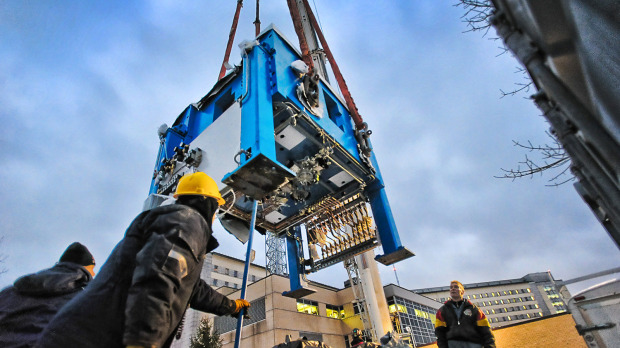
    A made-in-Canada solution to our medical-isotope problem could come from a machine with a name that could have been pulled straight from the pages of a science fiction novel: the cyclotron.

    “It was really pooh-poohed, this idea of using cyclotrons; they said there was no way we could produce enough in a commercially meaningful way,” says John Wilson, the cyclotron facilities manager at the University of Alberta’s Cross Cancer Institute.

    In mid-2010, scientists at the University of Sherbrooke and the University of Alberta made technetium-99m, the most commonly used medical isotope, without a nuclear reactor. Last fall, the Alberta scientists began putting the cyclotron-produced technetium-99m through its paces, testing it in animals and humans, and found that the medical scans looked the same as those done using the regular stuff.

    Now they’re looking to make more of it using more powerful machines, to prove that a cross-country cyclotron network could meet most of Canada’s medical isotope needs. Success could lift the country from its dependency on the aging reactor at the Chalk River Laboratories near Ottawa.

    Last week, the University of Sherbrooke received a higher-current cyclotron from Advanced Cyclotron Systems Inc., a company based in Richmond, B.C. The University of Alberta will install the same model in an old curling club on its south campus by the end of March.

    “Cyclotrons are a novel and very exciting way of producing technetium-99m,” says Kevin Tracey, vice-president of the Ontario Association of Nuclear Medicine and the medical director of nuclear medicine at Hôtel-Dieu Grace Hospital in Windsor.

    “There remain some technical impediments to making it efficient in day-to-day operations, but if we can produce it close to home, in our communities, that is a much better solution,” he says.

    Technetium-99m is the most common medical isotope used in the practice of nuclear medicine. About 80 per cent of all medical radioisotope tests—from cardiac perfusion tests to bone scans for cancer—require technetium-99m. In Canada, it’s used in roughly 1.8 million procedures annually.

    But there’s almost no natural technetium-99m on Earth. Instead it is produced via a precursor called molybdenum-99 that must be made in a nuclear reactor from highly enriched uranium.

    Keep reading this story in The Globe and Mail.