Category: natural resources

  • As Canada’s boreal forests burn again and again, they won’t grow back the same way

    As Canada’s boreal forests burn again and again, they won’t grow back the same way

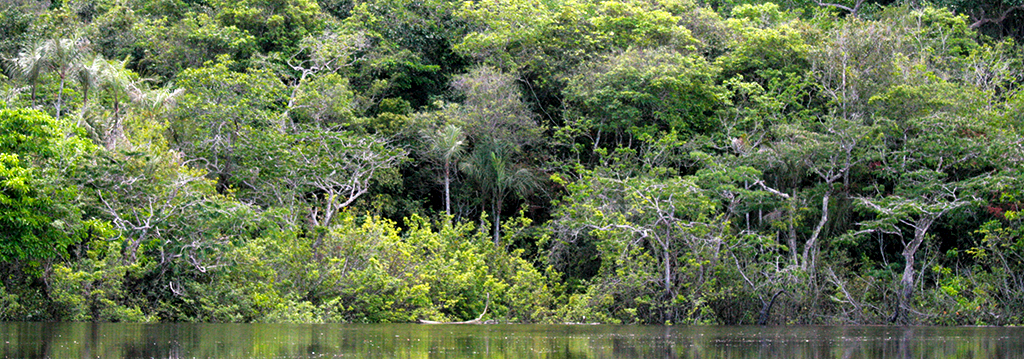
    Boreal forest. Credit: dvs from Vermont, USA, CC BY 2.0 , via Wikimedia Commons

    THE GLOBE AND MAIL

    In 2015, Ellen Whitman bushwhacked her way through a section of boreal forest in the southern Northwest Territories, near Fort Smith, and stepped into an open landscape, dotted with leafy trees. The area had once been thick with white spruce and some jack pine, but instead, Dr. Whitman saw trembling aspens surrounded by grassland.

    “It was almost like a savannah,” said Dr. Whitman, who is a forest-fire research scientist at Natural Resources Canada in Edmonton. “It was a big change.”

    Two fires had torn through the area less than 15 years apart. The first one burned the dense coniferous forest of older trees. The second killed off the young conifers that had sprouted after the first fire. The interval between the fires was too short for the trees to produce mature seeds and regenerate the forest on their own, allowing grasses, shrubs and deciduous trees to take root instead.

    It’s a shift that threatens to recur across Canada’s boreal forest. As wildfires increase in size, severity and frequency, against a backdrop of warmer temperatures and persistent drought, the boreal is beginning to give way to birch, aspen, shrubs and grasses.

    Wildfires have burned a staggering 15.4 million hectares so far this year, an area roughly the size of lakes Superior and Michigan combined. It is by far the worst wildfire season on record in Canada, where in an average year 2.1 million hectares burn.

    Historically, wildfire has been an important element in renewing the boreal. It clears out dead trees and other dry fuels and creates the conditions for fire-adapted tree species such as black spruce to distribute seeds and grow a new forest that resembles past ones. Wildfire also temporarily reshapes the forest for birds and other animals, creating open spaces for flycatchers and other insect eaters, and leaving behind dead trees that become larvae buffets for woodpeckers.

    But drought and warmer temperatures because of climate change have created hot and dry conditions that are causing fires to ignite more easily, grow larger and spread faster. Those changes to the fire regime are driving long-lasting shifts in the boreal.

    “Our forests are going to change,” said Jill Harvey, the Canada Research Chair in Fire Ecology at Thompson Rivers University in Kamloops, who studies repeat wildfires, historical fire regimes, drought and regeneration.

    “Forests need time to recover following wildfires. They need years for trees to germinate and time for trees to grow. … With drier conditions and more wildfires, we will see change in our forests, their structure and their function.”

    Read the rest of the story at The Globe and Mail.

  • In Canada’s boreal forest, a new national park faces the wrongs of the past — and guards our climate future

    In Canada’s boreal forest, a new national park faces the wrongs of the past — and guards our climate future

    AUDUBON

    James Marlowe zips along the glassy lake surface of the water in his aluminum fishing boat, and the town of Łutsël K’é quickly falls from sight. We stay close to the shoreline, avoiding hidden reefs, and steer straight for his net. It’s closing in on midnight, but Great Slave Lake—the deepest lake in North America and the 10th largest in the world—is flashing with fish and the tree-covered hills are aglow in the setting summer sun. Marlowe cuts the motor and begins hauling in the 150-foot net hand-over-hand.

    Splop! The first fish lands in a large plastic bin. Splop! Splop! Marlowe moves along the net, plucking whitefish from its mesh. With some effort, he untangles a 30-pound trout and heaves the rare find into the bin. “Oh, there are still more fish! It’s not going to stop, man,” he says with a laugh.

    Since he was a teen, Marlowe has hunted, trapped, and fished these wilds for caribou, moose, ducks, whitefish, and lake trout. Like his neighbors and ancestors of the Łutsël K’é Dene First Nation, he’s followed traplines that meander from the forest to  tundra and strung nets under the lake ice to harvest food. “We depend on the land and the water for survival,” says Marlowe. “It’s like our grocery store.”

    In the early 1990s, however, diamond mining and mineral exploration in Canada’s Northwest Territories began to threaten this tradition of living off the land. The mines produced some jobs and revenue for the community, but they also caused problems. The industry’s high interest in the area concerned the elders, who then directed Marlowe’s generation to find a way to protect the land, water, and animals for their own children—and for the survival of the Dene culture, language, and way of life.

    After more than 15 years of discussion, the Łutsël K’é Dene First Nation has now signed a landmark agreement with the governments of Canada and the Northwest Territories to form a massive new protected area called Thaidene Nëné, or “Land of the Ancestors.” Almost twice as large as the Grand Canyon, Yosemite, and Yellowstone national parks combined, Thaidene Nëné encompasses more than 6.4 million acres, stretching from the easternmost tip of Great Slave Lake northeast toward the Arctic territory of Nunavut. It spans the boreal forest and its transition to the heath-dominated tundra, making it one of the only protected areas in Canada to straddle the tree line—an important bridge for plants and animals that may migrate as the climate changes.

    .::. Read more at Audubon Magazine.

  • Nations put science before fishing in the Arctic

    Nations put science before fishing in the Arctic

    Nine nations and the European Union have reached a deal to place the central Arctic Ocean (CAO) off-limits to commercial fishers for at least the next 16 years. The pact, announced yesterday, will give scientists time to understand the region’s marine ecology—and the potential impacts of climate change—before fishing becomes widespread.

    “There is no other high seas area where we’ve decided to do the science first,” says Scott Highleyman, vice president of conservation policy and programs at the Ocean Conservancy in Washington, D.C., who also served on the U.S. delegation to the negotiations. “It’s a great example of putting the precautionary principle into action.”

    The deal to protect 2.8 million square kilometers of international waters in the Arctic was reached after six meetings spread over 2 years. It includes not just nations with coastal claims in the Arctic, but nations such as China, Japan, and South Korea with fishing fleets interested in operating in the region.

    Thus far, thick ice and uncertain fish stocks have kept commercial fishing vessels out of the CAO, but the region is becoming increasingly accessible because of rapid loss of summer sea ice. In recent summers, as much as 40% of the CAO has been open water, mostly north of Alaska and Russia, over the Chukchi Plateau.

    As the summer sea ice becomes thinner and its edge retreats northward, more sunlight is penetrating the water, increasing production of plankton, the base of the Arctic food web. These sun-fed plankton are gobbled up by Arctic cod, which in turn are hunted by animals higher up the food chain, including seals, polar bears, and humans. Some parts of the Arctic Ocean’s adjacent seas, such as the Barents Sea (off the northern coasts of Russia and Norway), saw steep increases in primary production in 2016, approaching 35% above the 2003–15 average.

    .::. Keep reading this story in Science.

  • Lady of the Lakes

    Lady of the Lakes

    Nature

    Diane Orihel set her PhD aside to lead a massive protest when Canada tried to shut down its unique Experimental Lakes Area.

    It was an ominous way to start the day. When she arrived at work on the morning of 17 May 2012, Diane Orihel ran into distraught colleagues. Staff from Canada’s Experimental Lakes Area had just been called to an emergency meeting at the Freshwater Institute in Winnipeg. “It can’t be good,” said one. (more…)

  • In carbon sequestration, money grows on trees

    In carbon sequestration, money grows on trees

    Guyana’s tropical rainforests protected under the REDD program provide not just natural resources but an income stream to the country.

    Two hours south of Georgetown, Guyana, a paved highway recedes, giving way to a rutted red road gushing through thick rainforest. In its muddiest spots, the road swallows trucks and spits them out at dangerous angles. Many hours later, it leads to an area of protected land called Iwokrama, a Rhode Island-size forest in the heart of Guyana, crowded with ancient buttress-trunked trees draped in liana vines.

    [media-credit name=”Hannah Hoag” align=”alignleft” width=”300″]red-mud-guyana[/media-credit]Since 2003, Jake Bicknell has been a fixture within this forest. Now a doctoral student in biodiversity management at the U.K.’s University of Kent, he is cataloging Iwokrama’s iconic and bizarre species, including jaguars, giant anteaters, anacondas, and scads of birds and bats. (Guyana boasts more than 700 bird and 120 bat species.)

    Specifically, he’s in Iwokrama to find out how logging affects tropical forest wildlife. Conventional logging ruins forests and decimates species, but low-impact methods of harvesting timber might not be so damaging. In fact, Bicknell believes selective logging can become a tool for protecting the forests and biodiversity of Guyana — a developing country eager to tap its natural resources as a way to boost its economy.

    “There will always be a market for products extracted from forests, so the point is to do it in the least impacting way,” says Bicknell.

    Keep reading this story in the November 2013 issue of Discover