Category: natural resources

  • Mixed Reviews for Quebec’s Plan Nord

    Mixed Reviews for Quebec’s Plan Nord

    The government of Quebec (Canada) has launched its multibillion-dollar Plan Nord, which will open the vast northern reaches of the province to mining and energy development–and protect 50% of the territory from economic development.

    The 1.2-million-square-kilometre region—twice the size of France—is known for its wild rivers, biodiversity, diverse ecosystems and a large swath (about 20%) of Canada’s boreal forest. Boreal forest covers more than 25% of Quebec. More than 120,000 people, including 33,000 aboriginals also live in the region.

    Quebec Premier Jean Charest said yesterday the government will invest CDN$80 billion into mining, forestry, transportation, energy development and tourism over the next 25 years.

    The environmental aspects of the plan include the promise to set aside 600,000 square kilometres of the region to protect the environment and preserve biodiversity. By 2016, the government will have established several provincial parks, completed a survey of northern Quebec’s biodiversity, protected over 31,000 square kilometres of land, and adopted mitigation or restoration plans for each development project.

    By protecting half of the forest, the Quebec government will keep more than 13.8 billion tons of CO2 sequestered—equivalent to about 70 years of industrial carbon dioxide emissions in Canada (Canadian Boreal Initiative, 2009 release).

    The Plan Nord is getting mixed reviews from environmental groups. The Canadian Boreal Initiative, affiliated with the Pew Environment Group’s International Boreal Conservation Campaign applauded the sustainable development measures included within the plan (release). But others, including Greenpeace and Nature Quebec, said they could not endorse the plan as presented. The coalition of groups told the Globe and Mail the plan was “an attempt to regulate a mining boom rather than the expression of an authentic vision for the north.” They called for, among other things, an evaluation of the global environmental impacts of northern development.

    From the Nature News blog.

    Image: MRNF, Gouvernement du Quebec

  • Think small

    The Canadian forestry industry could hinge on the most abundant nanomaterial on earth.

    A pale grey slurry roils about in a waist-high blue plastic drum at the centre of a garage-like space at the National Research Council’s Biotechnology Research Institute in Montreal. It looks a little like slush, but when it is dried it more closely resembles one of the fine white powders chefs stock in their kitchens. For the handful of chemists hovering about the room, it’s the stuff dreams are made of. For Canada’s faltering forestry industry, it is a beacon of optimism.

    Nanocrystalline cellulose (NCC) is nature’s Superman fibre; it is stronger than steel, lightweight and durable; its unique optical qualities make it desirable for use in everything from cosmetics and sunscreens to security documents, switchable optical filters, coatings and adhesives, and its anti-microbial properties open the door for a bunch of medical applications. All that from a little crystal made from tree trunks.

    It’s no surprise then that the Canadian forestry industry–straining under a slumped U.S. housing market and pricing pressures from developing countries–has high hopes that this possibly miraculous crystal will be their ticket to stage a much-needed comeback. The question now is, can this superhero compound make the leap from the lab, to large-scale production and into the marketplace?

    Read more in the April 2011 issue of Canadian Chemical News.

  • River metals linked to tar sand extraction

    River metals linked to tar sand extraction

    Researchers find that pollutants in Canada’s Athabasca River are not from natural sources.

    Oil-mining operations in Canada’s main tar sands region are releasing a range of heavy and toxic metals — including mercury, arsenic and lead — into a nearby river and its watershed, according to a new study.

    Research published online yesterday in the Proceedings of the National Academy of Sciences shows that 13 elements classified as priority pollutants (PPEs) by the US Environmental Protection Agency were found in the Athabasca River in the province of Alberta1. Seven of these were present at high enough concentrations to put aquatic life at risk. The findings are also of concern to human health.

    Almost all of Alberta’s known oil reserves — 172 billion barrels — are found within tar sands. The provincial government expects that oil production will increase from about 1.3 million barrels per day to 3 million barrels per day by 2018.

    Tar sands mining and upgrading — the process of extracting fuel from the mix of petroleum and sand or clay — produces sand, water, fine clays and minerals that are contained within tailing ponds.

    A team led by ecologist David Schindler of the University of Alberta in Edmonton set out to test the government and oil industry’s claims that the concentrations of elements in the Athabasca River and its tributaries were from natural sources and not tar sands development.

    The team took samples of surface water from the waterways upstream of the tar sands region and compared them with samples taken within the region — both upstream and downstream of mining projects. The researchers also looked at snow samples from many of the same areas towards the end of winter to look for airborne sources of PPEs, which would be discharged to surface waters when the snow melted.

    → Keep on reading at Nature

    Image courtesy of NormanEinstein and Wikimedia Commons.

  • Canada picks site for Arctic Research Station

    Canada picks site for Arctic Research Station

    Cambridge Bay location offers a wealth of opportunities for studying the far north.

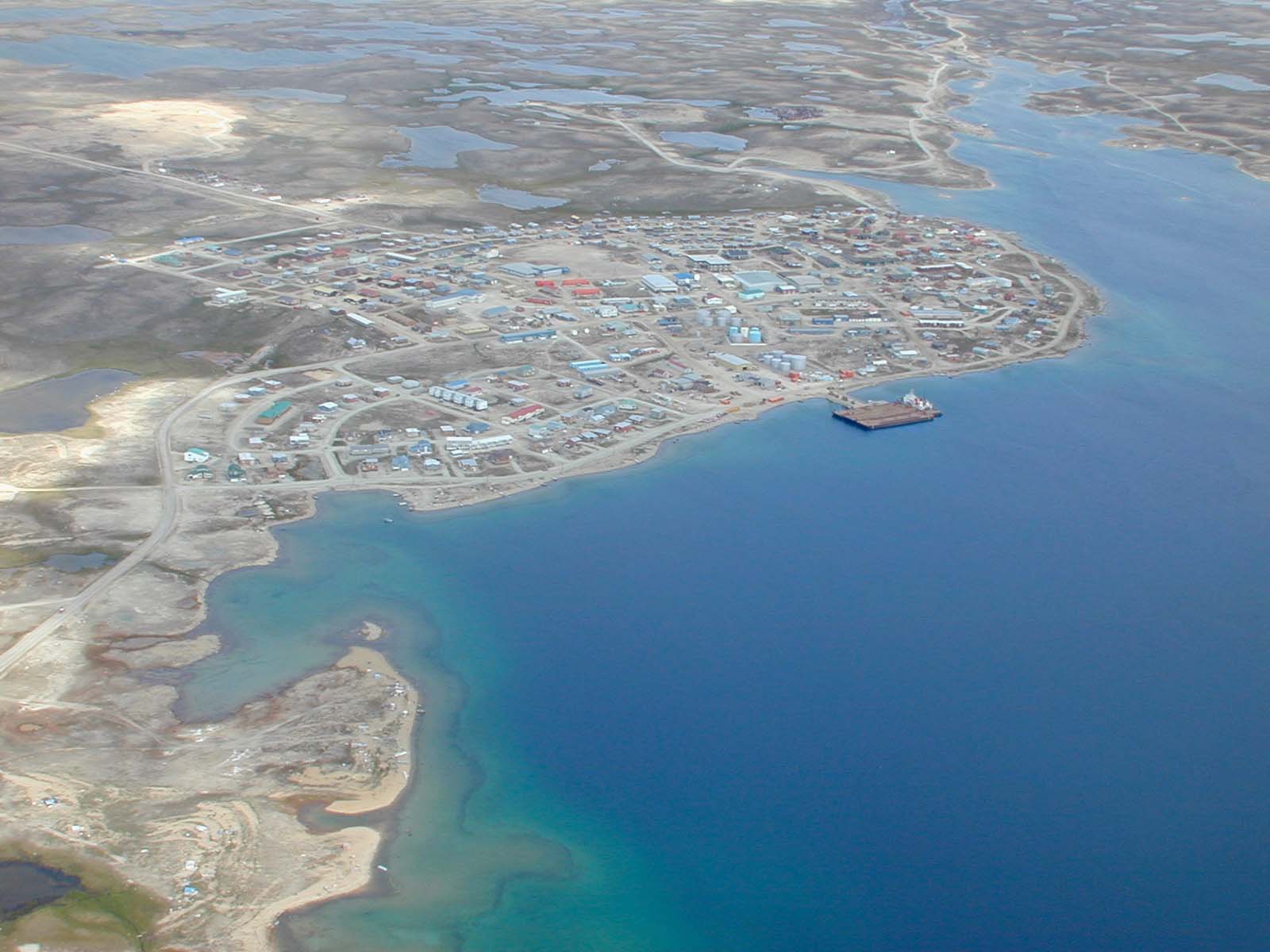
    After months of deliberation, the Canadian government has chosen Cambridge Bay — a hamlet midway along the Northwest Passage in the country’s far north — as the site for a world-class Arctic research station.

    Once built, the station will house scientists all year round, giving them a modern space to study Arctic issues, including climate change and natural resources. It will host conference facilities and laboratories for research on marine biology and geophysics, provide ecologists with the space to do long-term ecological monitoring in aquaria and greenhouses, and give researchers in the health and social sciences a base for their studies.

    “It’s a very exciting and long-awaited announcement,” says Warwick Vincent, director of the Centre for Northern Studies at Laval University in Quebec City, who was part of the committee consulted by the government during the selection process.

    The proposal for the Canadian research station was first sketched out in 2007 and a shortlist of sites was released in 2009. A Can$2-million (US$1.9-million) feasibility study for the proposed station established its functions, preliminary costs and construction schedule and involved an analysis of three possible locations: Pond Inlet, Resolute Bay and Cambridge Bay, all in the northern territory of Nunavut.

    Details about the new facility’s size or overall cost have yet to be released by the government, but sources suggest that it will be completed some time in 2017 at a cost of about Can$200 million.

    → Read more at the Nature website

    → Also found in WorldChanging’s Arctic Round-up (September 3)

  • Dying trees could exacerbate climate change

    Dying trees could exacerbate climate change

    forestForests could emit more carbon than they store if temperatures rise.

    Forestry experts have again warned that climate change could transform forests from sinks to sources of carbon. The carbon storing capacity of global forests could be lost entirely if the earth heats up 2.5° Celsius above pre-industrial levels, according to a new report.

    The analysis by the International Union of Forest Research Organizations (IUFRO) is a synthesis of existing information. “This is the first time it has been put together on a global scale,” says Alexander Buck, IUFRO deputy executive director, in Vienna. “It is the most thorough assessment of the negative and positive effects of climate change on the world’s forests.”

    :: Read more at Nature ::