Category: news

  • Control Freaks

    Tiny genetic snippets called microRNAs may promote metastasis

    Biologists know quite a bit about the steps that turn a normal cell into a cancerous one. Their understanding of metastasis, on the other hand, is somewhat more hazy. Now a short stretch of genetic material has been implicated in the spread of breast cancer, according to a study in the Oct. 11 Nature.

    Molecular biologist Li Ma of the Whitehead Institute for Biomedical Research, in Cambridge, Mass., has identified a type of microRNA—a tiny genetic molecule—that can coax breast cancer cells to spread to other tissues. MicroRNAs regulate the expression of genes by controlling the larger RNA molecules that help to make proteins.

    :: Read more in CR magazine ::

  • Permafrost that lives up to its name

    Permafrost that lives up to its name

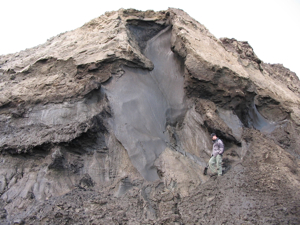
    Ancient Canadian ice survived previous warm periods.

    A 740,000-year-old wedge of ice discovered in central Yukon Territory, Canada, is the oldest known ice in North America. It suggests that permafrost has survived climates warmer than today’s, according to a new study.

    “Previously, it was thought that the permafrost had completely disappeared from the interior about 120,000 years ago,” says Duane Froese, an earth scientist at the University of Alberta in Edmonton, Canada, who is the author of the study published today in Science. “This deep permafrost appears to have been stable for more than 700,000 years, including several periods that were warmer and wetter.”

    Keep reading in Nature.

    Image credit: Duane Froese, University of Alberta