Category: news

  • Ozone-hole treaty slowed global warming

    Ozone-hole treaty slowed global warming

    Montreal Protocol helped to curb climate change and so did world wars and the Great Depression.

    Human actions that were not intended to limit the greenhouse effect have had large effects on slowing climate change. The two world wars, the Great Depression and a 1987 international treaty on ozone-depleting chemicals put a surprising dent in the rate at which the planet warmed, says research published today in Nature Geoscience1.

    Francisco Estrada, an ecological economist at the Free University in Amsterdam, and his colleagues analysed annual temperature data collected from 1850 to 2010, as well as trends in emissions of greenhouse gases such as carbon dioxide, methane and chlorofluorocarbons (CFCs) — ozone-depleting substances that also trap heat in the atmosphere — between 1880 and 2010.

    Instead of relying on climate-model simulations, the researchers used a statistical approach that they say helped them to get a better look at how components of the climate system contribute to its warming or cooling by trapping heat, an effect called radiative forcing. They found that changes in warming coincided with human-initiated adjustments in greenhouse-gas emissions.

    A cooling period between 1940 and 1970 had previously been chalked up to natural variability and the Sun-shielding effect of pollution emitted by European industries, as they recovered after the Second World War. But Estrada and his colleagues found that it followed a reduction in greenhouse-gas emissions associated with economic downturns, when industries were less active. Significant drops in emissions occurred during the First World War, the Great Depression of the 1930s and the Second World War.

    “When the wars end and you have large economic growth, the emissions of CO2 rise fast and you have the onset of modern climate change,” says Estrada.

    Keep reading this article in Nature.

    Image by Scott Witt via Flickr.

  • Lady of the Lakes

    Lady of the Lakes

    Nature

    Diane Orihel set her PhD aside to lead a massive protest when Canada tried to shut down its unique Experimental Lakes Area.

    It was an ominous way to start the day. When she arrived at work on the morning of 17 May 2012, Diane Orihel ran into distraught colleagues. Staff from Canada’s Experimental Lakes Area had just been called to an emergency meeting at the Freshwater Institute in Winnipeg. “It can’t be good,” said one. (more…)

  • Ozone loss warmed southern Africa

    Ozone loss warmed southern Africa

    Nature

    Antarctic ozone hole’s effects may have spread much wider than thought.

    Ozone loss over the South Pole might be the reason for a two-decade rise in early summer temperatures across southern Africa, according to research published today in Nature Geoscience1.

    Desmond Manatsa, a climate scientist at Bindura University of Science in Zimbabwe, and colleagues analysed data sets of southern African climate from 1979 to 2010, covering the years before and after the development of the ozone hole over the Antarctic. They found that the size of the ozone hole seemed to influence wind patterns and triggered an upward shift in early summer temperatures.

    Manatsa had been puzzled by the abrupt and seasonal increase in surface air temperatures in southern Africa. “The temperatures were actually significantly higher than those of other seasons and the rising assumed a shift rather than a slow and gradual manner,” he says. The warming did not match what he expected to see from greenhouse-gas emissions.

    Continue reading the story in Nature

    Image via sergioarosa on flickr.

  • Glimmer of hope for freshwater research site

    Glimmer of hope for freshwater research site

    This story was originally posted on the Nature News Blog. 

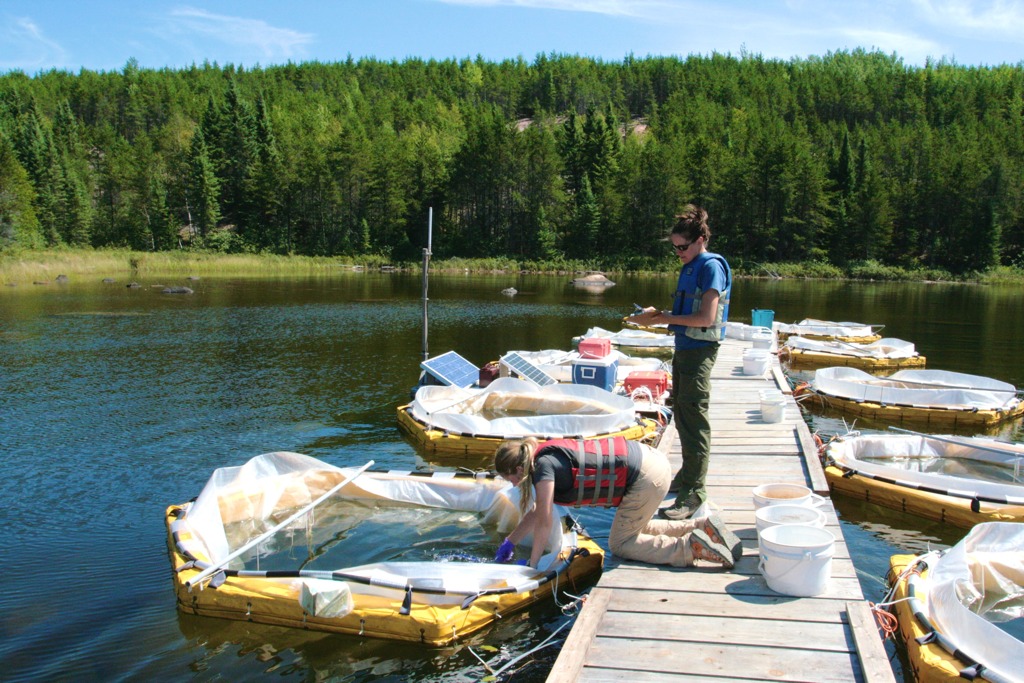
    The government of Ontario, Canada, has stepped in to keep open the Experimental Lakes Area (ELA). The freshwater research facility, located in northern Ontario, was closed in March by the government of Canada, despite protests from scientists.

    Ontario premier Kathleen Wynne announced today that the government of Ontario will provide support to keep the ELA running this year and in the future, as it works to transfer the facility to the International Institute for Sustainable Development (IISD), a United Nations think tank based in Winnipeg, Manitoba.

    “We have had many conversations with members of the public and our scientific and academic communities who want to see the Experimental Lakes Area stay open,” Wynne said in a statement. But the statement did not elaborate on how much money the government has designated for operations, whether the facility will be fully operational this summer or the fate of the long-term climate data set the facility has kept up for 45 years. Meanwhile, the federal government released its own statement today noting that it “has been leading negotiations with third parties”.

    “We remain hopeful that an agreement can be reached and we welcome Ontario’s willingness to play an active role,” reads the statement from Fisheries and Oceans Canada.

    Many university scientists say that they are still not sure whether they will be able to continue their experimental work this summer. Several are sceptical that negotiations will be wrapped up in time for experiments to proceed as planned. “It’s somewhat exciting news, but quite frankly I don’t know what it means for us yet,” says Maggie Xenopoulos, an aquatic biologist at Trent University in Peterborough, Ontario. Xenopoulos and her colleagues had planned to contaminate one of ELA’s lakes with nanosilver this summer and measure its ecological impact.

    A statement from the IISD’s leader offered few specifics about its potential deal with the government of Ontario. “If the ELA does come to IISD, we would work with other stakeholders to ensure it remains an independent, world-class research facility that continues to produce leading-edge freshwater ecosystems science in the public domain and in the public interest,” said Scott Vaughan, the institute’s president and chief executive.

    Vincent St. Louis, a biogeochemist at the University of Alberta in Edmonton, says that the plan “is a good first start”. The plan to close the lake area “has always been baffling from a scientific perspective, given how much it provides at such a low cost,” says St. Louis, who has studied acid rain, reservoir creation and mercury emissions at the ELA — and would like to see scientists use the facility to study the impact of chemicals found in oil sands tailing ponds, such as polyaromatic hydrocarbons, on aquatic biota.

    The federal government announced last May that it would stop funding the facility, which cost about Can$2 million (US$2 million) to operate, and that it would begin a search for a new operator. Federal funding dried up on 31 March, and university scientists who had planned experiments for the summer field season were told that they were not allowed on the site.

  • As millions gather for Kumbh Mela, doctors are watching

    As millions gather for Kumbh Mela, doctors are watching

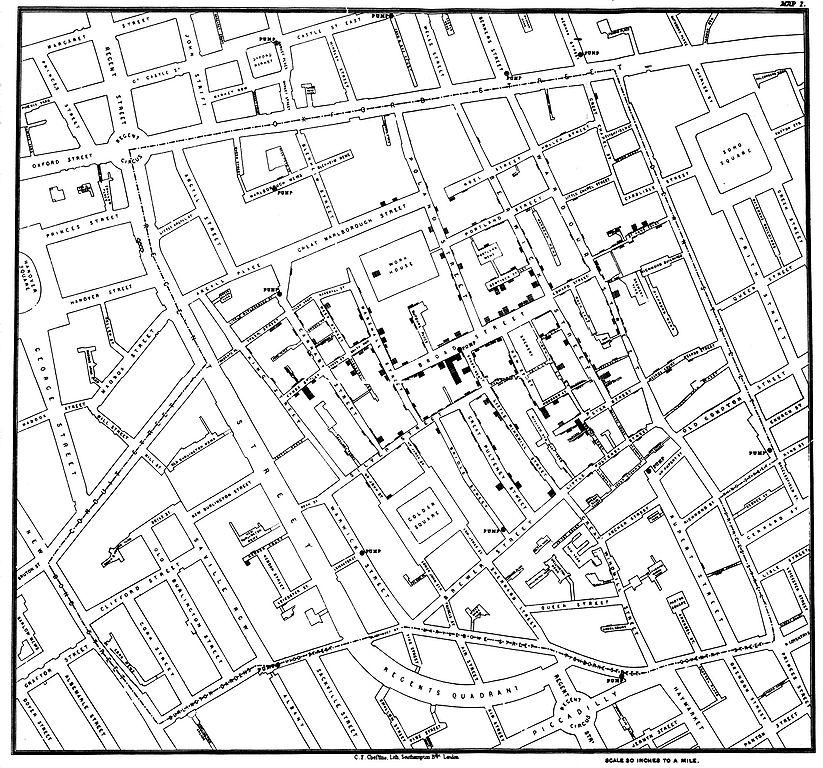
    When a cholera outbreak gripped a London neighbourhood in 1854, physician John Snow carefully mapped its deaths. The thin bars he traced under each address clustered around a water pump on Broad Street, which turned out to be the source of the bacteria. Snow’s studies of disease patterns won him recognition as the father of modern epidemiology—and crushed the prevailing theory that cholera was spread by bad air.

    Faced with the same challenge today, Snow might use a tablet computer. In mid-January, as the Indian city of Allahabad began ushering in millions of Hindu pilgrims for the religious festival Kumbh Mela, emergency physician and epidemiologist Gregg Greenough settled into a temporary field hospital with his tablet computer. He and his team from the Harvard School of Public Health were on the lookout for signs of influenza, tuberculosis, cholera and other diarrheal diseases. The plan is to record the temporary residence of each pilgrim admitted to hospital and plot it on a digital map that geolocates the festival’s toilets and drinking water. “We’re helping them digitize the data and analyze it in real time,” says Greenough. “It should help keep the pulse of the community and see if anything is emerging so they can act on it quickly.”

    CONTINUE…