Category: news

  • Canada’s renowned freshwater research site to close

    Canada’s renowned freshwater research site to close

    [media-credit name=”USGS” align=”alignright” width=”199″][/media-credit]
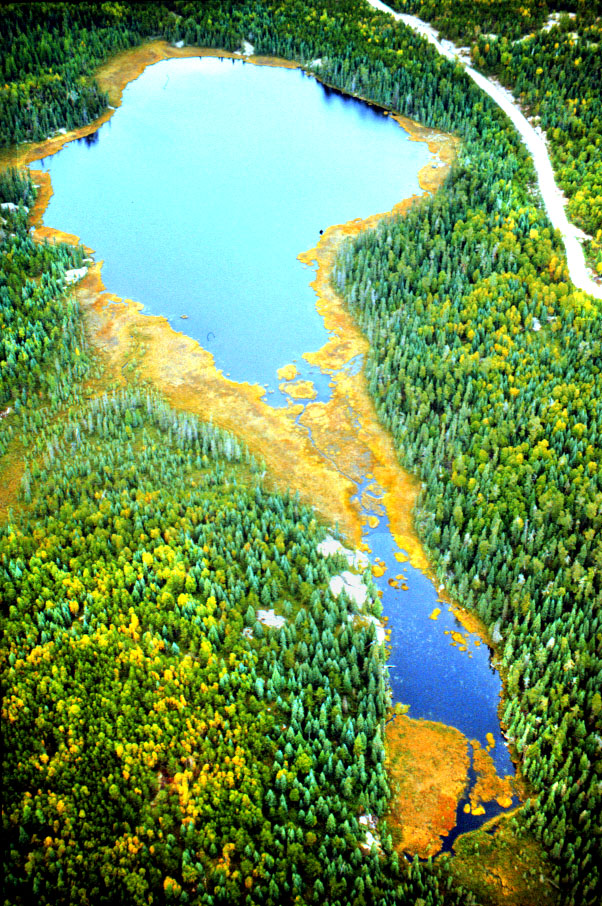
    The Experimental Lakes Area near Kenora, Ontario has been used to study the effects of detergents, heavy metals and acid rain on lakes and their watersheds.
    Budget fall-out hits environmental research stations

    The Canadian government has cancelled its funding for the Experimental Lakes Area (ELA), a research site in northwestern Ontario that has led to the re-shaping of international policies. It is the latest target in a string of research programmes to have been scaled back, shut down or left in limbo in the wake of massive cuts to this year’s federal budget.

    Fisheries and Oceans Canada — the government department that runs the site —  told its staff on 17 May that the ELA, a collection of 58 remote lakes and a laboratory complex, would be shut down in March 2013. “It is completely shocking,” says Jim Elser, an aquatic ecologist at Arizona State University in Tempe, who ran experiments at the site in the 1990s. “It is sort of like the US government shutting down Los Alamos — its most important nuclear-physics site — or taking the world’s best telescope and turning it off.”

    The ELA has attracted scientists from around the world to its shores since field research started there in 1968. It is possibly the only place where aquatic scientists can use lakes and their ecosystems as test tubes as well as having access to long-term environmental data and a decent place to sleep and eat.

    Many scientists say that the government is making a mistake. “If you try to base policy on small-scale experiments you miss some key ecosystem process, and that can have huge implications,” says David Schindler, a freshwater scientist at the University of Alberta, who founded the ELA and ran it until 1989.

    Scientists have manipulated the area’s lakes to show how acid rain destroys lake ecosystems1, how the ingredients found in birth-control pills can cause the collapse of fish populations2 and how wetland flooding for hydroelectric dams leads to increased production in methyl mercury and greenhouse gases3, while unmanipulated lakes have provided long-term comparative data. Studies done there have influenced policy, most notably the creation of an air quality agreement between the United States and Canada in 1991, which led to reductions in acid rain.

    More in Nature.
  • Canadian satellite system under budget cloud

    Canadian satellite system under budget cloud

    Nature

    Missed deadlines and an underfunded Canada Space Agency (CSA) may scuttle plans to build the next generation of earth observing satellites, according to the Canadian satellite company pegged to build them.

    In 2010, the CSA selected MacDonald, Detwillier and Associates Ltd. to design the successor to Radarsat-2, the agency’s current earth observing satellite. The company came up with a three-satellite system that would provide information for maritime surveillance, disaster management and ecosystem monitoring. But Dan Friedman, the company’s president and chief executive officer, says the federal government missed a target deadline for awarding the building contract in January, according to a story in the Globe and Mail and the CSA may not have enough money for the project.

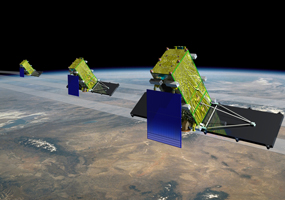
    The Radarsat Constellation calls for three satellites (scalable to six) to maintain a polar orbit and provide radar images of nearly all of Canada’s land and waters. The Constellation would monitor ice and icebergs, winds and oil pollution in shipping lanes and coastal zones on a daily basis. It would also provide information on the state of Canada’s forests, changes to vegetation in protected areas and important wildlife habitat, and monitor wetlands and coastal change.  Unlike Radarsat-2, which is owned by MDA, the Canadian government would own Constellation.

    Canada’s Earth observing satellites, Radarsat-1 and -2, have been important in mapping natural disasters, such as the 2011 flooding in Queensland, Australia, as well as the Antarctic’s glaciers and ice sheets. including a subsurface view of the ice-covered Lake Vostok.

    Keep reading this story at Nature.

  • Canadian budget bill undermines environment, critics charge

    Today in Canada’s House of Commons,  lawmakers debated a budget bill that critics say would gut a variety of environmental and species protection measures.

    The Jobs, Growth and Long-term Prosperity Act would allow the Conservative-led government to implement certain provisions included in the 2012 budget tabled just over a month ago (see ‘Canadian budget hits basic science‘). But the 420-page document includes “other measures,” which have angered the opposition, environmental groups and scientists.

    Bill C-38 aims to repeal the current Canadian Environmental Assessment Act, a federal law that promotes sustainable development, and rewrites the role of the National Energy Board, an independent agency that regulates the construction and operation of oil and natural gas pipelines that traverse provincial or international borders. The bill also relieves Canada from its duties under the Kyoto Protocol Implementation Act.

    The government says changes to the CEAA and NEB are necessary to streamline the environmental assessment process, make sure projects are reviewed in a timely manner and reduce duplicate assessments.

    The changes to the NEB would limit project reviews to two years, in an effort to avoid a repeat of the six-year review of the 1,200-kilometre long Mackenzie Valley natural gas pipeline that was finally approved in 2010. It would also give cabinet the final say on whether a project is approved. “In the past, there wasn’t a direct provision for the cabinet to overrule the decision and send it back for further review,” says Andrew Leach, an environmental economist at the University of Alberta, in Edmonton.

    Read the rest in Nature.
  • Canadian biofuel plans derailed

    Canadian biofuel plans derailed

    Iogen cancels a pioneering facility to turn crop waste into ethanol.

    A leading biofuels company whose products have powered Formula 1 racing cars has hit a major bump in the road.

    Canadian company Iogen Energy in Ottawa announced on 30 April that it has shelved plans to build a large-scale facility in Manitoba to produce fuel ethanol from cellulose, the long molecular chain of sugars that forms the fibrous material in plants.

    Instead, the company will “refocus its strategy and activities”, leading to a smaller development programme and the loss of 150 jobs, its joint owners Royal Dutch Shell and Iogen Corporation said in a statement. Iogen Corporation would not comment further on the story and Shell did not respond to Nature‘s questions.

    In the past decade, growing concerns about climate change, rising energy consumption and dependence on foreign oil  have prompted countries and companies to invest in biofuel production.

    Most fuel ethanol is made by fermenting the sugars in grains or sugar cane, but cellulosic ethanol can be made from municipal waste, wood chips, grass, and the stalks, leaves and stems of food crops. It is seen as a more sustainable biofuel because it does not divert food from dinner tables to biorefineries. But cracking apart the tough cellulose molecules is a lot harder than brewing up simple sugars.

    Cracking stuff

    Iogen opened the world’s first demonstration plant for producing cellulosic ethanol in Ottawa in 2004. Its process uses enzymes to break down the cellulose in wheat, oat and barley straw to glucose, which is then converted to ethanol.

    Although the plant’s production capacity is nearly 2 million litres per year, its output peaked at just 581,042 litres in 2009. In 2008, Iogen suspended plans to build a commercial-scale cellulosic ethanol facility in Iowa, and in 2011 it decided not to set up a plant in central Saskatchewan.

    “This shouldn’t be seen as a black mark on the industry,” says Scott Thurlow, president of the Canadian Renewable Fuels Association. “There is still lots of opportunity in Canada.”

    Keep reading this story in Nature.

    Image from jayneandd on Flickr

  • Scientists call for no-fishing zone in Arctic

    Scientists call for no-fishing zone in Arctic

    Nature

    Thousands of scientists from 67 countries have called for an international agreement to close the Arctic high seas to commercial fishing until research reveals more about the freshly exposed waters.

    Recent Arctic sea-ice retreat during the summer months has opened up some of the waters that fall outside of the exclusive economic zones of the nations that circle the polar ocean. In all, more than 2.8 million square kilometres make up these international waters, which some scientists say could be ice free during summer months within 10–15 years. Although industrial fishing hasn’t yet occurred in the northernmost part of the Arctic, the lack of regulation may make it an appealing target for international commercial-fishing vessels.

    “The science community currently does not have sufficient biological information to understand the presence, abundance, structure, movements, and health of fish stocks and the role they play in the broader ecosystem of the central Arctic Ocean,” says the letter, which was released by the Pew Environment Group on Sunday on the eve of the opening of the International Polar Year 2012 scientific conference in Montreal, Canada. More than 2,000 scientists, including 1,328 from Arctic coastal countries, signed the letter.

    The letter calls for the Arctic countries to put a moratorium on commercial fishing in the region until the impacts of fisheries on the central Arctic ecosystem, including seals, whales and polar bears, and those who live in the Arctic, can be evaluated.

    In 2009, the United States adopted a precautionary approach by banning commercial fishing in the waters north of the Bering Strait, including the Chukchi and the Beaufort Seas. The Arctic Fishery Management Plan closes nearly 400,000 square kilometres to commercial fishing. Canada is drafting its own fisheries policy for the adjacent Beaufort Sea. In 2011, a memorandum of understanding between the Canadian federal government and the Inuvialuit people of the western Arctic prohibited the issuing of new commercial fishing licences in the area until a management plan was created and put into practice.

    “Our knowledge of Canadian marine biodiversity is next to nil. We know nothing about trends over time for a single marine fish in the Arctic,” says Jeffrey Hutchings, a biologist at Dalhousie University in Halifax, Nova Scotia. Hutchings says that scientists have pushed for such measures before, adding that it is up to the Arctic nations to implement such measures through the Arctic Council. “The Canadian government seems unwilling to take a stand similar to that of the US.”

    This story originally appeared on the Nature News blog.

    Photo: Jessica K. Robertson/ US Geological Survey