Category: policy / funding

  • On this Social Network, Sea Ice, Traditional Foods, and Wildlife Are Always Trending

    On this Social Network, Sea Ice, Traditional Foods, and Wildlife Are Always Trending

    Using an app developed by Inuit in Nunavut, Indigenous communities from Alaska to Greenland are harnessing data to make their own decisions.

    HAKAI MAGAZINE

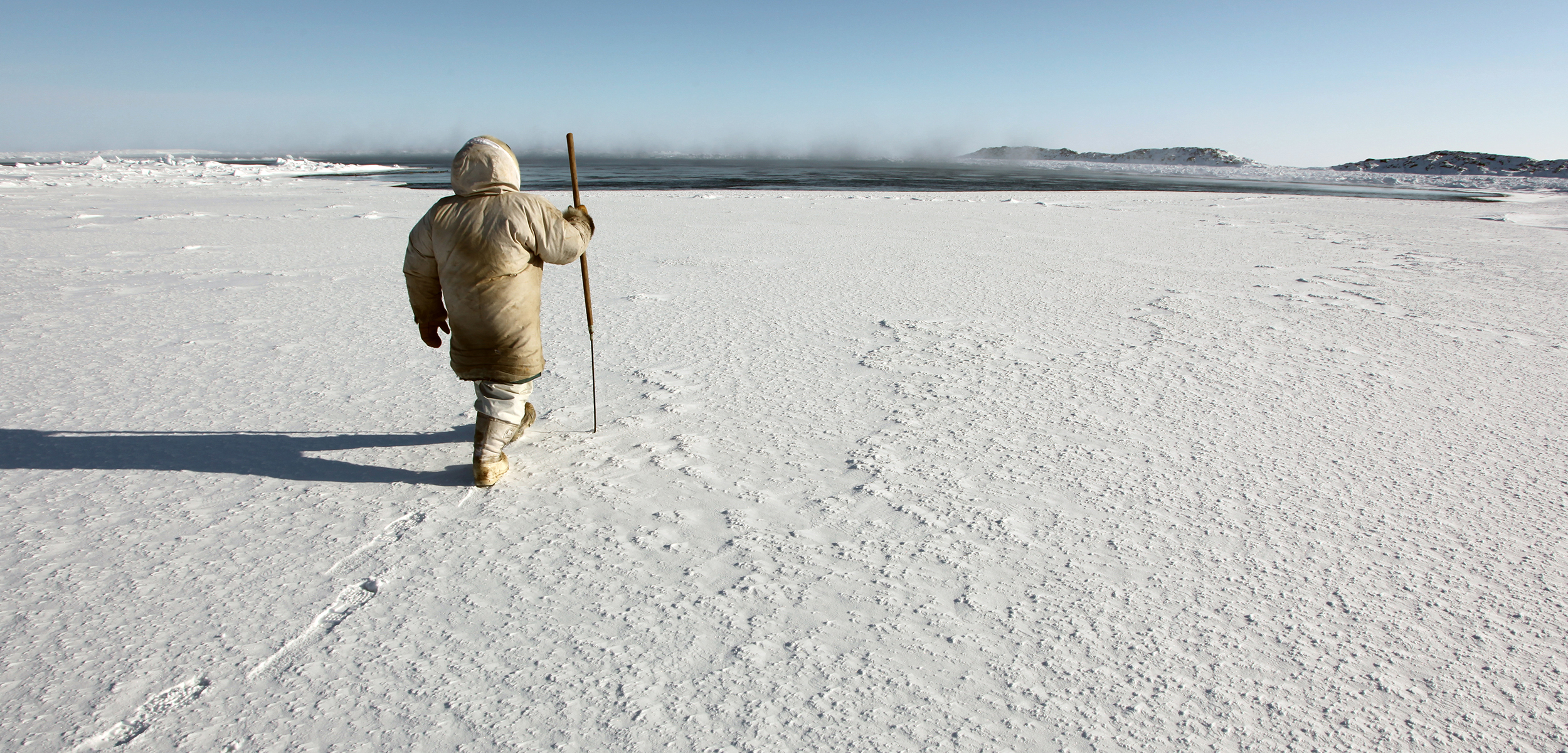
    Few social networking platforms are known for inspiring positive social change these days, but an Inuit-developed app is helping Indigenous communities from Alaska to Greenland advance their self-determination. Named SIKU after the Inuktitut word for “sea ice,” the app allows communities in the North to pull together traditional knowledge and scientific data to track changes in the environment, keep tabs on local wild foods, and make decisions about how to manage wildlife—all while controlling how the information is shared.

    A group of Inuit elders and hunters from Sanikiluaq, Nunavut, came up with the idea for SIKU more than a decade ago to document and understand the changing sea ice they were witnessing in southeastern Hudson Bay. The group turned to the local nonprofit Arctic Eider Society to develop a web-based platform where hunters in nearby coastal communities could upload photos and videos and share knowledge. Contributors began using the portal in 2015 to log water temperature and salinity data, note observations of important wildlife species—such as beluga and common eider ducks—and track the flow of contaminants through the food web.

    Over the years, SIKU has evolved, and recently, the elders saw that the platform could help address a familiar challenge: sharing knowledge with younger people who often have their noses in their phones. In 2019, SIKU relaunched as a full-fledged social network—a platform where members can post photos and notes about wildlife sightings, hunts, sea ice conditions, and more. The app operates in multiple languages, such as Inuktitut, Cree, Innu, and Greenlandic, and includes maps with traditional place names. Since early 2024, over 25,000 people from at least 120 communities have made more than 75,000 posts on SIKU.

    Members’ photos demonstrate the breadth and bounty of northern foods: They show plump bags of berries sitting on the tundra, clusters of sea urchins nestled on smooth gray stones, and boxes of fresh Arctic char placed in the snow. They depict harp sealsringed seals, ptarmigan, beluga, common eider, and neat rows of colorful eggs laid out next to smiling kids. The posts tell stories of hunting and traveling, the impacts of climate change and industrial activity, and the migrations, diets, and illnesses of local animals. In effect, SIKU captures everyday Indigenous life in a rapidly changing landscape.

    Keep reading this article at Hakai Magazine.
  • In Canada’s boreal forest, a new national park faces the wrongs of the past — and guards our climate future

    In Canada’s boreal forest, a new national park faces the wrongs of the past — and guards our climate future

    AUDUBON

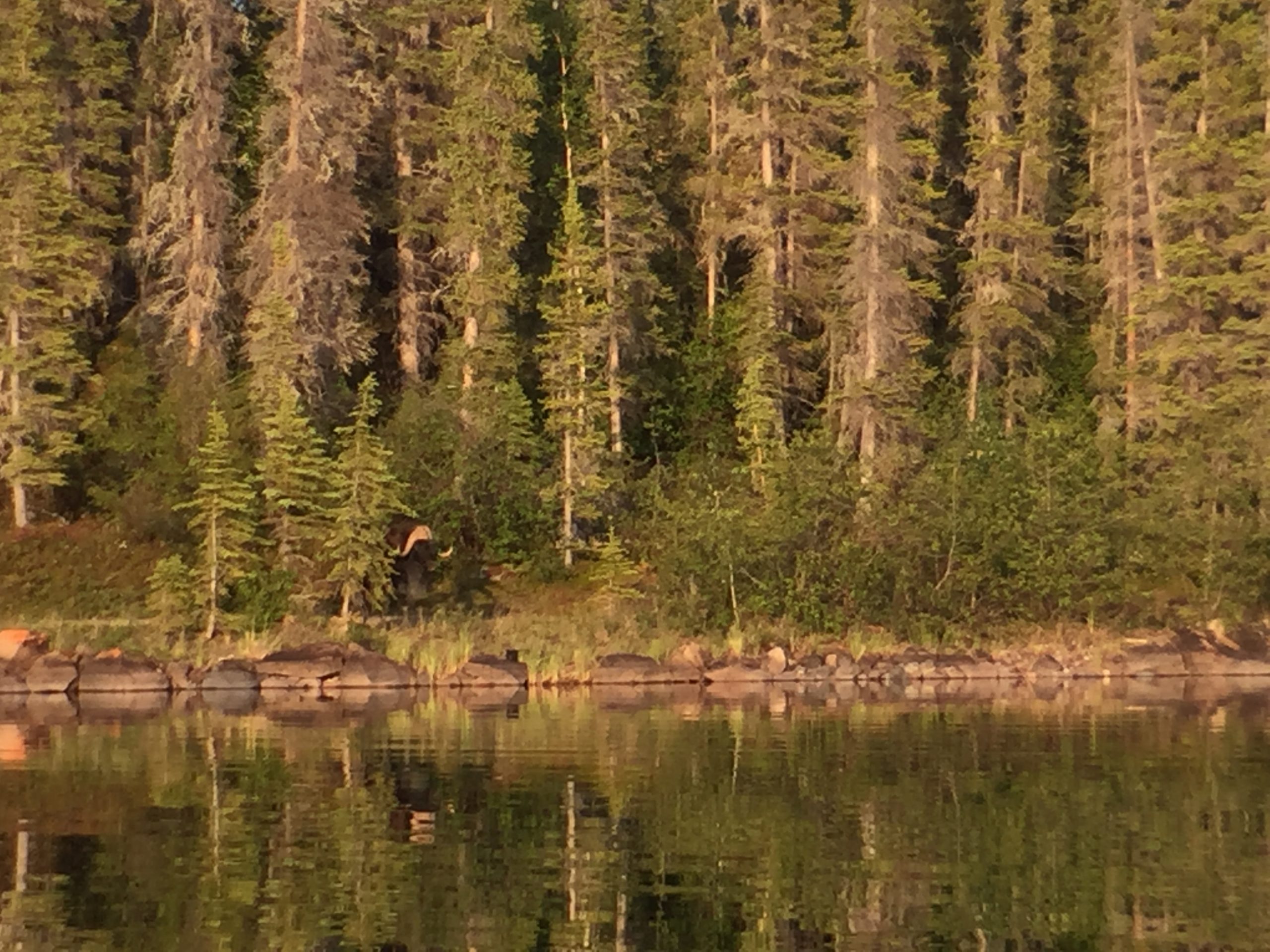
    James Marlowe zips along the glassy lake surface of the water in his aluminum fishing boat, and the town of Łutsël K’é quickly falls from sight. We stay close to the shoreline, avoiding hidden reefs, and steer straight for his net. It’s closing in on midnight, but Great Slave Lake—the deepest lake in North America and the 10th largest in the world—is flashing with fish and the tree-covered hills are aglow in the setting summer sun. Marlowe cuts the motor and begins hauling in the 150-foot net hand-over-hand.

    Splop! The first fish lands in a large plastic bin. Splop! Splop! Marlowe moves along the net, plucking whitefish from its mesh. With some effort, he untangles a 30-pound trout and heaves the rare find into the bin. “Oh, there are still more fish! It’s not going to stop, man,” he says with a laugh.

    Since he was a teen, Marlowe has hunted, trapped, and fished these wilds for caribou, moose, ducks, whitefish, and lake trout. Like his neighbors and ancestors of the Łutsël K’é Dene First Nation, he’s followed traplines that meander from the forest to  tundra and strung nets under the lake ice to harvest food. “We depend on the land and the water for survival,” says Marlowe. “It’s like our grocery store.”

    In the early 1990s, however, diamond mining and mineral exploration in Canada’s Northwest Territories began to threaten this tradition of living off the land. The mines produced some jobs and revenue for the community, but they also caused problems. The industry’s high interest in the area concerned the elders, who then directed Marlowe’s generation to find a way to protect the land, water, and animals for their own children—and for the survival of the Dene culture, language, and way of life.

    After more than 15 years of discussion, the Łutsël K’é Dene First Nation has now signed a landmark agreement with the governments of Canada and the Northwest Territories to form a massive new protected area called Thaidene Nëné, or “Land of the Ancestors.” Almost twice as large as the Grand Canyon, Yosemite, and Yellowstone national parks combined, Thaidene Nëné encompasses more than 6.4 million acres, stretching from the easternmost tip of Great Slave Lake northeast toward the Arctic territory of Nunavut. It spans the boreal forest and its transition to the heath-dominated tundra, making it one of the only protected areas in Canada to straddle the tree line—an important bridge for plants and animals that may migrate as the climate changes.

    .::. Read more at Audubon Magazine.

  • Butterflies in the storm

    Butterflies in the storm

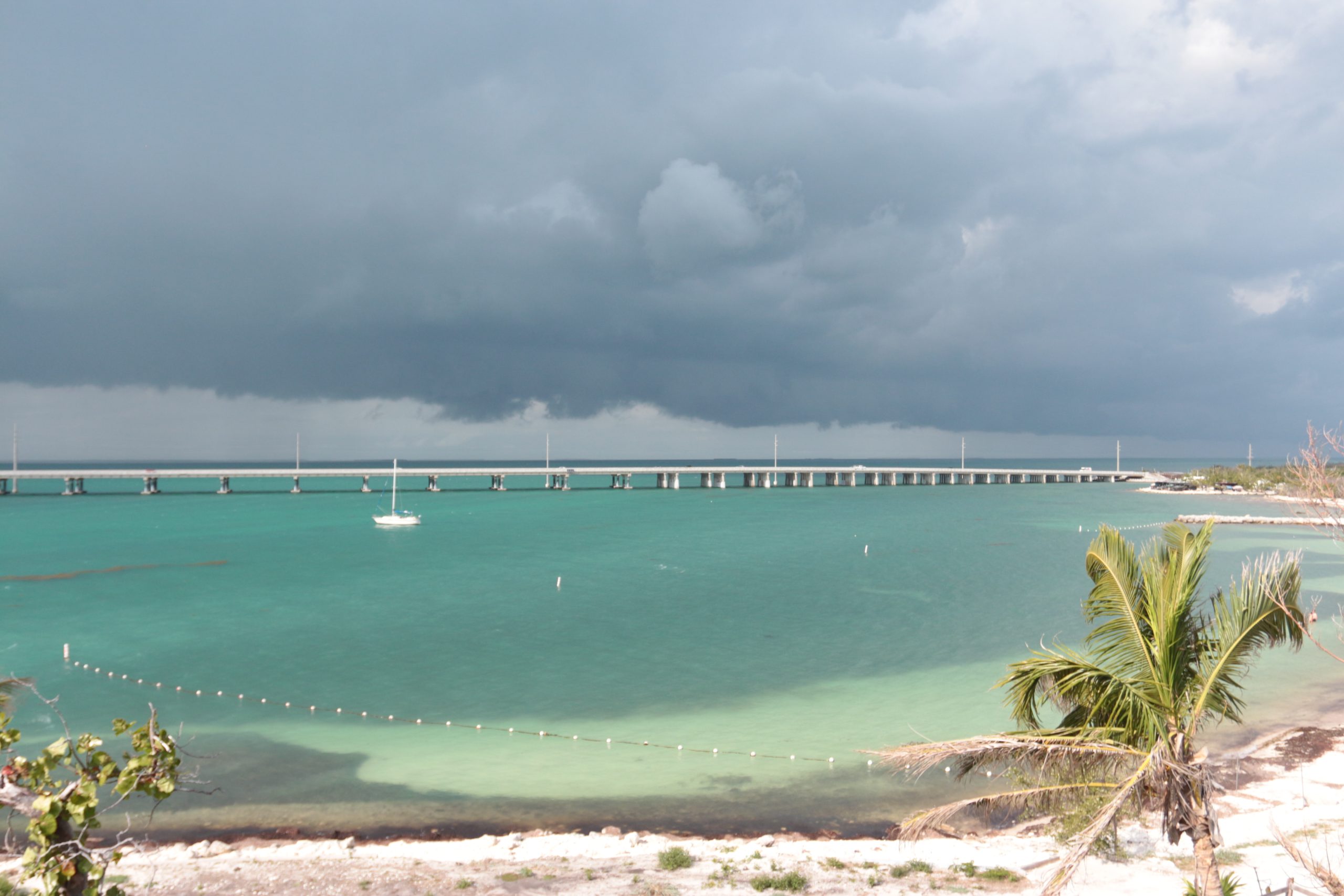
    As Hurricane Irma was bearing down on the Florida Keys last September, Erica Henry was watching from Raleigh, North Carolina. Henry, an ecologist, had packed up and left the Keys at the start of hurricane season and was supposed to be working on her doctoral thesis. But instead of writing code for a butterfly population model, she was checking and re-checking the hurricane’s projected path and posting anxious updates to Twitter.

    For six years, Henry had been studying some of the rarest endangered butterflies in North America, and she feared the storm seething through the Atlantic might gobble them up for good. “We always talk about how one hurricane could be the end of them,” said Henry. The day Irma slammed into the Keys, Henry approached one of the members of her advisory committee with a question: “What happens if one of your study species goes extinct during your dissertation?”

    Of the 25 native butterflies on the U.S. endangered species list, four reside in Florida. Henry is studying two of them, the Miami blue (Cyclargus thomasi bethunebakeri) and Bartram’s scrub hairstreak (Strymon acis bartrami). A former ski bum who wearied of waiting tables, Henry now copes with south Florida’s blistering sun, thorny bushes, and infinite mosquitoes in an effort to grasp what helps these butterflies thrive—and what might stave off their demise.

    For decades, efforts to save the world’s rarest butterflies have come up short. Many species have only become rarer—or extinct—sometimes after scientists and conservationists adopted seemingly cautious interventions that turned dire. Nick Haddad, Henry’s supervisor, likes to tell a story about the large blue butterfly (Maculinea arion eutyphron). First recorded in 1795, it became extinct in the British Isles in 1979.

    More than a hundred years ago, conservationists erected fences around fields that housed the disappearing butterfly to keep out both butterfly hunters and cattle. But it turned out grazers were key to the butterfly’s survival, keeping grasses short so that ants could squirrel the caterpillars below ground for 10 months until the butterflies emerged. (Butterfly larvae look remarkably like ant larvae, so the ants carry them into their nests where the butterfly larvae feast on developing ants.) Over time, the fields became overgrown, the soil temperature dropped, and other ant species with no interest in the large blue moved in.

    Fencing off the fields “was exactly the wrong thing to do,” said Haddad, an ecologist at Michigan State University who studies wildlife corridors, butterflies, and bees. “The very acts of conservation were dooming butterflies.” Another large blue subspecies from Sweden has since been introduced in the UK—and cattle munching on grasses have contributed to their success.

    Now, after watching endangered butterfly populations dwindle and sometimes wink out, butterfly ecologists are finally getting a handle on what it takes to give a rare butterfly a leg up. Farming, urbanization, and forestry have carved up habitat, wiped out key plant species, and squelched natural disturbances like fire, flooding, and grazing, that help keep butterflies alive. And when isolated fragments of rare habitat sit adjacent to homes or schools—or on the edge of rapidly rising seas—the extinction risk only grows. Ecologists have discovered that by re-introducing this natural disturbance, often in combination with captive breeding programs, they can set butterflies on track to recovery.

    .::. Keep reading at bioGraphic.

  • Cost of Arctic fieldwork limits research

    Cost of Arctic fieldwork limits research

    SCIENCE — Mark Mallory, who has studied Arctic seabirds for more than 20 years, often notes in his scientific papers how expensive it is to conduct fieldwork in the far north, as have some of his colleagues. But when they recently tallied up their costs systematically, they were shocked to find the true price of northern research was eight times greater than for similar studies of seabirds in southern locations.

    The findings, reported on 4 June online in Arctic Science,  are among the first to quantify the high costs of Arctic research. The authors say funding sources are often insufficient to cover these expenses, limiting scientists from collecting enough data to understand how Arctic ecosystems are responding to climate change.

    Mallory, a professor at Acadia University in Wolfville, Canada, convened seabird researchers who work in the Arctic and in temperate regions. Based on their actual expenses, they estimated costs for a generic scenario in which three researchers establish a field camp for 4 weeks to monitor the breeding success of seabirds, including travel; accommodation; and shipping food, equipment, and supplies for sites in Nunavut and northern Newfoundland and Labrador in Canada; Svalbard, a Norwegian archipelago; Greenland; and the Aleutian Islands. The researchers compared these estimates to calculations for southern locales.

    .::. Keep reading in Science.

  • Nations put science before fishing in the Arctic

    Nations put science before fishing in the Arctic

    Nine nations and the European Union have reached a deal to place the central Arctic Ocean (CAO) off-limits to commercial fishers for at least the next 16 years. The pact, announced yesterday, will give scientists time to understand the region’s marine ecology—and the potential impacts of climate change—before fishing becomes widespread.

    “There is no other high seas area where we’ve decided to do the science first,” says Scott Highleyman, vice president of conservation policy and programs at the Ocean Conservancy in Washington, D.C., who also served on the U.S. delegation to the negotiations. “It’s a great example of putting the precautionary principle into action.”

    The deal to protect 2.8 million square kilometers of international waters in the Arctic was reached after six meetings spread over 2 years. It includes not just nations with coastal claims in the Arctic, but nations such as China, Japan, and South Korea with fishing fleets interested in operating in the region.

    Thus far, thick ice and uncertain fish stocks have kept commercial fishing vessels out of the CAO, but the region is becoming increasingly accessible because of rapid loss of summer sea ice. In recent summers, as much as 40% of the CAO has been open water, mostly north of Alaska and Russia, over the Chukchi Plateau.

    As the summer sea ice becomes thinner and its edge retreats northward, more sunlight is penetrating the water, increasing production of plankton, the base of the Arctic food web. These sun-fed plankton are gobbled up by Arctic cod, which in turn are hunted by animals higher up the food chain, including seals, polar bears, and humans. Some parts of the Arctic Ocean’s adjacent seas, such as the Barents Sea (off the northern coasts of Russia and Norway), saw steep increases in primary production in 2016, approaching 35% above the 2003–15 average.

    .::. Keep reading this story in Science.