Category: wildlife

  • Butterflies in the storm

    Butterflies in the storm

    As Hurricane Irma was bearing down on the Florida Keys last September, Erica Henry was watching from Raleigh, North Carolina. Henry, an ecologist, had packed up and left the Keys at the start of hurricane season and was supposed to be working on her doctoral thesis. But instead of writing code for a butterfly population model, she was checking and re-checking the hurricane’s projected path and posting anxious updates to Twitter.

    For six years, Henry had been studying some of the rarest endangered butterflies in North America, and she feared the storm seething through the Atlantic might gobble them up for good. “We always talk about how one hurricane could be the end of them,” said Henry. The day Irma slammed into the Keys, Henry approached one of the members of her advisory committee with a question: “What happens if one of your study species goes extinct during your dissertation?”

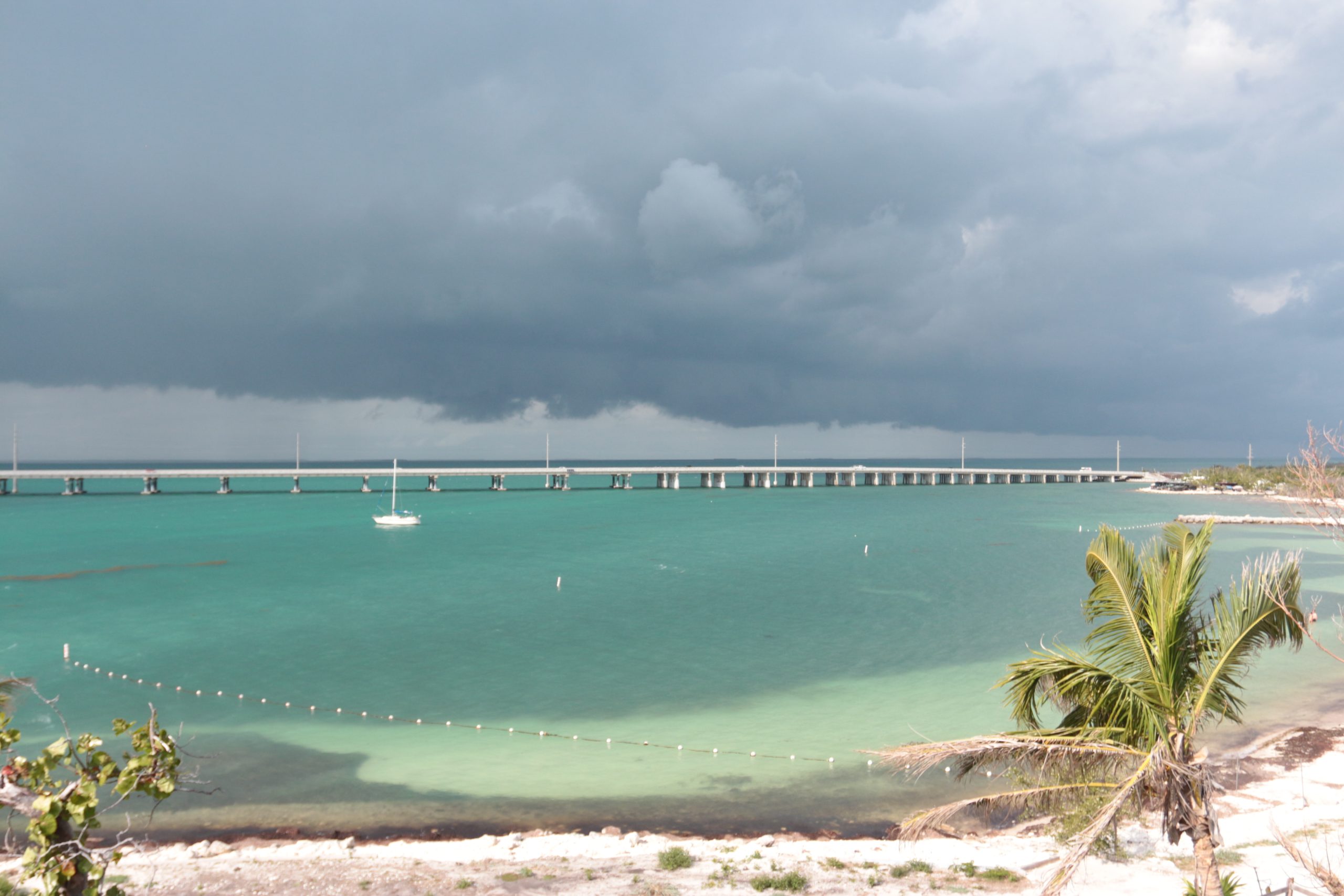
    Of the 25 native butterflies on the U.S. endangered species list, four reside in Florida. Henry is studying two of them, the Miami blue (Cyclargus thomasi bethunebakeri) and Bartram’s scrub hairstreak (Strymon acis bartrami). A former ski bum who wearied of waiting tables, Henry now copes with south Florida’s blistering sun, thorny bushes, and infinite mosquitoes in an effort to grasp what helps these butterflies thrive—and what might stave off their demise.

    For decades, efforts to save the world’s rarest butterflies have come up short. Many species have only become rarer—or extinct—sometimes after scientists and conservationists adopted seemingly cautious interventions that turned dire. Nick Haddad, Henry’s supervisor, likes to tell a story about the large blue butterfly (Maculinea arion eutyphron). First recorded in 1795, it became extinct in the British Isles in 1979.

    More than a hundred years ago, conservationists erected fences around fields that housed the disappearing butterfly to keep out both butterfly hunters and cattle. But it turned out grazers were key to the butterfly’s survival, keeping grasses short so that ants could squirrel the caterpillars below ground for 10 months until the butterflies emerged. (Butterfly larvae look remarkably like ant larvae, so the ants carry them into their nests where the butterfly larvae feast on developing ants.) Over time, the fields became overgrown, the soil temperature dropped, and other ant species with no interest in the large blue moved in.

    Fencing off the fields “was exactly the wrong thing to do,” said Haddad, an ecologist at Michigan State University who studies wildlife corridors, butterflies, and bees. “The very acts of conservation were dooming butterflies.” Another large blue subspecies from Sweden has since been introduced in the UK—and cattle munching on grasses have contributed to their success.

    Now, after watching endangered butterfly populations dwindle and sometimes wink out, butterfly ecologists are finally getting a handle on what it takes to give a rare butterfly a leg up. Farming, urbanization, and forestry have carved up habitat, wiped out key plant species, and squelched natural disturbances like fire, flooding, and grazing, that help keep butterflies alive. And when isolated fragments of rare habitat sit adjacent to homes or schools—or on the edge of rapidly rising seas—the extinction risk only grows. Ecologists have discovered that by re-introducing this natural disturbance, often in combination with captive breeding programs, they can set butterflies on track to recovery.

    .::. Keep reading at bioGraphic.

  • Sea change

    Sea change

    The Arctic Ocean is beginning to look and act more like the Atlantic. It’s a shift that threatens to upend an entire food web built on frigid waters.

    On a cool morning in late July, the Oceania, a blue and white, three-masted research vessel, maneuvers through the dark waters of a fjord on the west coast of the Arctic island of Spitsbergen. Craggy peaks streaked with snow rise sharply out of the water. Expansive sweeps of glacial ice plow between mountains and into the fjord, ending abruptly in towering turquoise walls. Chunks of ice drift by, sizzling and popping like sheets of bubble wrap as they melt and release air captured ages ago.

    As the ship sets anchor, scientists in wool sweaters, knit hats, rubber boots, and insulated marine jackets spill onto the deck and begin their work. One lowers a silver box of an instrument into the water to record its temperature, salinity, and depth. Another uses a winch to drop a cone-shaped net over the side of the ship to the seafloor. On its way back up, the fine mesh gathers a menagerie of tiny sea creatures, including krill, copepods, other tiny crustaceans, and a couple of grape-sized sea jellies.

    The copepods, tiny and transparent with slim red antennae, are the least beguiling of the hoard, but they are the main target. “We want to find out who they are, where they are, and how many of them there are,” says marine ecologist Sławomir Kwaśniewski who works at the Institute of Oceanology of the Polish Academy of Sciences (IO PAN) in Sopot, Poland. These minute crustaceans form the key middle links in a compressed Arctic food web: They are the primary food for Arctic cod, marine birds, and bowhead whales—and the energy and nutrients they contain help sustain seals, reindeer, and polar bears. By studying copepods, along with the Arctic ecosystem they support, from seafloor to bird-covered cliffs, the researchers hope to gain a better understanding of how climate change is restructuring that food web and changing the entire biological character of the Arctic.

    At its core, the scientists’ interest in the tiny copepods lies in a relatively recent phenomenon—one they’re calling the “Atlantification” of the Arctic. Years of sampling have shown that the Arctic Ocean is losing its distinctly Arctic traits and becoming increasingly more like the Atlantic. Its sea ice is melting, its water warming. In response, animals from warmer climes are encroaching, leading to a reorganization of its biodiversity. One particular copepod species is providing clues about the extent of the disruption and just how grave it might become.

    Keep reading this story at bioGraphic.

  • High stakes in the High North

    High stakes in the High North

    BIOGRAPHIC

    A stiff wind buffeted the helicopter as it set down near the gravel shore of Wrangel Island, a remote spot of land 300 miles north of the Arctic Circle in Russia’s extreme Far East. After flying two and a half hours from Pevek, Russia, mostly over open water, the aircraft smelled of vodka and gasoline from the extra fuel cans secured inside. Joel Berger peered up at the white hills that rose around him and spotted several black flecks on the slopes: his quarry, muskoxen.

    These shaggy, horned creatures are one of the many archetypal Arctic species that thrive on Wrangel Island, a little-known hotspot for polar biodiversity. Berger, a wildlife biologist at Colorado State University, came to Wrangel as part of a joint Russian-American project to understand how climate change and other factors, such as predation by polar bears, might be affecting the island’s roughly 900 muskoxen. The island’s isolation, along with its cold, dry polar climate, have created a unique and surprisingly biodiverse ecosystem. Despite the harsh conditions, more than 400 varieties of plants persist here—twice the number found on any other similarly sized piece of Arctic tundra—as well as hundreds of mosses and lichens. Some of them are not found anywhere else on Earth.

    .::. Read the rest of this story at bioGraphic.

  • Caribou genetics reveal shadow of climate change

    Caribou genetics reveal shadow of climate change

    Nature

    Ancient ice ages that shaped modern caribou populations may foretell animals’ fate in a warmer world.

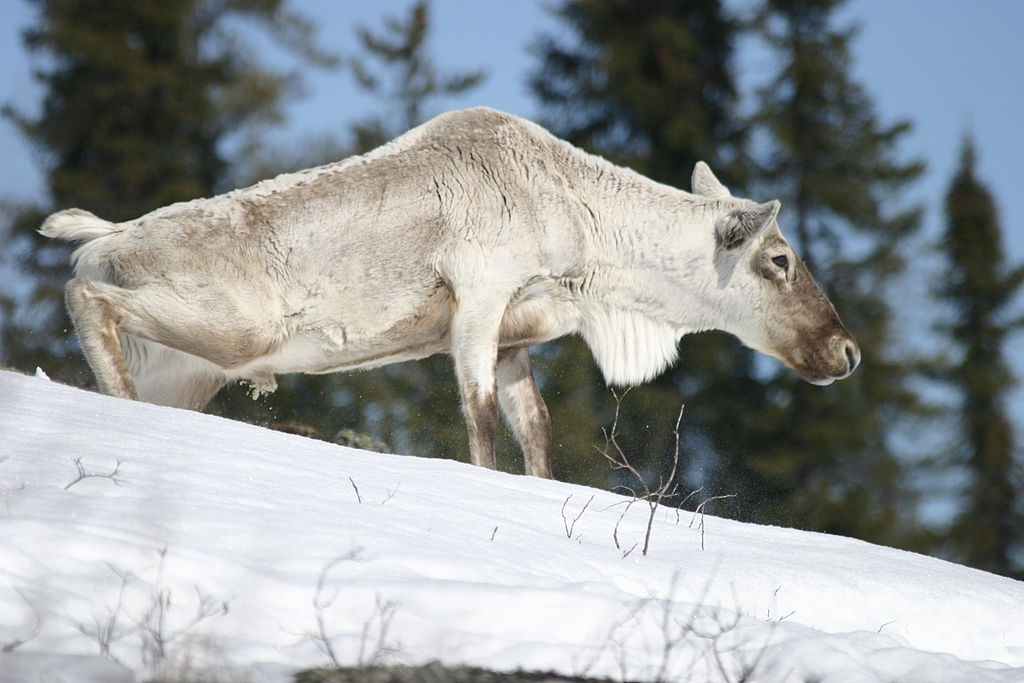
    When ice sheets marched across North America 20,000 years ago during the Last Glacial Maximum, they devoured liveable areas for caribou and isolated them from their Eurasian relatives for thousands of years.

    Now researchers have evidence that such climatic events have sculpted the genetics of North American caribou, which may make the animals unable to adapt to future climate change.

    “Although the past is not a guarantee for the future, it makes me pessimistic about the future of the species,” says Glenn Yannic, a population geneticist at Laval University in Quebec City, Canada, and lead author of a study published today in Nature Climate Change1.

    Major caribou herds around the globe are in decline. Scientists have blamed this on natural resource development and new roads that encroach on caribou habitat, and on changes in climate that put migrating caribou out of sync with spring plant growth, leaving them hungry. Most studies that forecast climate impacts on species look at ecosystems, individual species or populations, but not genetic factors on a global scale, says Yannic.

    Keep reading this story at Nature.

  • In carbon sequestration, money grows on trees

    In carbon sequestration, money grows on trees

    Guyana’s tropical rainforests protected under the REDD program provide not just natural resources but an income stream to the country.

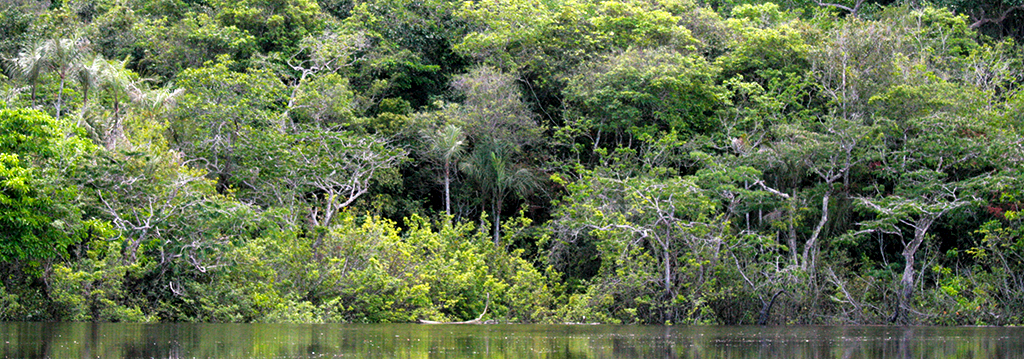
    Two hours south of Georgetown, Guyana, a paved highway recedes, giving way to a rutted red road gushing through thick rainforest. In its muddiest spots, the road swallows trucks and spits them out at dangerous angles. Many hours later, it leads to an area of protected land called Iwokrama, a Rhode Island-size forest in the heart of Guyana, crowded with ancient buttress-trunked trees draped in liana vines.

    [media-credit name=”Hannah Hoag” align=”alignleft” width=”300″]red-mud-guyana[/media-credit]Since 2003, Jake Bicknell has been a fixture within this forest. Now a doctoral student in biodiversity management at the U.K.’s University of Kent, he is cataloging Iwokrama’s iconic and bizarre species, including jaguars, giant anteaters, anacondas, and scads of birds and bats. (Guyana boasts more than 700 bird and 120 bat species.)

    Specifically, he’s in Iwokrama to find out how logging affects tropical forest wildlife. Conventional logging ruins forests and decimates species, but low-impact methods of harvesting timber might not be so damaging. In fact, Bicknell believes selective logging can become a tool for protecting the forests and biodiversity of Guyana — a developing country eager to tap its natural resources as a way to boost its economy.

    “There will always be a market for products extracted from forests, so the point is to do it in the least impacting way,” says Bicknell.

    Keep reading this story in the November 2013 issue of Discover