Category: wildlife

  • Cold cash for cold science

    Cold cash for cold science

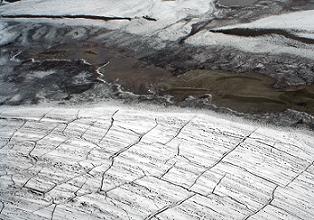
    The recent funding wrap-up from the international polar year (IPY) has left many Canadian researchers scratching their heads, trying to find a way to continue their arctic science projects. A new grant from the Natural Sciences and Engineering Research Council of Canada may help close that research-funding gap.

    In its announcement yesterday, NSERC opened a competition to fund large-scale research with a focus—for this round of funding—on northern earth systems. The Discovery Frontiers initiative will heft Can$4 million over five years on the successful research team to study the physical, chemical, biological and social factors that affect the North and its inhabitants—and to come up with solutions. Fresh water, sea level, permafrost, weather patterns, biodiversity or climate change adaptation could be part of the successful pitch. The northern community will help define the projects and their goals.

    The story continues at Nature’s blog The Great Beyond.

  • Free Radicals Radio: Bring on the bugs!

    Babes in the woods

    Get outside

    Can a walk in the woods really change us? Scientists are beginning to think so. There’s evidence to suggest that being in a busy city environment can reduce the brain’s capacity to remember things and lower self-control. Kids are driven to school and back, and off to soccer practice, and then when they get home, they turn on the computer or TV and settle down to an evening of screen-tertainment. The growing children and nature movement suggests children’s problems with obesity, attention span and lack of understanding of the environment are connected to less outdoor play and exposure to nature. Do you have nature-deficit disorder?

    Listen to the show: Babes in the woods (Download full episode, October 9) or listen to it from the CKUT archive.

    Find out more

    Children and Nature Network
    Environment Canada’s Biokits
    Child & Nature Alliance

    Red Fox Remix

    Here’s a treat: Growing up in Toronto in the 1970s, I was exposed to Hinterland Who’s Who–one-minute wildlife video segments about muskox, moose and the mighty beaver. (See the Red Fox below.) Now the Canadian Wildlife Service and the Canadian Wildlife Federation have opened the nostalgia gates for parents across Canada and giving kids the chance to remix their own Hinterland Who’s Who. It’s brilliant. Make your own HWW remix with your favourite Canadian critter. Don’t forget to upload it to the HWW YouTube channel.

    HWW video Copyright CWS, CWF (2005) Please direct any questions about the video to info@hww.ca.

  • Few bats for Quebec’s belfries. White-nose syndrome killing North American bats.

    Few bats for Quebec’s belfries. White-nose syndrome killing North American bats.

    Photograph by: Nancy Heaslip, New York Department of Environmental Conservation

    MONTREAL – In March, Frédérick Lelièvre found himself crawling through a narrow passage into the final chamber of the Laflèche Cave in Val des Monts. Raising his eyes to the hibernating bats on the rock above him, his heart dropped. The tiny lime-size animals were dusted with a white powdery substance. Most of them had it on their muzzles, and it was on the wings and the feet of others. It wasn’t a good sign.

    Wildlife biologists in the United States have come across similar sights over the last four years. Since 2006, a strange new fungus has been spreading through bat roosts, from New Hampshire to Oklahoma, leaving a grisly mess of rotting bat carcasses and toothpick-size bones in its wake.

    Until recently, the fungus had remained south of the border. But by March, the illness – dubbed white-nose syndrome – had spread to Ontario as well as Quebec.

    Despite the scene before him, Lelièvre clung to the faint hope that this was something different. Unlike the bat hibernacula in the U.S., the Laflèche Cave wasn’t littered with carcasses.

    “We looked at many, many bats, and we found the mould on them, but we found only a few dead bats,” says Lelièvre, a biologist at the Quebec Department of Natural Resources and Wildlife.

    Lelièvre sent whole bats to the Centre québécois sur la santé des animaux sauvages at the Université de Montréal faculty of veterinary medicine in St. Hyacinthe for necropsies to look more closely at the bats’ condition. Skin samples taken during the necropsy were then sent to the National Wildlife Health Centre in Madison, Wis., where a genetic test was used to identify the fungus. Both studies are necessary for diagnosis.

    André Dallaire, a veterinary pathologist, studied the animals – outside and in – for signs of the infection. The fungus looks like “what you’d see if you had a piece of bread that you left too long on the countertop,” he says. Some of the bats he examined were emaciated, having burned though their body fat and muscle to try to stay alive.

    By mid-April, Lelièvre had received word that the bats from the Outaouais area cave carried the same fungus as those in the U.S.

    “I was very worried. I thought, ‘Oh, no! Are we also going to lose our bat populations?’ ” says Lelièvre.

    More than one million bats have died in the U.S. In some hibernacula, 90 to 100 per cent of the bats have been reduced to a pile of bones. Aeolus Cave in East Dorset, Vt., – the largest hibernaculum in New England – once held an estimated 300,000 bats, says Scott Darling, a wildlife biologist with the Vermont Fish and Wildlife Department. Now about one-tenth of the initial population remains.

    The loss of so many bats has ramifications for humans and the ecosystem. Bats are ravenous predators of night-flying insects, moths, beetles and mosquitoes, some of which transmit human diseases and others that may damage crops and trees.

    Some have likened their vanishing to bee colony collapse disorder.

    “We’ve put a dollar value on what bees do for conservation, but I don’t know anyone who can put a dollar value on bats,” says Brock Fenton, a bat biologist at the University of Western Ontario, in London.

    > More photos from the US Fish and Wildlife Service, via Flickr
    > Listen to Dave Blehert on NPR’s Science Friday (October 32, 2008.) Video, too.
  • Confronting the biodiversity crisis

    Confronting the biodiversity crisis

    In 2002, the world’s governments agreed to significantly slow the rate of biodiversity loss by 2010. Time is almost up, and by most accounts they’ve failed. Now that climate change is emerging as one of biodiversity’s greatest threats, scientists are proposing new ways to tackle the crisis. Hannah Hoag reports.

    Barcoding life

    In July 2009, for the fourth year in a row, a swarm of biologists fanned out across the tundra near Churchill, Manitoba, in northern Canada. They plucked fragments of plants and animals — feathers and fur, mayflies and moths — from land, lakes, rivers and ocean. At the lab, the specimens were ground up and identified using short stretches of DNA — a unique barcode for every species. So far, the team — led by Paul Hebert, an evolutionary biologist at the University of Guelph in Canada, who invented DNA barcoding (Proc. R. Soc. B 270, 313–321; 2003) to speed up the process of taxonomy — has identified more than 4,000 species from its northern expeditions, including parasitic wasps that have been observed across North America but were previously overlooked in the Canadian Arctic.

    “The first business of conservation is telling species apart,” says Hebert. Before barcoding, biological specimens were identified on the basis of morphology, behaviour and genetics. The technique will offer a “quantum jump” in the rate that species are registered, says Hebert. What once took months can now take a few hours. It also gives biodiversity a boost: barcoding has repeatedly shown that one species is, in fact, three, or ten (Evol. Biol. 7, 121; 2007).


    >> Keep reading…

  • Q&A with Earth director Alastair Fothergill

    Green Living

    Polar bears and prophecies from the director of Earth.

    Earth, the hotly anticipated new film from Disneynature—in theatres on Earth Day (April 22)—follows three families of mammals. It captures the spectacle of the animal kingdom on the Arctic sea ice, in the tropics and Kalahari Desert, and at the Antarctic’s Southern Ocean. Green Living caught up with Emmy Award-winning wildlife filmmaker and Earth’s co-director Alastair Fothergill (best known for producing and directing the BBC series Planet Earth) for a chat about climate, camera angles and the thrill of the chase.

    Green Living: What do you hope people will take away from this type of film?

    :: Read more at Green Living ::