Tag: arctic

  • Cold cash for cold science

    Cold cash for cold science

    The recent funding wrap-up from the international polar year (IPY) has left many Canadian researchers scratching their heads, trying to find a way to continue their arctic science projects. A new grant from the Natural Sciences and Engineering Research Council of Canada may help close that research-funding gap.

    In its announcement yesterday, NSERC opened a competition to fund large-scale research with a focus—for this round of funding—on northern earth systems. The Discovery Frontiers initiative will heft Can$4 million over five years on the successful research team to study the physical, chemical, biological and social factors that affect the North and its inhabitants—and to come up with solutions. Fresh water, sea level, permafrost, weather patterns, biodiversity or climate change adaptation could be part of the successful pitch. The northern community will help define the projects and their goals.

    The story continues at Nature’s blog The Great Beyond.

  • Collapse of the ice titans

    Collapse of the ice titans

    Nature

    Monitoring Greenland’s melting glaciers from a 15-metre long sailboat.

    In early August, a 260-kilometre-square chunk of ice broke off the Petermann Glacier — the largest iceberg to calve in the Arctic Ocean since 1962.

    The collapse didn’t surprise Richard Bates, a geophysicist from the University of St Andrews, UK. During a visit to Petermann last summer, with glaciologists Jason Box of the Byrd Polar Research Center at Ohio State University in Columbus and Alun Hubbard of Aberystwyth University, UK, the three noted rifts and meltwater — a sign of pending collapse. They installed time-lapse cameras atop the 900-metre-high cliffs and placed eight Global Positioning System (GPS) units along the glacier’s centre line to monitor the event.

    The researchers returned to Greenland late last month to retrieve the equipment and make other oceanographic and geophysical measurements, but were thwarted in their attempts to reach Petermann by ice. Nature caught up with Bates soon after he stepped off the Gambo, the sailboat that voyaged to the north end of Humboldt Glacier, which the team is also studying.

    What did you see while sailing up the Greenland coast?

    We saw a lot of calving glaciers. One 400-metre-long section of the glacier broke off just after we surveyed it. On our way to the Humboldt Glacier we got close to some major calving. It can seem very dangerous to have such a small boat in front of these glaciers, but you can be a lot more reactive and nimble than in large research vessels. But once you’re stuck in the ice, you’re stuck. We were pushing it a bit last week.

    Richard Bates.

    What work did you have planned for this trip?

    We worked our way up from central Greenland — the Lille, Store and Rink glaciers. We took time-lapse measurements and looked at the submerged portion of the glacier to see how fast the front is changing. We’ve been finding out that the submarine melt rates can be 20–100 times faster than the above-surface melt rates. We’re using a laser scanner to measure the changes above the water and using a sonar to look at the melt rates below the water.

    → Read the entire Q&A with Richard Bates at Nature.

    Richard Bates photo courtesy of Richard Bates, Petermann Ice Island photo courtesy of NASA.

  • Canada picks site for Arctic Research Station

    Canada picks site for Arctic Research Station

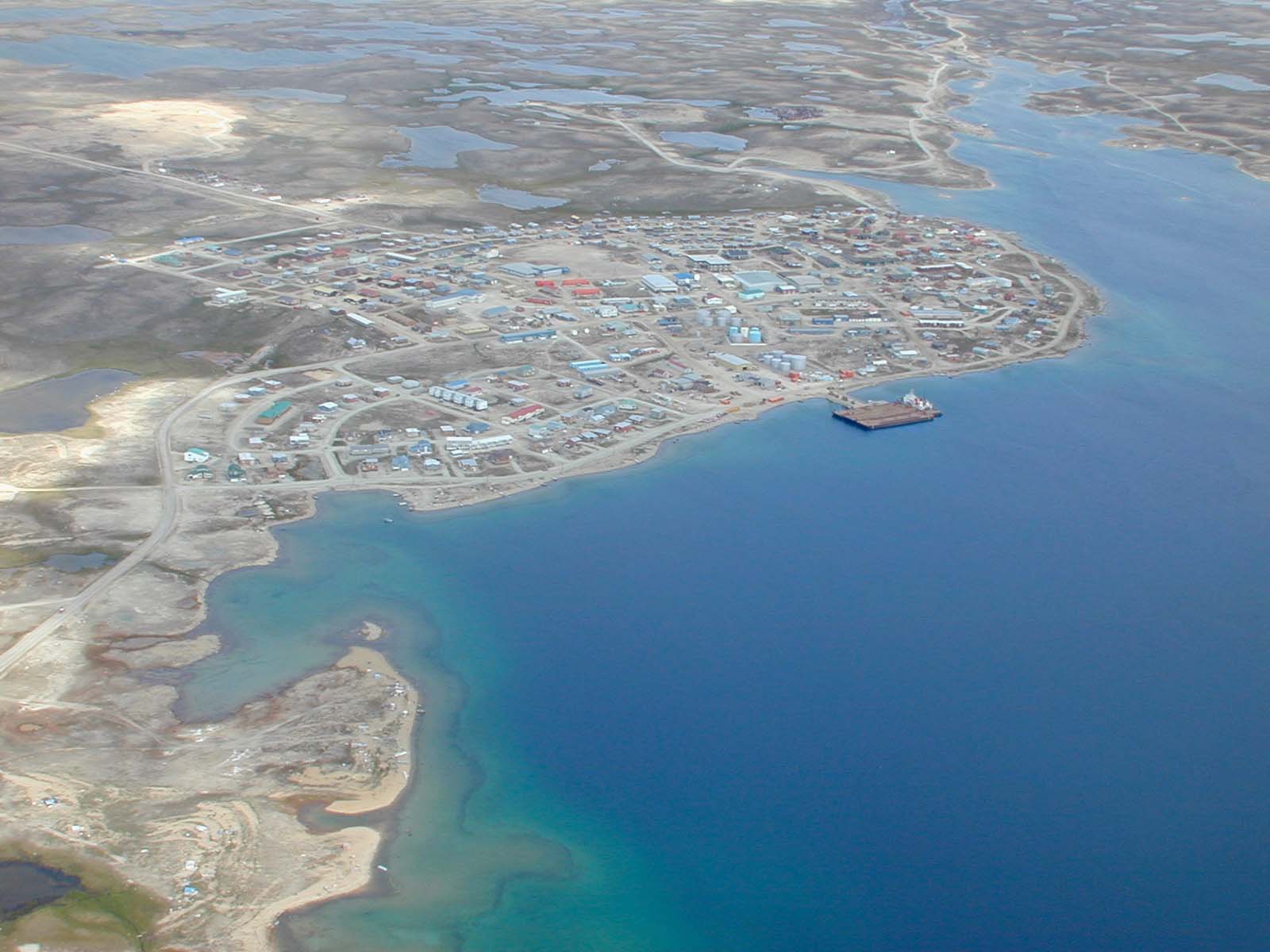
    Cambridge Bay location offers a wealth of opportunities for studying the far north.

    After months of deliberation, the Canadian government has chosen Cambridge Bay — a hamlet midway along the Northwest Passage in the country’s far north — as the site for a world-class Arctic research station.

    Once built, the station will house scientists all year round, giving them a modern space to study Arctic issues, including climate change and natural resources. It will host conference facilities and laboratories for research on marine biology and geophysics, provide ecologists with the space to do long-term ecological monitoring in aquaria and greenhouses, and give researchers in the health and social sciences a base for their studies.

    “It’s a very exciting and long-awaited announcement,” says Warwick Vincent, director of the Centre for Northern Studies at Laval University in Quebec City, who was part of the committee consulted by the government during the selection process.

    The proposal for the Canadian research station was first sketched out in 2007 and a shortlist of sites was released in 2009. A Can$2-million (US$1.9-million) feasibility study for the proposed station established its functions, preliminary costs and construction schedule and involved an analysis of three possible locations: Pond Inlet, Resolute Bay and Cambridge Bay, all in the northern territory of Nunavut.

    Details about the new facility’s size or overall cost have yet to be released by the government, but sources suggest that it will be completed some time in 2017 at a cost of about Can$200 million.

    → Read more at the Nature website

    → Also found in WorldChanging’s Arctic Round-up (September 3)

  • Arctic Ocean full up with carbon dioxide

    Arctic Ocean full up with carbon dioxide

    Loss of sea ice is unlikely to enable Arctic waters to mop up more carbon dioxide from the air.

    As climate scientists watched the Arctic’s sea-ice cover shrink year after year, they thought there might be a silver lining: an ice-free Arctic Ocean could soak up large amounts of CO2 from the atmosphere, slowing down the accumulation of greenhouse gases and climate change.

    But research published in Science today suggests that part of the Arctic Ocean has already mopped up so much CO2 that it could have almost reached its limit1. Wei-Jun Cai, a biogeochemist at the University of Georgia in Athens and an international team sampled the amount of CO2 in the surface waters of the Canada Basin, in the western Arctic Ocean. “We found that ice-free basin areas had rather high CO2 values that approached atmospheric levels,” says Cai. “It was not expected.”

    Although the Arctic Ocean accounts for only 3% of the world’s ocean surface area and is mostly covered in ice, it takes up 5-14% of all the CO2 absorbed by the planet’s oceans. It tends to take in proportionately more CO2 because gases dissolve more easily in cold water.

    Scientists had previously thought that open water would promote the exchange of CO2 between the air and the ocean and that the increase in light reaching the water would also trigger the microscopic ocean plants called phytoplankton to transfer more CO2 from the atmosphere to the ocean through photosynthesis2.

    But that “prediction was based on observations of either highly productive ocean margins or ice-covered basins prior to a major ice retreat,” says Cai. Very few scientists had surveyed CO2 concentrations in offshore waters.

    → Read more at Nature

    Image courtesy of Pink floyd88 a, via Wikimedia Commons

  • Arctic Expedition: Life on the Amundsen

    Arctic Expedition: Life on the Amundsen

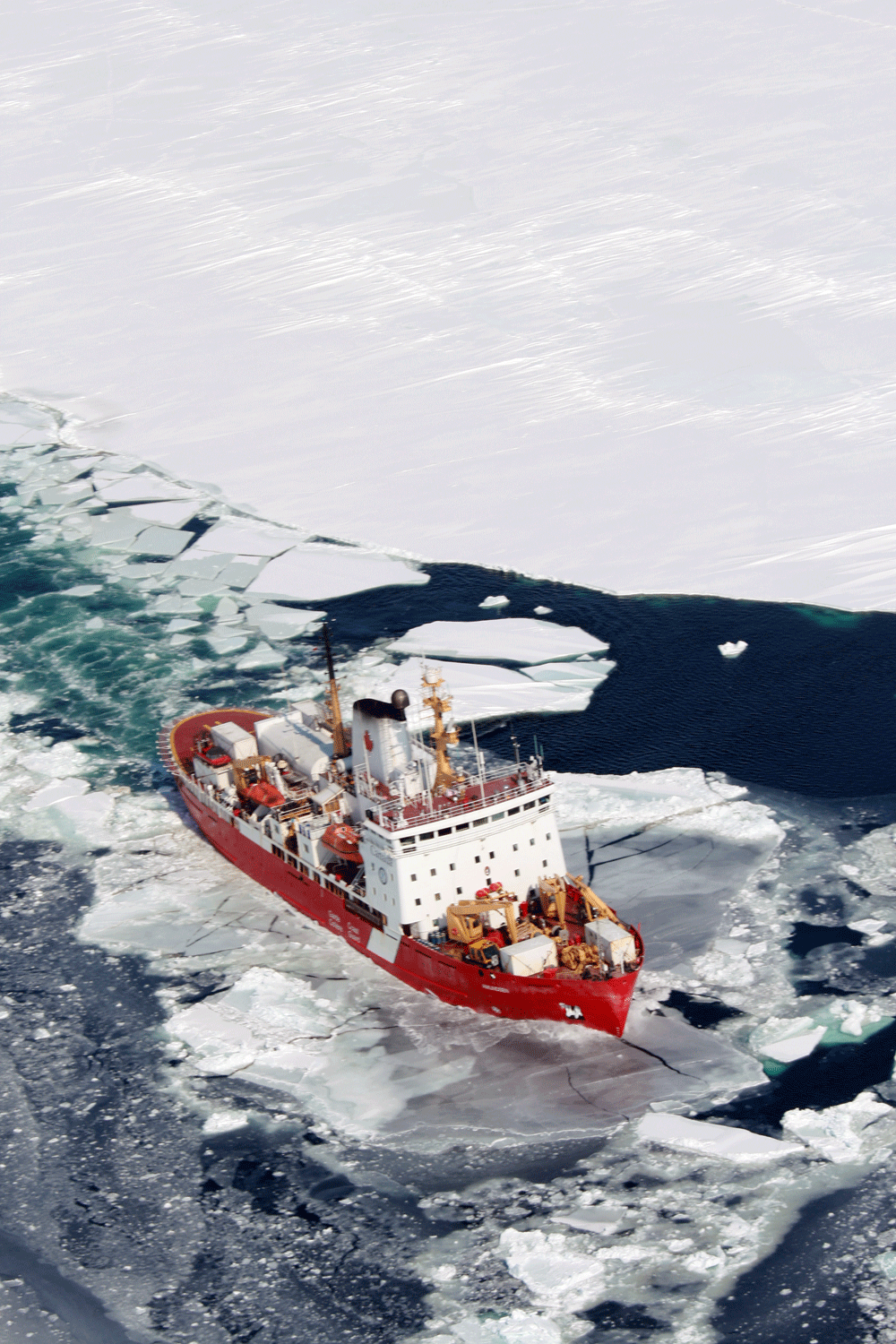
    When the CCGS Amundsen, a Canadian research ice breaker, left its home port of Quebec City in July 2007, it embarked upon a historic 15-month expedition that would have it travel across the Arctic and overwinter in the Beaufort Sea.

    The scientists on board the  Amundsen might spend their days hunting for ice algae, fishing for zooplankton, or surveying the contours of the nearby ice floes.   But it’s not all work and no play for the researchers and graduate students that call the Amundsen home.

    This slideshow was first published by The Gazette in December 2008.

    The World Federation of Science Journalists sponsored this trip in April 2008.