Tag: arctic

  • Permafrost that lives up to its name

    Permafrost that lives up to its name

    Ancient Canadian ice survived previous warm periods.

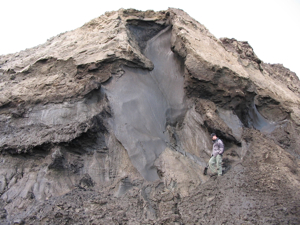
    A 740,000-year-old wedge of ice discovered in central Yukon Territory, Canada, is the oldest known ice in North America. It suggests that permafrost has survived climates warmer than today’s, according to a new study.

    “Previously, it was thought that the permafrost had completely disappeared from the interior about 120,000 years ago,” says Duane Froese, an earth scientist at the University of Alberta in Edmonton, Canada, who is the author of the study published today in Science. “This deep permafrost appears to have been stable for more than 700,000 years, including several periods that were warmer and wetter.”

    Keep reading in Nature.

    Image credit: Duane Froese, University of Alberta

  • Arctic radio

    Arctic radio

    Free Radicals

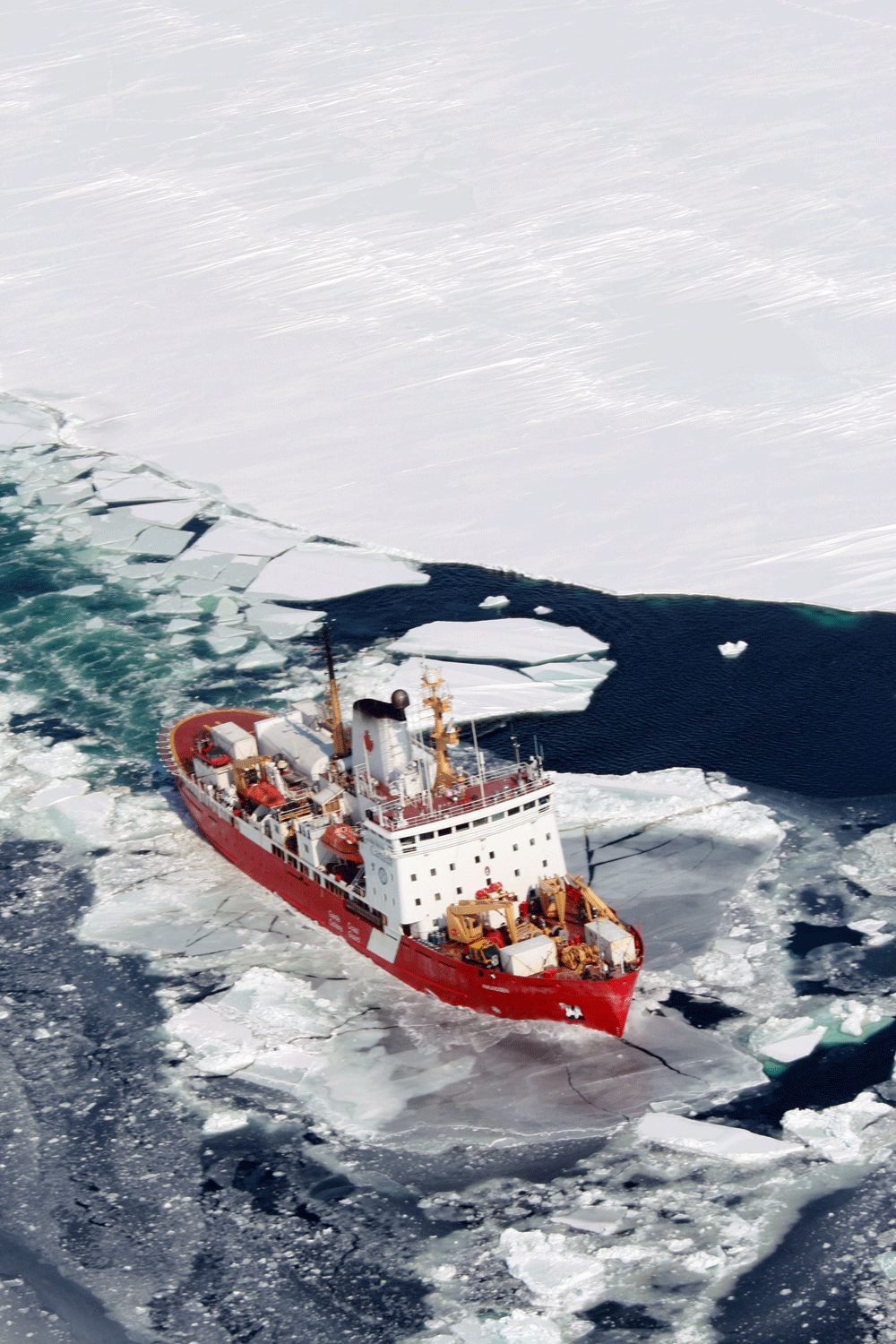
    When the CCGS Amundsen, a Canadian research ice breaker, left its home port of Quebec City in July 2007, it embarked upon a historic 15-month expedition that would have it travel across the Arctic and overwinter in the Beaufort Sea.

    The scientists on board the  Amundsen might spend their days hunting for ice algae, fishing for zooplankton, or surveying the contours of the nearby ice floes. The sounds of them at work were featured on Free Radicals (science, culture and connection), a radio program that airs on CKUT (90.3 FM Montreal) on Mondays.

    Listen to the show (August 18, 2008): Arctic Science (08.18.08)

  • Rapid Ice Retreat Threatens Arctic Interior

    Rapid Ice Retreat Threatens Arctic Interior

    Nature Reports: Climate Change

    The rapid decline of sea ice could accelerate inland warming over the Arctic region, radically transforming the landscape.

    One of the Northern Hemisphere’s natural cycles is the expansion and contraction of the floating Arctic ice cap. Typically, sea ice decreases during the Arctic summer, reaching a low in September, before recovering as temperatures drop in winter. From as far back as satellite measurements began in 1978 until 2000, the average sea-ice extent, or the area of ocean covered by at least 15 per cent ice, has routinely hovered around 7 million square kilometres during the summer minimum.

    But in 2002, scientists noticed a sharp drop in the region’s minimum ice coverage. By September 2007, the area covered by ice had been whittled down to a startling 4.3 million square kilometres — 40 per cent smaller than in the 1980s. Scientists say the retreat witnessed last year was drastic, unexpected and more than 20 per cent below the previous record minimum.

    Not only will the loss affect the marine ecosystem and its dependents, from indigenous communities to marine mammals that rely on the ice for hunting and travel; it stands to alter the Arctic landscape much further afield. According to a new study in the 13 June issue of Geophysical Research Letters, the rapid retreat of Arctic sea ice could accelerate warming 1,500 kilometres inland in northern Alaska, Canada and Russia. During rapid ice retreat, the rate of inland warming could be more than three times that previously predicted from global climate models.

    :: Read more in Nature Reports: Climate Change ::