Tag: budget

  • Canada’s renowned freshwater research site to close

    Canada’s renowned freshwater research site to close

    [media-credit name=”USGS” align=”alignright” width=”199″][/media-credit]
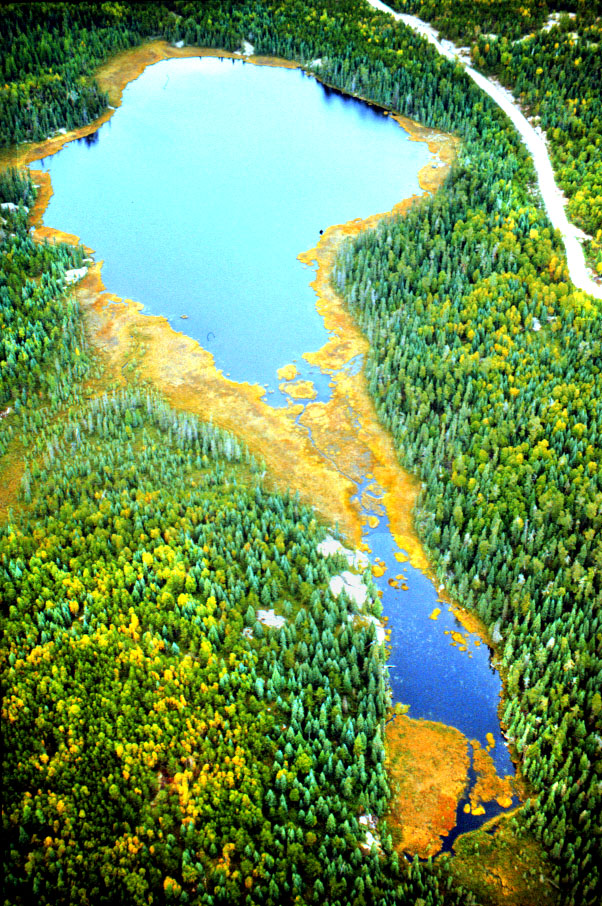
    The Experimental Lakes Area near Kenora, Ontario has been used to study the effects of detergents, heavy metals and acid rain on lakes and their watersheds.
    Budget fall-out hits environmental research stations

    The Canadian government has cancelled its funding for the Experimental Lakes Area (ELA), a research site in northwestern Ontario that has led to the re-shaping of international policies. It is the latest target in a string of research programmes to have been scaled back, shut down or left in limbo in the wake of massive cuts to this year’s federal budget.

    Fisheries and Oceans Canada — the government department that runs the site —  told its staff on 17 May that the ELA, a collection of 58 remote lakes and a laboratory complex, would be shut down in March 2013. “It is completely shocking,” says Jim Elser, an aquatic ecologist at Arizona State University in Tempe, who ran experiments at the site in the 1990s. “It is sort of like the US government shutting down Los Alamos — its most important nuclear-physics site — or taking the world’s best telescope and turning it off.”

    The ELA has attracted scientists from around the world to its shores since field research started there in 1968. It is possibly the only place where aquatic scientists can use lakes and their ecosystems as test tubes as well as having access to long-term environmental data and a decent place to sleep and eat.

    Many scientists say that the government is making a mistake. “If you try to base policy on small-scale experiments you miss some key ecosystem process, and that can have huge implications,” says David Schindler, a freshwater scientist at the University of Alberta, who founded the ELA and ran it until 1989.

    Scientists have manipulated the area’s lakes to show how acid rain destroys lake ecosystems1, how the ingredients found in birth-control pills can cause the collapse of fish populations2 and how wetland flooding for hydroelectric dams leads to increased production in methyl mercury and greenhouse gases3, while unmanipulated lakes have provided long-term comparative data. Studies done there have influenced policy, most notably the creation of an air quality agreement between the United States and Canada in 1991, which led to reductions in acid rain.

    More in Nature.
  • Canadian research infrastructure receives support, but will it last?

    Investment in infrastructure typically brings to mind hard-hat projects such as the construction of highways. But to keep science on the fast track, focused funding of research infrastructure is necessary. Following this logic, in December the Canada Foundation for Innovation (CFI) announced it would award C$45.5 million ($35.9 million) to specific Canadian research projects. The investment will support more than 250 projects, including those in the health field, by providing equipment to attract and retain researchers to Canadian institutions.

    The money will be distributed through two channels: the Leaders Opportunity Fund, which allows institutions to invest in research equipment for new or existing faculty, and the Infrastructure Operating Fund, a smaller accompanying program that covers a portion of the operating and maintenance costs of CFI-supported infrastructure projects.

    “We’re really pleased,” says Peter Lewis, vice dean of research at the University of Toronto’s Faculty of Medicine. “It’s been quite catalytic to get researchers to work together on projects that they might not have been able to otherwise.”

    :: continue reading in Nature Medicine :: (subscription required)