Tag: Canada

  • Canada picks site for Arctic Research Station

    Canada picks site for Arctic Research Station

    Cambridge Bay location offers a wealth of opportunities for studying the far north.

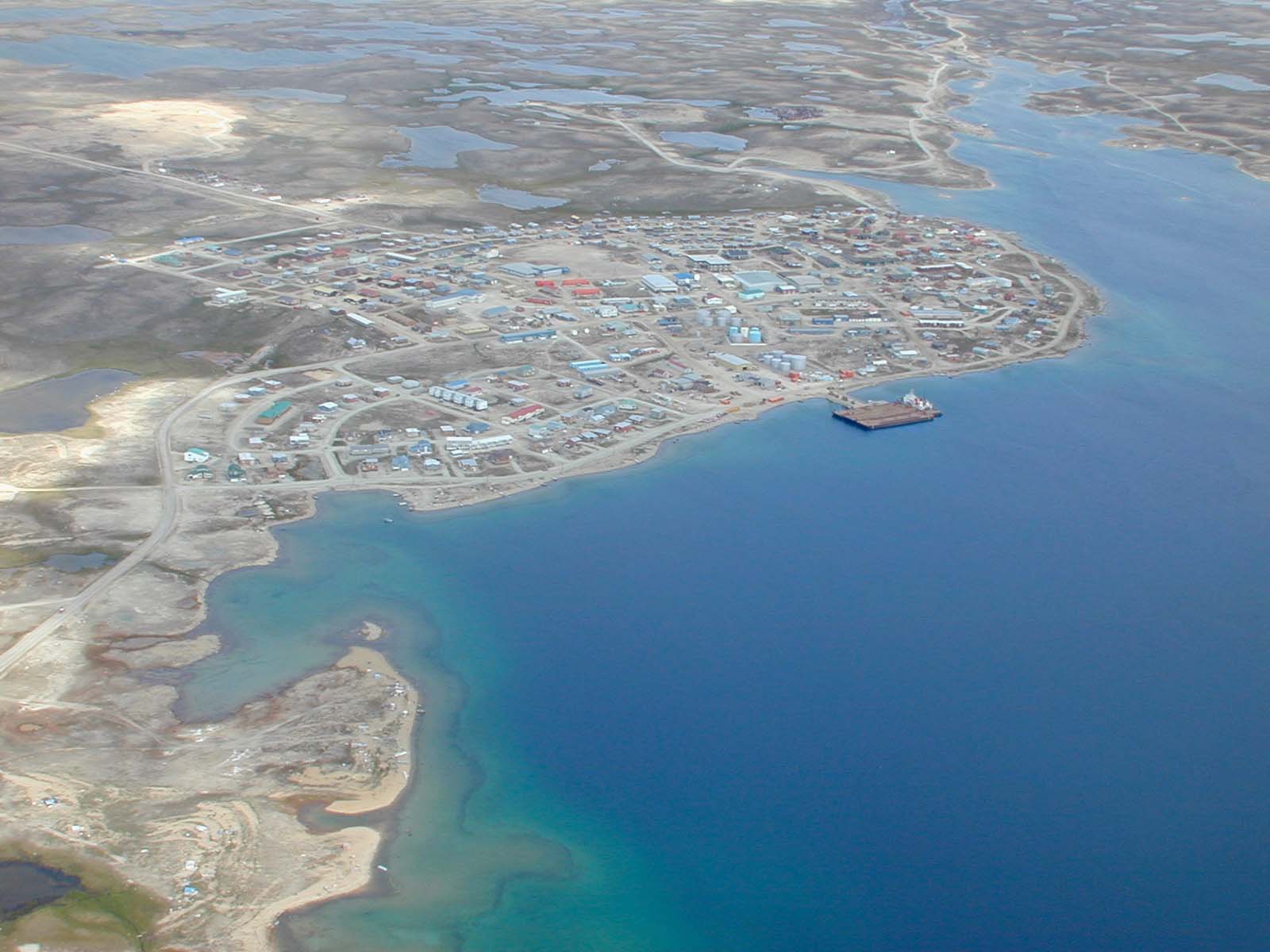
    After months of deliberation, the Canadian government has chosen Cambridge Bay — a hamlet midway along the Northwest Passage in the country’s far north — as the site for a world-class Arctic research station.

    Once built, the station will house scientists all year round, giving them a modern space to study Arctic issues, including climate change and natural resources. It will host conference facilities and laboratories for research on marine biology and geophysics, provide ecologists with the space to do long-term ecological monitoring in aquaria and greenhouses, and give researchers in the health and social sciences a base for their studies.

    “It’s a very exciting and long-awaited announcement,” says Warwick Vincent, director of the Centre for Northern Studies at Laval University in Quebec City, who was part of the committee consulted by the government during the selection process.

    The proposal for the Canadian research station was first sketched out in 2007 and a shortlist of sites was released in 2009. A Can$2-million (US$1.9-million) feasibility study for the proposed station established its functions, preliminary costs and construction schedule and involved an analysis of three possible locations: Pond Inlet, Resolute Bay and Cambridge Bay, all in the northern territory of Nunavut.

    Details about the new facility’s size or overall cost have yet to be released by the government, but sources suggest that it will be completed some time in 2017 at a cost of about Can$200 million.

    → Read more at the Nature website

    → Also found in WorldChanging’s Arctic Round-up (September 3)

  • Canadian science minister under fire

    Comments on evolution spark fierce criticism.

    It’s been a rough month for Canada’s minister of science and technology. Gary Goodyear, who was appointed to the new position in October 2008, has been roundly criticized in the media for an outburst during a meeting with a university teachers’ group and for his comments on evolution.

    Some Canadian researchers say the criticism is unreasonable, but others say it suggests that Goodyear, a chiropractor by training, is not in tune with the community whose portfolio he oversees.

    :: Keep reading in Nature ::

  • Unearthing North America’s First French Colony

    Unearthing North America’s First French Colony

    Cartier-RobervalIn 1541, France established Fort Charlesbourg-Royal in what is now Québec City. Two years later, it was abandoned. The site was discovered in 2005, and archaeologists are trying to understand what took place at the settlement.

    On a forested outcrop at the western limit of Québec City, Gilles Samson makes his way across an archaeological site quilted with sheets of plywood and plastic. The coverings protect 16th-century stone walls from the sometimes harsh Canadian elements. He grips the edge of one of the boards and lifts, revealing a strip of neatly stacked grey stones. “We’re following the walls to get a clearer picture of the fort,” he says. Samson is in the midst of uncovering one of Canada’s most important archaeological discoveries: the charred remains of the first French colony in North America. The walls and other artifacts the archaeologists have unearthed are the remnants of Fort Charlesbourg-Royal, a settlement established by Jacques Cartier in 1541 and occupied by Jean-François de la Rocque de Roberval from 1542 to 1543, along with several hundred colonists.

    An archaeologist with Québec’s National Capital Commission and the project’s co-director, Samson reasons that the site ranks with Jamestown, the first English colony in the New World. Cartier-Roberval (as it is now called, after its founders) predates Samuel de Champlain’s founding of Québec City and New France and England’s establishment of Jamestown by more than 60 years.

    :: coming soon in American Archeology ::

  • Canadian research infrastructure receives support, but will it last?

    Investment in infrastructure typically brings to mind hard-hat projects such as the construction of highways. But to keep science on the fast track, focused funding of research infrastructure is necessary. Following this logic, in December the Canada Foundation for Innovation (CFI) announced it would award C$45.5 million ($35.9 million) to specific Canadian research projects. The investment will support more than 250 projects, including those in the health field, by providing equipment to attract and retain researchers to Canadian institutions.

    The money will be distributed through two channels: the Leaders Opportunity Fund, which allows institutions to invest in research equipment for new or existing faculty, and the Infrastructure Operating Fund, a smaller accompanying program that covers a portion of the operating and maintenance costs of CFI-supported infrastructure projects.

    “We’re really pleased,” says Peter Lewis, vice dean of research at the University of Toronto’s Faculty of Medicine. “It’s been quite catalytic to get researchers to work together on projects that they might not have been able to otherwise.”

    :: continue reading in Nature Medicine :: (subscription required)

  • Permafrost that lives up to its name

    Permafrost that lives up to its name

    Ancient Canadian ice survived previous warm periods.

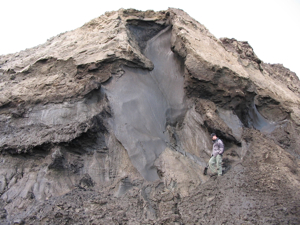
    A 740,000-year-old wedge of ice discovered in central Yukon Territory, Canada, is the oldest known ice in North America. It suggests that permafrost has survived climates warmer than today’s, according to a new study.

    “Previously, it was thought that the permafrost had completely disappeared from the interior about 120,000 years ago,” says Duane Froese, an earth scientist at the University of Alberta in Edmonton, Canada, who is the author of the study published today in Science. “This deep permafrost appears to have been stable for more than 700,000 years, including several periods that were warmer and wetter.”

    Keep reading in Nature.

    Image credit: Duane Froese, University of Alberta