Tag: ecology

  • This is your brain on trees — why is urban nature so good for the mind?

    This is your brain on trees — why is urban nature so good for the mind?

    worms eyeview of green trees
    (Felix Mittermeier/Pexels)

    Green space helps people feel less depressed and fatigued, and science is still exploring all the other ways it lifts our spirits. In a global crisis, we could all use more time in nature

    THE GLOBE AND MAIL

    As temperatures warmed last spring, Montrealers flocked to Mount Royal Park. Trapped inside – first by winter, then by lockdowns – the city’s residents were desperate for nature. The winding trails, lush forests and steep escarpments of Mount Royal offered an ideal remedy for their cabin fever. And as the pandemic has dragged on, the 700-acre green space has become such a popular destination that the city has repeatedly closed its parking lots to limit access during peak periods.

    “The mountain has been intensely used during the pandemic,” says Juan Torres, a professor in the school of urban planning and landscape architecture at the University of Montreal, which is set on the north slope of the mountain. Unable to travel to Mexico to visit his mother and go to the sea, Prof. Torres and his family have spent much of the past year exploring the mountain and the island’s riverside green spaces. “It has been a great stress reliever,” he says.

    Humans, it turns out, often seek out nature more earnestly in times of crisis. War, pandemics and natural disasters have led to the launch of community gardens for veterans and widows, and compelled people to tend to trees that survived bombings. That phenomenon, called “urgent biophilia,” may bring emotional balance to people overwhelmed by a crisis.

    Urban nature is important for mental health over all – city dwellers who live near green spaces are less depressed and anxious than those who don’t.

    More people are grasping nature’s benefits as the pandemic has put people out of work, forced families to juggle jobs and school from the kitchen table and curbed social interactions.

    In a national survey from the not-for-profit group Park People, 82 per cent of Canadians said parks had become more important to their mental health during the pandemic, and 55 per cent of cities said park use had increased.

    “Many people may think that urban nature is nice to have, that it’s pretty or a bonus. But actually, it’s absolutely essential to our mental and physical health,” says Carly Ziter, an urban landscape ecologist at Concordia University.

    Nature in cities provides people with a place to exercise. Parks also gives people places to socialize with friends and family, which makes people happier. During the pandemic, urban green spaces have become rare hubs of acceptable social activity when public-health authorities have urged people to stay one caribou (Yukon), two lobster traps (Halifax) or three racoons (Toronto) apart.

    But research suggests there’s something about how our brains interact with nature that yields psychological benefits. A visit to a natural area delivers sights, sounds and smells – the varied greens of a spring forest; the trill of a redwing blackbird; the whiff of petrichor, the earthy odour produced after rain falls on dry soil – that can improve our mental health by resetting our mood, focus and creativity.

    With more than 80 per cent of Canadians now living in urban and suburban environments, understanding the links between nature and mental health could go a long way to improving our well-being. City dwellers tend to be healthier over all than their rural neighbours, except when it comes to mental health. They are 20 per cent more likely to have anxiety and 40 per cent more likely to develop depression.

    .::. Read more at the Globe and Mail.

  • Bird origin for 1918 flu pandemic

    Bird origin for 1918 flu pandemic

    Nature

    Model also links avian influenza strains to deadly horse flu.

    The virus that caused the 1918 influenza pandemic probably sprang from North American domestic and wild birds, not from the mixing of human and swine viruses. A study published today in Nature reconstructs the origins of influenza A virus and (more…)

  • Lady of the Lakes

    Lady of the Lakes

    Nature

    Diane Orihel set her PhD aside to lead a massive protest when Canada tried to shut down its unique Experimental Lakes Area.

    It was an ominous way to start the day. When she arrived at work on the morning of 17 May 2012, Diane Orihel ran into distraught colleagues. Staff from Canada’s Experimental Lakes Area had just been called to an emergency meeting at the Freshwater Institute in Winnipeg. “It can’t be good,” said one. (more…)

  • Glimmer of hope for freshwater research site

    Glimmer of hope for freshwater research site

    This story was originally posted on the Nature News Blog. 

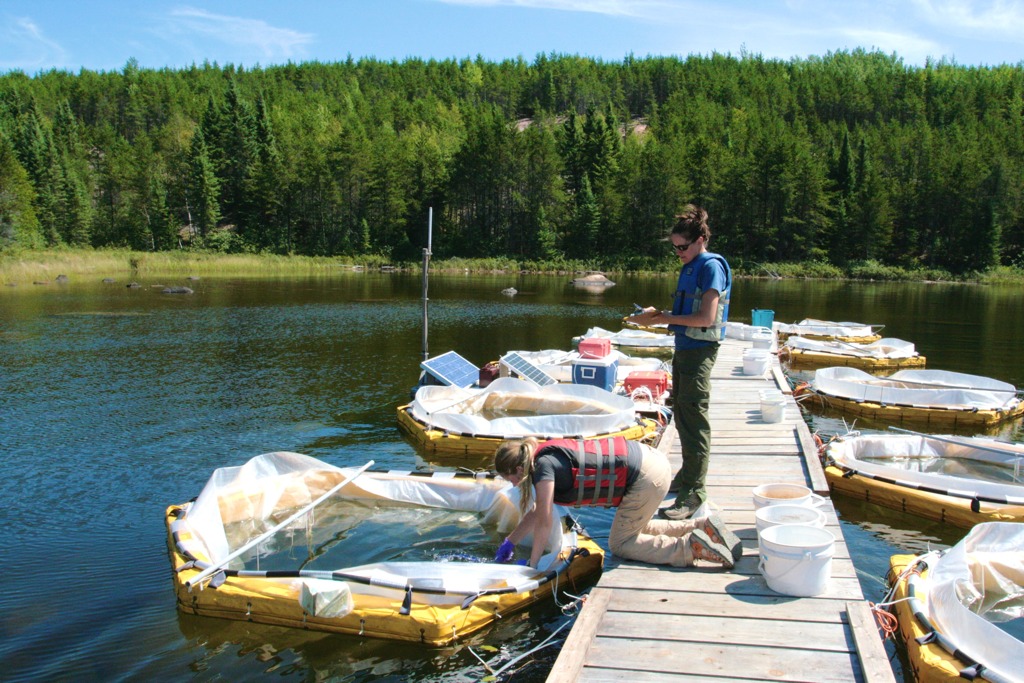
    The government of Ontario, Canada, has stepped in to keep open the Experimental Lakes Area (ELA). The freshwater research facility, located in northern Ontario, was closed in March by the government of Canada, despite protests from scientists.

    Ontario premier Kathleen Wynne announced today that the government of Ontario will provide support to keep the ELA running this year and in the future, as it works to transfer the facility to the International Institute for Sustainable Development (IISD), a United Nations think tank based in Winnipeg, Manitoba.

    “We have had many conversations with members of the public and our scientific and academic communities who want to see the Experimental Lakes Area stay open,” Wynne said in a statement. But the statement did not elaborate on how much money the government has designated for operations, whether the facility will be fully operational this summer or the fate of the long-term climate data set the facility has kept up for 45 years. Meanwhile, the federal government released its own statement today noting that it “has been leading negotiations with third parties”.

    “We remain hopeful that an agreement can be reached and we welcome Ontario’s willingness to play an active role,” reads the statement from Fisheries and Oceans Canada.

    Many university scientists say that they are still not sure whether they will be able to continue their experimental work this summer. Several are sceptical that negotiations will be wrapped up in time for experiments to proceed as planned. “It’s somewhat exciting news, but quite frankly I don’t know what it means for us yet,” says Maggie Xenopoulos, an aquatic biologist at Trent University in Peterborough, Ontario. Xenopoulos and her colleagues had planned to contaminate one of ELA’s lakes with nanosilver this summer and measure its ecological impact.

    A statement from the IISD’s leader offered few specifics about its potential deal with the government of Ontario. “If the ELA does come to IISD, we would work with other stakeholders to ensure it remains an independent, world-class research facility that continues to produce leading-edge freshwater ecosystems science in the public domain and in the public interest,” said Scott Vaughan, the institute’s president and chief executive.

    Vincent St. Louis, a biogeochemist at the University of Alberta in Edmonton, says that the plan “is a good first start”. The plan to close the lake area “has always been baffling from a scientific perspective, given how much it provides at such a low cost,” says St. Louis, who has studied acid rain, reservoir creation and mercury emissions at the ELA — and would like to see scientists use the facility to study the impact of chemicals found in oil sands tailing ponds, such as polyaromatic hydrocarbons, on aquatic biota.

    The federal government announced last May that it would stop funding the facility, which cost about Can$2 million (US$2 million) to operate, and that it would begin a search for a new operator. Federal funding dried up on 31 March, and university scientists who had planned experiments for the summer field season were told that they were not allowed on the site.

  • Scientists call for no-fishing zone in Arctic

    Scientists call for no-fishing zone in Arctic

    Nature

    Thousands of scientists from 67 countries have called for an international agreement to close the Arctic high seas to commercial fishing until research reveals more about the freshly exposed waters.

    Recent Arctic sea-ice retreat during the summer months has opened up some of the waters that fall outside of the exclusive economic zones of the nations that circle the polar ocean. In all, more than 2.8 million square kilometres make up these international waters, which some scientists say could be ice free during summer months within 10–15 years. Although industrial fishing hasn’t yet occurred in the northernmost part of the Arctic, the lack of regulation may make it an appealing target for international commercial-fishing vessels.

    “The science community currently does not have sufficient biological information to understand the presence, abundance, structure, movements, and health of fish stocks and the role they play in the broader ecosystem of the central Arctic Ocean,” says the letter, which was released by the Pew Environment Group on Sunday on the eve of the opening of the International Polar Year 2012 scientific conference in Montreal, Canada. More than 2,000 scientists, including 1,328 from Arctic coastal countries, signed the letter.

    The letter calls for the Arctic countries to put a moratorium on commercial fishing in the region until the impacts of fisheries on the central Arctic ecosystem, including seals, whales and polar bears, and those who live in the Arctic, can be evaluated.

    In 2009, the United States adopted a precautionary approach by banning commercial fishing in the waters north of the Bering Strait, including the Chukchi and the Beaufort Seas. The Arctic Fishery Management Plan closes nearly 400,000 square kilometres to commercial fishing. Canada is drafting its own fisheries policy for the adjacent Beaufort Sea. In 2011, a memorandum of understanding between the Canadian federal government and the Inuvialuit people of the western Arctic prohibited the issuing of new commercial fishing licences in the area until a management plan was created and put into practice.

    “Our knowledge of Canadian marine biodiversity is next to nil. We know nothing about trends over time for a single marine fish in the Arctic,” says Jeffrey Hutchings, a biologist at Dalhousie University in Halifax, Nova Scotia. Hutchings says that scientists have pushed for such measures before, adding that it is up to the Arctic nations to implement such measures through the Arctic Council. “The Canadian government seems unwilling to take a stand similar to that of the US.”

    This story originally appeared on the Nature News blog.

    Photo: Jessica K. Robertson/ US Geological Survey