Tag: environment

  • Glimmer of hope for freshwater research site

    Glimmer of hope for freshwater research site

    This story was originally posted on the Nature News Blog. 

    The government of Ontario, Canada, has stepped in to keep open the Experimental Lakes Area (ELA). The freshwater research facility, located in northern Ontario, was closed in March by the government of Canada, despite protests from scientists.

    Ontario premier Kathleen Wynne announced today that the government of Ontario will provide support to keep the ELA running this year and in the future, as it works to transfer the facility to the International Institute for Sustainable Development (IISD), a United Nations think tank based in Winnipeg, Manitoba.

    “We have had many conversations with members of the public and our scientific and academic communities who want to see the Experimental Lakes Area stay open,” Wynne said in a statement. But the statement did not elaborate on how much money the government has designated for operations, whether the facility will be fully operational this summer or the fate of the long-term climate data set the facility has kept up for 45 years. Meanwhile, the federal government released its own statement today noting that it “has been leading negotiations with third parties”.

    “We remain hopeful that an agreement can be reached and we welcome Ontario’s willingness to play an active role,” reads the statement from Fisheries and Oceans Canada.

    Many university scientists say that they are still not sure whether they will be able to continue their experimental work this summer. Several are sceptical that negotiations will be wrapped up in time for experiments to proceed as planned. “It’s somewhat exciting news, but quite frankly I don’t know what it means for us yet,” says Maggie Xenopoulos, an aquatic biologist at Trent University in Peterborough, Ontario. Xenopoulos and her colleagues had planned to contaminate one of ELA’s lakes with nanosilver this summer and measure its ecological impact.

    A statement from the IISD’s leader offered few specifics about its potential deal with the government of Ontario. “If the ELA does come to IISD, we would work with other stakeholders to ensure it remains an independent, world-class research facility that continues to produce leading-edge freshwater ecosystems science in the public domain and in the public interest,” said Scott Vaughan, the institute’s president and chief executive.

    Vincent St. Louis, a biogeochemist at the University of Alberta in Edmonton, says that the plan “is a good first start”. The plan to close the lake area “has always been baffling from a scientific perspective, given how much it provides at such a low cost,” says St. Louis, who has studied acid rain, reservoir creation and mercury emissions at the ELA — and would like to see scientists use the facility to study the impact of chemicals found in oil sands tailing ponds, such as polyaromatic hydrocarbons, on aquatic biota.

    The federal government announced last May that it would stop funding the facility, which cost about Can$2 million (US$2 million) to operate, and that it would begin a search for a new operator. Federal funding dried up on 31 March, and university scientists who had planned experiments for the summer field season were told that they were not allowed on the site.

  • Test lakes face closure

    Test lakes face closure

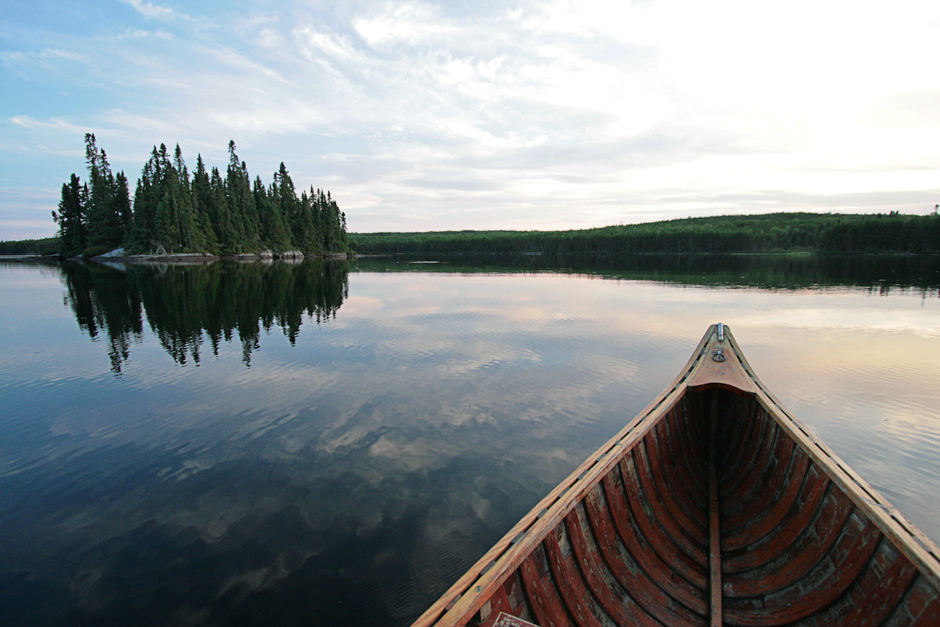
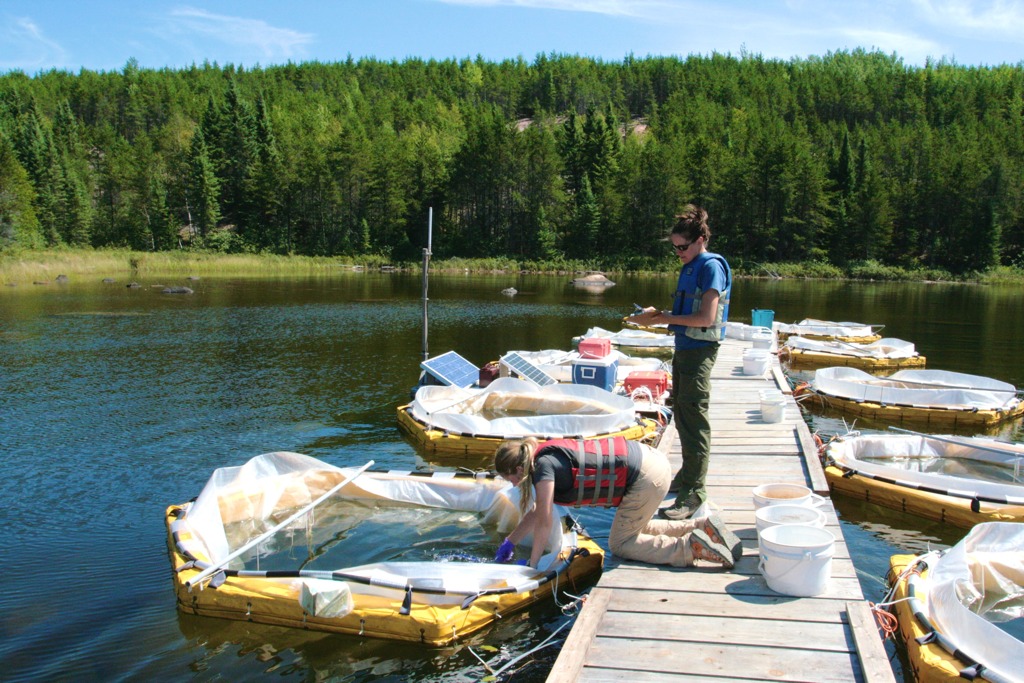
    Lake 239 looks inviting. Pines and spruce fringe the shoreline and waves lap against outcrops of weathered granite. But on this hot August afternoon in northwestern Ontario (see ‘Water works’), one feature stands out. At the far end of the 800-metre-long lake, a series of plastic-walled columns descend from a floating dock to the muddy bottom about 2 metres down. They are the sign that the lake’s placid setting disguises an experiment in controlled environmental abuse.

    Jennifer Vincent, a graduate student at Trent University in Peterborough, Ontario, kneels by one of the columns and empties a vial of silver nanoparticles into it. An iridescent purple cloud blooms in the water for a moment before the metal particles are mixed and disperse. These experiments are the first stage of a three-year, Can$720,000 (US$728,000) project to understand the biological effects of ‘nanosilver’ — an antibacterial agent commonly added to commercial products — and its possible effect on the environment. Previous work has shown that the chemical alters bacterial-community structure, affects algae and may change phosphorus cycling. Next year, the project intends to add nanosilver to an entire lake (Lake 222) and measure its effects across the ecosystem.

    With 58 such lakes serving as sites for a broad range of studies, the Experimental Lakes Area (ELA) is unique in the world. “I don’t take it lightly that you’re basically poisoning a lake,” says Chris Metcalfe, an environmental toxicologist from Trent University, and a leader on the project. But at the ELA, he adds, “you can graphically demonstrate what goes on in a whole lake ecosystem.”

    Yet the ELA project, with its laboratory buildings, residences and workshops, may soon disappear. Earlier this year, Canada announced that it would cease funding the ELA after March 2013, a development that dismayed scientists who have made use of the 44-year-old facility for investigations ranging from chemical contamination to the effects of climate change.

    The decision was unexpected. On 17 May, ELA employees at the Freshwater Institute in Winnipeg, were called to an emergency meeting, where they were told that the government was no longer interested in experiments requiring whole-lake manipulation. The 17 ELA staff at the institute, including four scientists, who are employed by the Department of Fisheries and Oceans (DFO), were told that their positions will be axed as of April 2013. (more…)

    Related stories

    More related stories

    Nature 488, 437–438

    Published 21 August 2012

  • Scientists call for no-fishing zone in Arctic

    Scientists call for no-fishing zone in Arctic

    Nature

    Thousands of scientists from 67 countries have called for an international agreement to close the Arctic high seas to commercial fishing until research reveals more about the freshly exposed waters.

    Recent Arctic sea-ice retreat during the summer months has opened up some of the waters that fall outside of the exclusive economic zones of the nations that circle the polar ocean. In all, more than 2.8 million square kilometres make up these international waters, which some scientists say could be ice free during summer months within 10–15 years. Although industrial fishing hasn’t yet occurred in the northernmost part of the Arctic, the lack of regulation may make it an appealing target for international commercial-fishing vessels.

    “The science community currently does not have sufficient biological information to understand the presence, abundance, structure, movements, and health of fish stocks and the role they play in the broader ecosystem of the central Arctic Ocean,” says the letter, which was released by the Pew Environment Group on Sunday on the eve of the opening of the International Polar Year 2012 scientific conference in Montreal, Canada. More than 2,000 scientists, including 1,328 from Arctic coastal countries, signed the letter.

    The letter calls for the Arctic countries to put a moratorium on commercial fishing in the region until the impacts of fisheries on the central Arctic ecosystem, including seals, whales and polar bears, and those who live in the Arctic, can be evaluated.

    In 2009, the United States adopted a precautionary approach by banning commercial fishing in the waters north of the Bering Strait, including the Chukchi and the Beaufort Seas. The Arctic Fishery Management Plan closes nearly 400,000 square kilometres to commercial fishing. Canada is drafting its own fisheries policy for the adjacent Beaufort Sea. In 2011, a memorandum of understanding between the Canadian federal government and the Inuvialuit people of the western Arctic prohibited the issuing of new commercial fishing licences in the area until a management plan was created and put into practice.

    “Our knowledge of Canadian marine biodiversity is next to nil. We know nothing about trends over time for a single marine fish in the Arctic,” says Jeffrey Hutchings, a biologist at Dalhousie University in Halifax, Nova Scotia. Hutchings says that scientists have pushed for such measures before, adding that it is up to the Arctic nations to implement such measures through the Arctic Council. “The Canadian government seems unwilling to take a stand similar to that of the US.”

    This story originally appeared on the Nature News blog.

    Photo: Jessica K. Robertson/ US Geological Survey

  • Regime Change: Q&A with John Smol

    Nature

    A freshwater ecologist at Queen’s University in Kingston, Ontario, Canada, Smol studies lake sediments to understand climatic and environmental change. Nature Outlook asks him to share his experience.

    What can we learn from lake sediments?
    One of the biggest challenges in environmental science is the lack of long-term data, so we have to use indirect proxies. All over the planet, lakes act as passive samplers of the environment, recording information 24 hours a day. They contain biological, chemical and physical information. The deeper you go in the sediment, the older it gets. Typically, in North America you can go back 12,000 years to the last Ice Age. In ponds near the Arctic Ocean, it’s closer to 5,000 years, because before that those areas were below sea level. We focus on the changes that have occurred in the past few hundred years and compare them with the long-term record. So we can ask: is there anything peculiar going on now, or is this just part of a long-term cycle?

    What have these remote ponds told us about climate change?

    We chose shallow ponds because they would be the most sensitive. They’re the bellwethers. The palaeo-data show that some very striking ecological changes started happening since the 1800s. The most plausible interpretation is that it was climate change and that it was human related. This conclusion was very controversial when we published it in 1994 (ref.1).

    We started going to these ponds on Cape Herschel in far northern Canada in 1983. We were going up every two or three years, and we could see they were getting shallower. We thought they could eventually disappear, but none of us thought it could happen in our lifetime. By 2006, many of the ponds had gone dry. It was stunning. We wondered if it was a one-off event, but we checked the 2005 data from the probes that we had left in some of the ponds in 2004 and saw that they were dry even then. We could tell that the ponds were evaporating, not draining, because the water’s conductivity — which is proportional to the concentration of dissolved ions — had steadily been increasing. Nothing like this had ever happened before, although the drying trend has occurred since. We called it crossing the final ecological threshold.

    Keep reading this article in Nature

  • Mixed Reviews for Quebec’s Plan Nord

    Mixed Reviews for Quebec’s Plan Nord

    The government of Quebec (Canada) has launched its multibillion-dollar Plan Nord, which will open the vast northern reaches of the province to mining and energy development–and protect 50% of the territory from economic development.

    The 1.2-million-square-kilometre region—twice the size of France—is known for its wild rivers, biodiversity, diverse ecosystems and a large swath (about 20%) of Canada’s boreal forest. Boreal forest covers more than 25% of Quebec. More than 120,000 people, including 33,000 aboriginals also live in the region.

    Quebec Premier Jean Charest said yesterday the government will invest CDN$80 billion into mining, forestry, transportation, energy development and tourism over the next 25 years.

    The environmental aspects of the plan include the promise to set aside 600,000 square kilometres of the region to protect the environment and preserve biodiversity. By 2016, the government will have established several provincial parks, completed a survey of northern Quebec’s biodiversity, protected over 31,000 square kilometres of land, and adopted mitigation or restoration plans for each development project.

    By protecting half of the forest, the Quebec government will keep more than 13.8 billion tons of CO2 sequestered—equivalent to about 70 years of industrial carbon dioxide emissions in Canada (Canadian Boreal Initiative, 2009 release).

    The Plan Nord is getting mixed reviews from environmental groups. The Canadian Boreal Initiative, affiliated with the Pew Environment Group’s International Boreal Conservation Campaign applauded the sustainable development measures included within the plan (release). But others, including Greenpeace and Nature Quebec, said they could not endorse the plan as presented. The coalition of groups told the Globe and Mail the plan was “an attempt to regulate a mining boom rather than the expression of an authentic vision for the north.” They called for, among other things, an evaluation of the global environmental impacts of northern development.

    From the Nature News blog.

    Image: MRNF, Gouvernement du Quebec