Tag: infectious disease

  • As millions gather for Kumbh Mela, doctors are watching

    As millions gather for Kumbh Mela, doctors are watching

    When a cholera outbreak gripped a London neighbourhood in 1854, physician John Snow carefully mapped its deaths. The thin bars he traced under each address clustered around a water pump on Broad Street, which turned out to be the source of the bacteria. Snow’s studies of disease patterns won him recognition as the father of modern epidemiology—and crushed the prevailing theory that cholera was spread by bad air.

    Faced with the same challenge today, Snow might use a tablet computer. In mid-January, as the Indian city of Allahabad began ushering in millions of Hindu pilgrims for the religious festival Kumbh Mela, emergency physician and epidemiologist Gregg Greenough settled into a temporary field hospital with his tablet computer. He and his team from the Harvard School of Public Health were on the lookout for signs of influenza, tuberculosis, cholera and other diarrheal diseases. The plan is to record the temporary residence of each pilgrim admitted to hospital and plot it on a digital map that geolocates the festival’s toilets and drinking water. “We’re helping them digitize the data and analyze it in real time,” says Greenough. “It should help keep the pulse of the community and see if anything is emerging so they can act on it quickly.”

    CONTINUE…

  • Climate change may alter malaria patterns

    Climate change may alter malaria patterns

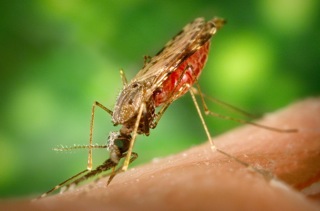
    mosquitoMalaria has long been endemic in Kenya’s humid lowlands and its tropical coast. But in recent decades there has been a spike in the number of malaria epidemics in the East African Highlands—an area where the people living there have little experience with the disease.

    The East African Highlands are high above sea level. Traditionally, the cool breezy climate has been inhospitable to mosquitoes. But in the late 1990s average temperatures in Kenya’s highlands were as much as 4 degrees higher than normal and the incidence of malaria jumped 300 percent. Many experts believe that climate change is fueling this new epidemic.

    Matt Thomas, an entomologist at Penn State University. He believes that temperature plays a key role in the development of malaria parasites in the mosquito, but that it is the daily temperature fluctuations that matter. Understanding these temperature fluctuations will be an important factor in understanding the spread of malaria. He’s studying malaria from the mosquito’s perspective: trying to understand its basic biology so that he can fill in the knowledge gaps of how temperature and environmental change might trigger a malaria epidemic.

    :: Listen on CKUT, 90.3FM ::

    * CKUT’s servers are down. Check back later for the mp3 of the show.