Tag: Nature Medicine

  • A universal problem

    A universal problem

    Recent headlines have promised that a ‘universal flu vaccine’ may be within reach, pointing to antibodies that offer broad protection in animal studies. But the scientists behind this effort had to first overcome great skepticism from their peers—as well as an imperfect laboratory test. Hannah Hoag reports on one virologist’s 20-year effort to challenge the tenets of the field.

    Influenza is the Lady Gaga of viruses: it reinvents itself each year, often in unexpected ways. But the flu virus is far more dangerous than an infectious tune. Although the flu usually manifests as a mild illness, the virus kills as many as 500,000 people worldwide each year, and it continues to provide a challenge from a vaccination standpoint. Whereas most vaccines for illnesses such as measles or polio offer years or decades of protection, influenza vaccines tend to work for only one season. The relentless refashioning means new influenza vaccines must be routinely reformulated, all at a cost to consumers and global health systems of more than $4 billion each year.

    A new type of vaccine could be on the way. In the past few years, a flurry of papers has provided firm evidence of antibodies capable of neutralizing multiple subtypes of the influenza virus. Immunologists say that isolating such antibodies is the first step toward the creation of a universal influenza vaccine that protects against seasonal flu year after year—and possibly prevents hundreds of millions of deaths when the next influenza pandemic sweeps across the globe. Several such universal flu vaccines are already in early human clinical testing. But convincing the biology community of the existence and potential of such antibodies was an uphill battle, and one complicated by a ‘gold standard’ test that masked the key findings.

    Yoshinobu Okuno, who has chased the dream of a universal antibody against flu since 1989, knows these challenges well. Okuno, a virologist at Osaka University in Japan, is now viewed by many experts in the field as an important and early champion of the idea. Yet his discovery two decades ago of a broad-acting antibody called C179 didn’t make waves at the time. “People didn’t pay attention to it,” says Ian Wilson, a structural biologist at the Scripps Research Institute in La Jolla, California. “In those days, most people weren’t thinking about broadly neutralizing antibodies that you could develop for flu.”

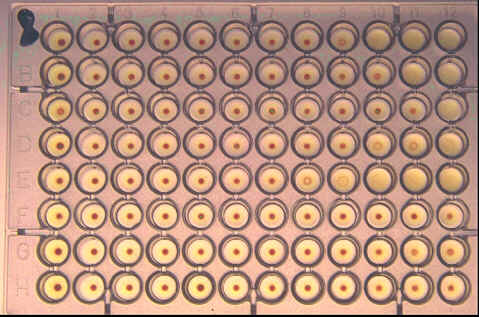
    The very test that prompted Okuno to look for these special antibodies—a tool known as the hemagglutination inhibition assay—tripped up the efforts of others in the field. In hindsight, the fault in the assay provides a cautionary tale of how the shortcomings of a test can mean that biomedical researchers miss what they are not looking for.

    Continue reading this story at Nature Medicine.

  • Accord could make Canadian generics industry a ‘rust bucket’

    Accord could make Canadian generics industry a ‘rust bucket’

    A trade agreement in negotiations between Canada and the EU is drawing the ire of generic drugmakers, provincial governments and patient advocates over proposals to extend drug patents by several years in Canada, a move that critics say would delay the arrival of generic medicines to market in that country and inflate healthcare costs.

    According to Canada’s Department of Foreign Affairs and International Trade, Canada imports C$8.4 billion ($8.2 billion) of pharmaceutical products from the EU annually, making Canada the fifth largest export market for the continent’s drugmakers. The sweeping Comprehensive Economic and Trade Agreement (CETA) could add another $2.8 billion to the annual bill, according to a report by health economists Paul Grootendorst, from the University of Toronto, and Aidan Hollis, from the University of Calgary (J. Generic Med. 8, 81–103, 2011). This cost is largely shouldered by the provincial and territorial governments, which pay for healthcare.CETA—first proposed in 2009 and subsequently leaked in 2010—calls on Canada to beef up its intellectual property rights for pharmaceuticals. The proposed changes would add five years to patents for drugs that are unduly bogged down in the regulatory approval process, lengthen the period of time clinical trial data is kept off-limits for use by generics companies from eight years to ten years (or even longer in the case of pediatric drugs) and grant brand-name companies an appeal process to challenge generics companies on their patent compliance. (more…)

    Nature Medicine 18, 991 (2012)

    Published online 06 July 2012

  • Canadian research infrastructure receives support, but will it last?

    Investment in infrastructure typically brings to mind hard-hat projects such as the construction of highways. But to keep science on the fast track, focused funding of research infrastructure is necessary. Following this logic, in December the Canada Foundation for Innovation (CFI) announced it would award C$45.5 million ($35.9 million) to specific Canadian research projects. The investment will support more than 250 projects, including those in the health field, by providing equipment to attract and retain researchers to Canadian institutions.

    The money will be distributed through two channels: the Leaders Opportunity Fund, which allows institutions to invest in research equipment for new or existing faculty, and the Infrastructure Operating Fund, a smaller accompanying program that covers a portion of the operating and maintenance costs of CFI-supported infrastructure projects.

    “We’re really pleased,” says Peter Lewis, vice dean of research at the University of Toronto’s Faculty of Medicine. “It’s been quite catalytic to get researchers to work together on projects that they might not have been able to otherwise.”

    :: continue reading in Nature Medicine :: (subscription required)