Tag: Nature News

  • Muslim students weigh in on evolution

    In Indonesia and Pakistan, questions about how science and faith can be reconciled.

    In the first large study of its kind, a survey of 3,800 high-school students in Indonesia and Pakistan has found that teachers are delivering conflicting messages about evolution.

    The Can$250,000 Islam and Evolution research project is the first large study of students, teachers and scientists in countries with significant Muslim populations to examine their understanding and acceptance of evolution. Some results from the three-year project were presented at a symposium at McGill University in Montreal, Canada, this week.

    “We now have empirical data for how Muslim students, teachers and scientists think about the subject,” says Brian Alters, the study’s lead investigator and director of the Evolution Education Research Center, a joint project between McGill and Harvard universities. “It was pretty much a black hole prior to this.”

    :: Read more at Nature ::

  • Canadian science minister under fire

    Comments on evolution spark fierce criticism.

    It’s been a rough month for Canada’s minister of science and technology. Gary Goodyear, who was appointed to the new position in October 2008, has been roundly criticized in the media for an outburst during a meeting with a university teachers’ group and for his comments on evolution.

    Some Canadian researchers say the criticism is unreasonable, but others say it suggests that Goodyear, a chiropractor by training, is not in tune with the community whose portfolio he oversees.

    :: Keep reading in Nature ::

  • Warmer caves may save bats from deadly fungus

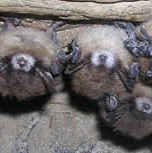
    Warmer caves may save bats from deadly fungus

    Nancy Heaslip, New York Dept. of Environmental Conservation
    Nancy Heaslip, New York Dept. of Environmental Conservation

    Shivering bats need help to fight off white-nose syndrome

    Researchers are hoping that heated bat boxes can curtail the number of bats dying from white-nose syndrome — a condition that has decimated hibernating bats across the northeastern United States.

    As many as half a million bats have died from the poorly understood ailment since it was discovered in New York state in 2006. Because the bodies of emaciated bats are often found strewn around the entrances of affected caves, scientists have hypothesized that the bats are starving to death during hibernation. Now, a pair of ecologists has created a mathematical model that suggests the bats’ hibernation patterns are being altered, forcing them to burn through their fat reserves to warm up. Furthermore, they propose placing heated huts within affected caves for the bats to move into, allowing them to conserve energy — and survive.

    :: continue reading in Nature ::

  • Permafrost that lives up to its name

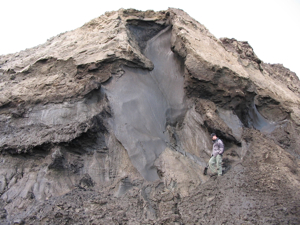
    Permafrost that lives up to its name

    Ancient Canadian ice survived previous warm periods.

    A 740,000-year-old wedge of ice discovered in central Yukon Territory, Canada, is the oldest known ice in North America. It suggests that permafrost has survived climates warmer than today’s, according to a new study.

    “Previously, it was thought that the permafrost had completely disappeared from the interior about 120,000 years ago,” says Duane Froese, an earth scientist at the University of Alberta in Edmonton, Canada, who is the author of the study published today in Science. “This deep permafrost appears to have been stable for more than 700,000 years, including several periods that were warmer and wetter.”

    Keep reading in Nature.

    Image credit: Duane Froese, University of Alberta