Tag: ocean

  • Acidic oceans threaten fish

    Acidic oceans threaten fish

    Stocks could suffer as seas soak up more carbon dioxide. 

    Ocean acidification looks likely to damage crucial fish stocks. Two studies published today in Nature Climate Change reveal that high carbon dioxide concentrations can cause death and organ damage in very young fish.

    The work challenges the belief that fish, unlike organisms with shells or exoskeletons made of calcium carbonate, will be safe as marine CO2 levels rise.

    Fish could be most susceptible to carbon dioxide when in the egg, or just hatched.

    Oceans act like carbon sponges, drawing CO2 from the atmosphere into the water. As the CO2 mixes with the water, it forms carbonic acid, making the water more acidic. The drop in pH removes calcite and aragonite — carbonate minerals essential for skeleton and shell formation — from the marine environment.

    This can mean that corals, algae, shellfish and molluscs have difficulty forming skeletons and shells or that their shells become pitted and dissolve.

    Flawed belief? 

    At present, atmospheric CO2 levels exceed 380 parts per million and are expected to climb throughout the century to approximately 800 p.p.m. if emissions are not kept in check. And the oceans are expected to continue to sop up the gas, dropping ocean pH by 0.4 units to about 7.7 by 2100 [2].

    However, many scientists have suggested that acidification wouldn’t be problematic for marine fish because they don’t have exoskeletons and because as adults they possess mechanisms that allow them to tolerate high concentrations of CO2.

    But a handful of studies have shown that increased CO2 levels can wreck the sense of smell of orange clown fish larvae and increase the size of the otolith — a bony organ akin to the human inner ear — in white sea bass larvae.

    Continue reading this story at Nature.

    Image: Hannes Baumann

  • Arctic Ocean full up with carbon dioxide

    Arctic Ocean full up with carbon dioxide

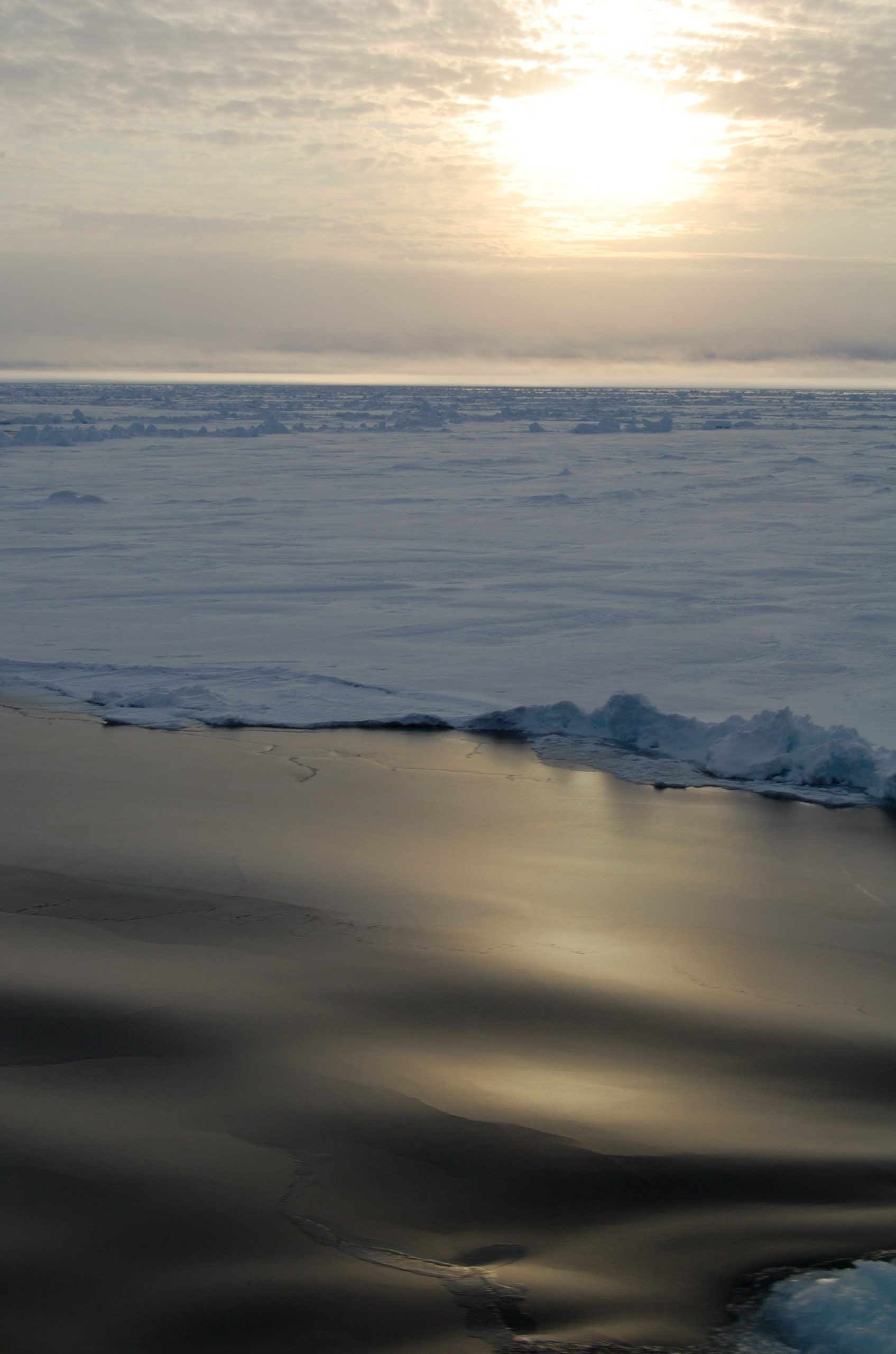
    Loss of sea ice is unlikely to enable Arctic waters to mop up more carbon dioxide from the air.

    As climate scientists watched the Arctic’s sea-ice cover shrink year after year, they thought there might be a silver lining: an ice-free Arctic Ocean could soak up large amounts of CO2 from the atmosphere, slowing down the accumulation of greenhouse gases and climate change.

    But research published in Science today suggests that part of the Arctic Ocean has already mopped up so much CO2 that it could have almost reached its limit1. Wei-Jun Cai, a biogeochemist at the University of Georgia in Athens and an international team sampled the amount of CO2 in the surface waters of the Canada Basin, in the western Arctic Ocean. “We found that ice-free basin areas had rather high CO2 values that approached atmospheric levels,” says Cai. “It was not expected.”

    Although the Arctic Ocean accounts for only 3% of the world’s ocean surface area and is mostly covered in ice, it takes up 5-14% of all the CO2 absorbed by the planet’s oceans. It tends to take in proportionately more CO2 because gases dissolve more easily in cold water.

    Scientists had previously thought that open water would promote the exchange of CO2 between the air and the ocean and that the increase in light reaching the water would also trigger the microscopic ocean plants called phytoplankton to transfer more CO2 from the atmosphere to the ocean through photosynthesis2.

    But that “prediction was based on observations of either highly productive ocean margins or ice-covered basins prior to a major ice retreat,” says Cai. Very few scientists had surveyed CO2 concentrations in offshore waters.

    → Read more at Nature

    Image courtesy of Pink floyd88 a, via Wikimedia Commons