Tag: science

  • Control Freaks

    Tiny genetic snippets called microRNAs may promote metastasis

    Biologists know quite a bit about the steps that turn a normal cell into a cancerous one. Their understanding of metastasis, on the other hand, is somewhat more hazy. Now a short stretch of genetic material has been implicated in the spread of breast cancer, according to a study in the Oct. 11 Nature.

    Molecular biologist Li Ma of the Whitehead Institute for Biomedical Research, in Cambridge, Mass., has identified a type of microRNA—a tiny genetic molecule—that can coax breast cancer cells to spread to other tissues. MicroRNAs regulate the expression of genes by controlling the larger RNA molecules that help to make proteins.

    :: Read more in CR magazine ::

  • Arctic radio

    Arctic radio

    Free Radicals

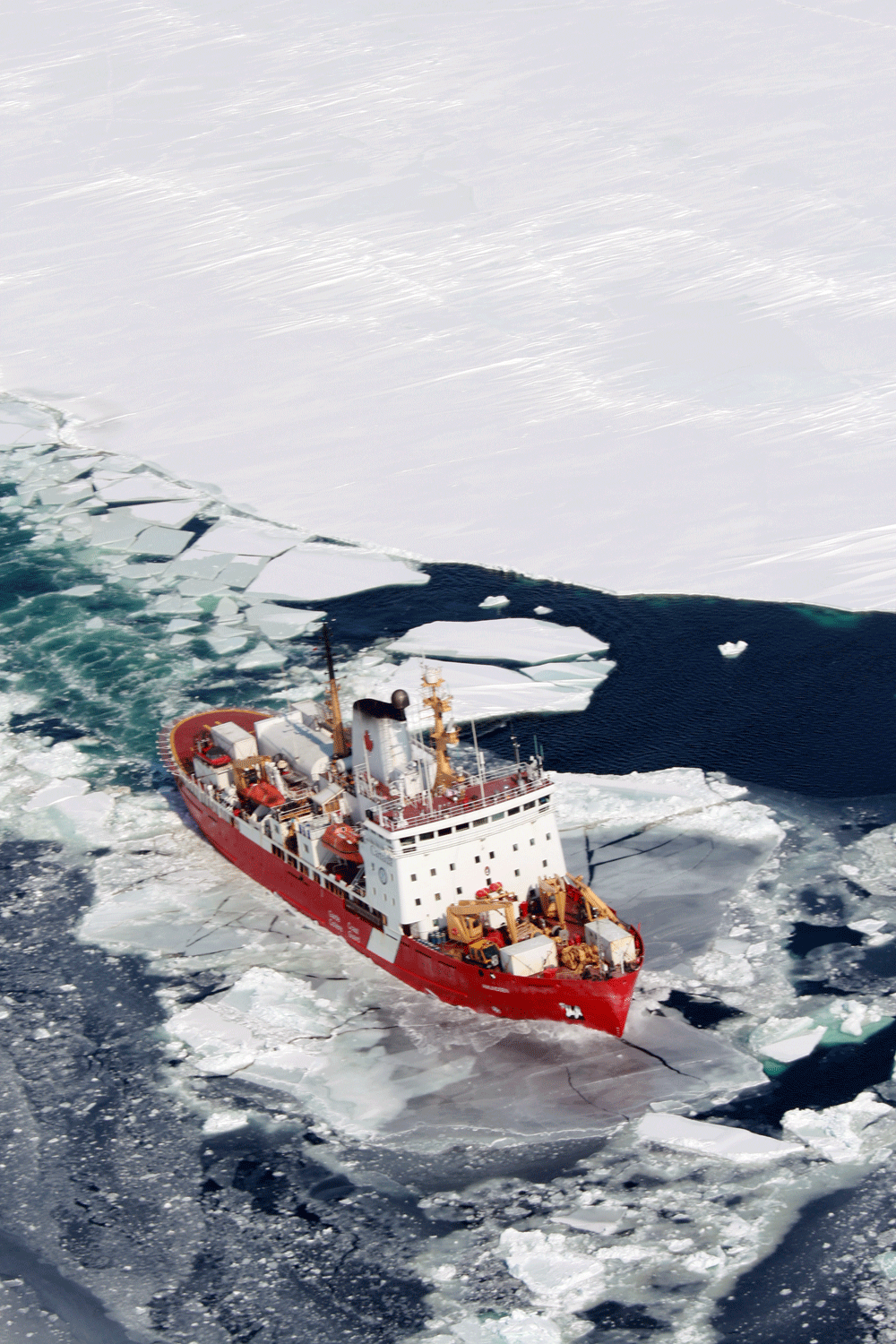
    When the CCGS Amundsen, a Canadian research ice breaker, left its home port of Quebec City in July 2007, it embarked upon a historic 15-month expedition that would have it travel across the Arctic and overwinter in the Beaufort Sea.

    The scientists on board the  Amundsen might spend their days hunting for ice algae, fishing for zooplankton, or surveying the contours of the nearby ice floes. The sounds of them at work were featured on Free Radicals (science, culture and connection), a radio program that airs on CKUT (90.3 FM Montreal) on Mondays.

    Listen to the show (August 18, 2008): Arctic Science (08.18.08)

  • The missing greenhouse gas

    Growth of the electronics industry will boost emissions of a ‘hidden’ — but extremely potent — greenhouse gas.

    Our insatiable appetite for gadgets — mobile phones, MP3 players and flat-screen TVs — may be adding a hidden greenhouse gas to the Earth’s atmosphere. Countries that ratified the Kyoto Protocol committed to reducing their emissions of carbon dioxide and five other heat-trapping gases: methane, nitrous oxide, hydrofluorocarbons, perfluorocarbons and sulfur hexafluoride. But these aren’t the only climate-altering chemicals being produced by human activity. In the 13 years since the Protocol was first drawn up, scientists have discovered that other gases, such as nitrogen trifluoride (NF3), could become an increasing part of the climate problem.

    :: Read more in Nature Reports: Climate Change ::