Tag: wildlife

  • Taxonomy in Trouble in Canada

    Taxonomy in Trouble in Canada

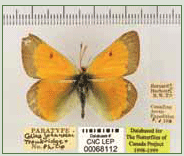
    Canada is at risk of losing its taxonomic expertise, according to a report released today.

    The report details stagnant research funding, greying experts, a lag in digitization and a lack of support for national collections. This is threatening Canada’s understanding of its biodiversity, and the ecosystem services it provides, the report concludes.

    “Canadian contributions to describing new species has dropped from being 6th in the world to 14th in the last decade,” says Thomas Lovejoy, Biodiversity Chair at the Heinz Center for Science, Economics and the Environment, who chaired the panel of 14 Canadian and international experts who authored the report. “The taxonomic expertise in Canada is slipping at the moment when it needs to surge forward.”

    The effects are already being felt. The Committee on the Status of Endangered Wildlife in Canada recently filled positions on its subcommittees with outside experts because not enough Canadians had expertise in several taxonomic groups, including terrestrial and freshwater molluscs, lichens and mosses, the report says.

    Canada has more than 50 million wildlife specimens in collections worth over CDN$250 million, but there is no strategy for their maintenance, says David Green, director of the Redpath Museum at McGill University in Montreal. There are few storage facilities with advanced climate and pest control systems, and many are bulging beyond capacity.

    The story continues on Nature’s blog The Great Beyond.

  • Q&A with Earth director Alastair Fothergill

    Green Living

    Polar bears and prophecies from the director of Earth.

    Earth, the hotly anticipated new film from Disneynature—in theatres on Earth Day (April 22)—follows three families of mammals. It captures the spectacle of the animal kingdom on the Arctic sea ice, in the tropics and Kalahari Desert, and at the Antarctic’s Southern Ocean. Green Living caught up with Emmy Award-winning wildlife filmmaker and Earth’s co-director Alastair Fothergill (best known for producing and directing the BBC series Planet Earth) for a chat about climate, camera angles and the thrill of the chase.

    Green Living: What do you hope people will take away from this type of film?

    :: Read more at Green Living ::

  • Warmer caves may save bats from deadly fungus

    Warmer caves may save bats from deadly fungus

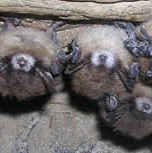
    Nancy Heaslip, New York Dept. of Environmental Conservation
    Nancy Heaslip, New York Dept. of Environmental Conservation

    Shivering bats need help to fight off white-nose syndrome

    Researchers are hoping that heated bat boxes can curtail the number of bats dying from white-nose syndrome — a condition that has decimated hibernating bats across the northeastern United States.

    As many as half a million bats have died from the poorly understood ailment since it was discovered in New York state in 2006. Because the bodies of emaciated bats are often found strewn around the entrances of affected caves, scientists have hypothesized that the bats are starving to death during hibernation. Now, a pair of ecologists has created a mathematical model that suggests the bats’ hibernation patterns are being altered, forcing them to burn through their fat reserves to warm up. Furthermore, they propose placing heated huts within affected caves for the bats to move into, allowing them to conserve energy — and survive.

    :: continue reading in Nature ::